Récemment, les appels d'offres et les négociations de contrats annuels à long terme sur le marché africain du cuivre raffiné se sont intensifiés. Sous l'effet des changements structurels de l'offre et de la demande mondiales, des tensions géopolitiques et des chocs des politiques tarifaires, la concurrence acharnée entre soumissionnaires a précipité le marché dans une phase précoce de course aux ressources et de négociations contractuelles. Notamment à partir du troisième trimestre 2025, des signaux clairs sont apparus — tels que des révisions à la hausse des primes des contrats à long terme FCA en RDC et en Zambie, et des flambées des offres sur lots au comptant.
Resserrement de l'offre durant la transition des capacités
Alors que les cycles de capacités anciens et nouveaux se chevauchent, le paysage de l'offre et de la demande se recompose et l'offre se resserre : 2025–2026 sont largement considérées comme les deux années les plus tendues pour l'équilibre du concentré de cuivre, avec des réductions et arrêts fréquents dans les fonderies étrangères. Hors de Chine, l'Afrique et l'Indonésie sont perçues comme les plus grandes sources d'incrément sur les deux prochaines années, devenant ainsi des points focaux pour les acheteurs mondiaux.
Demande d'importation supplémentaire liée à la refonte de la demande américaine
Suite à l'article 232 des États-Unis imposant des droits de 50 % sur les produits semi-ouvrés en cuivre, la demande d'importation de produits semi-ouvrés devrait progressivement se déplacer vers les importations de cuivre raffiné. En supposant un transfert complet en deux ans, cela implique un besoin d'importation supplémentaire de cuivre raffiné d'environ 400 000 tonnes par an dans les 1 à 2 prochaines années. Étant donné que les fournisseurs traditionnels comme le Chili, le Pérou, le Mexique et le Canada ne pourront probablement pas combler intégralement cet incrément à court terme, les États-Unis et autres centres de demande chercheront inévitablement des approvisionnements complémentaires auprès de pays ressources alternatifs.
Hausse structurelle de la demande en aval
La demande à plus long terme de secteurs comme les énergies nouvelles, l'IA et l'électronique-informatique a rapidement augmenté ces dernières années, conférant au cuivre certaines caractéristiques de « ressource énergétique stratégique ». Les États-Unis ont déjà désigné le cuivre comme ressource stratégique pour la sécurité nationale, intensifiant encore la concurrence pour un approvisionnement à long terme de qualité.
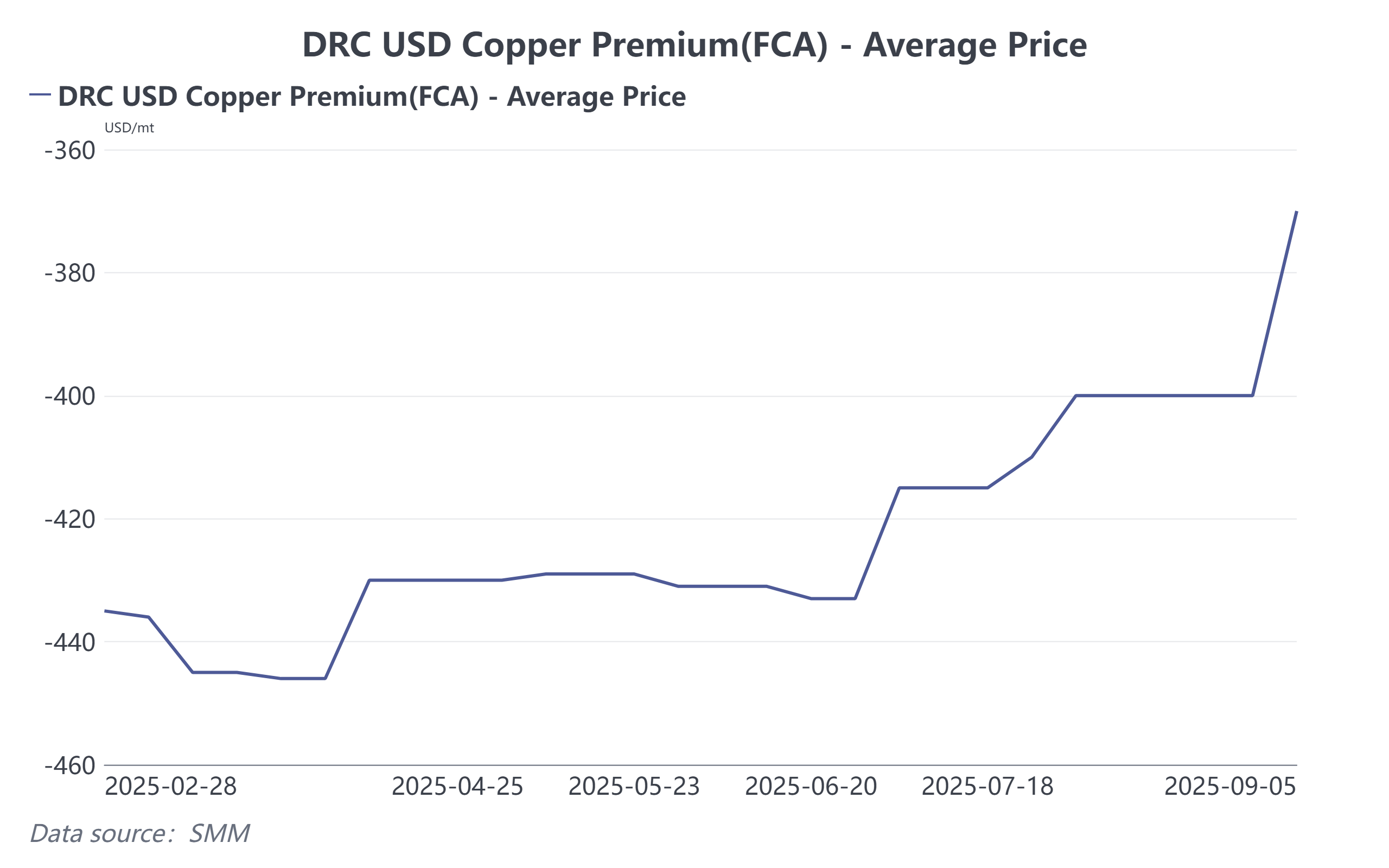
Les négociants accélèrent l'allocation des ressources ; les primes régionales augmentent, avec des hausses des prix des lots à long terme et au comptant
Selon SMM, depuis le T3, les prix des contrats à long terme FCA en RDC ont été relevés d'environ 30–40 $/tonne. En même temps, un petit nombre d’appels d’offres au comptant se sont soldés autour de −300 $/tonne (offres gagnantes à QP M+1 — note : il s’agissait d’attributions individuelles au comptant), représentant une augmentation notable par rapport aux niveaux antérieurs. Les primes au comptant EXW aux ports de Durban et Dar es Salaam ont augmenté en glissement hebdomadaire ; certaines transactions récentes se situaient autour de −50 $/tonne (QP M+0). La concurrence entre les négociants pour les cargaisons du T4 et de 2026 est féroce, et les attentes du marché continuent de grimper.
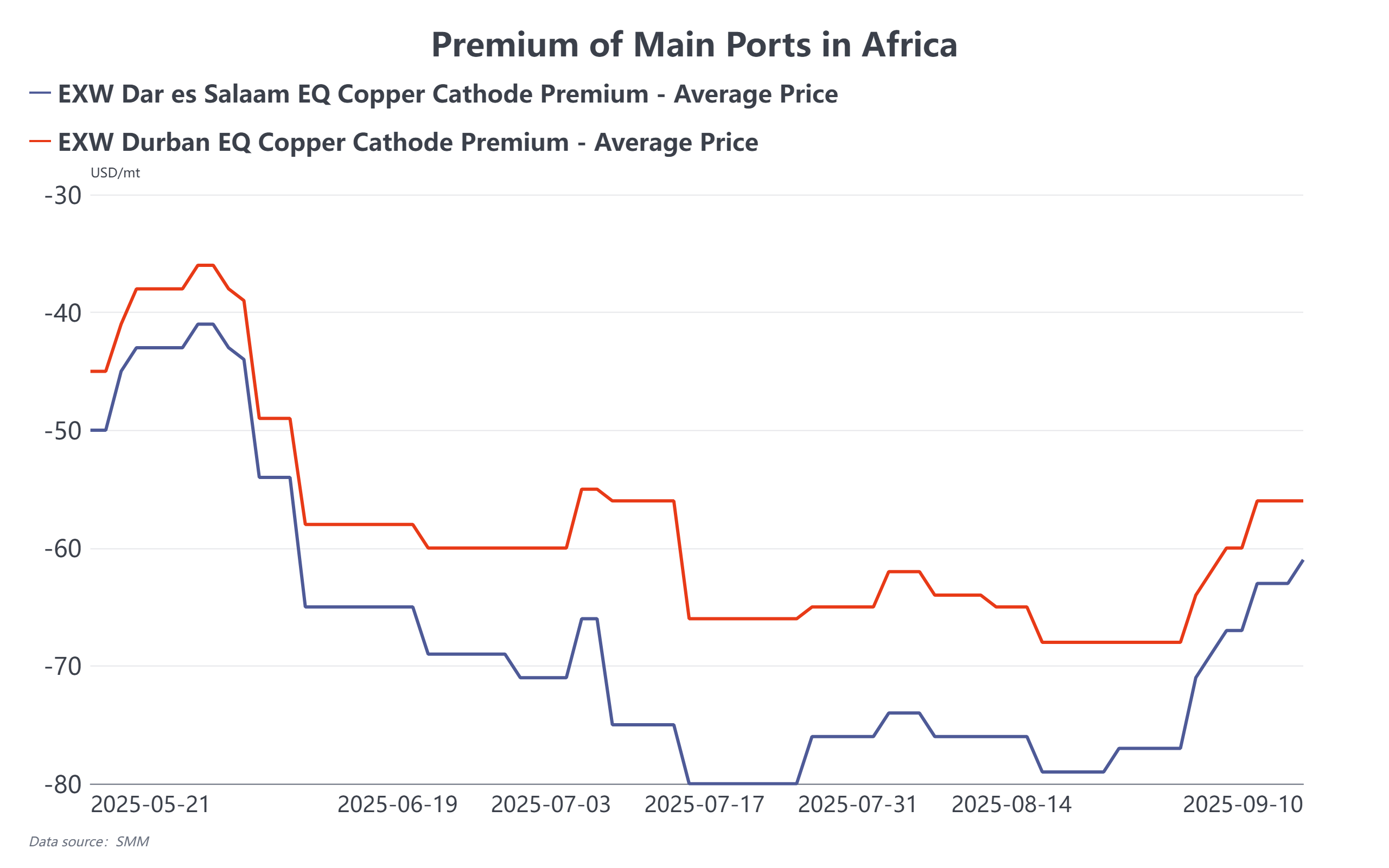
Offre et demande et concurrence stratégique déjà axées sur T4/2026
Avec les négociations annuelles à long terme imminentes, l’incertitude est grande quant à la réapparition de conflits tarifaires ou d’autres chocs politiques en 2026. Des récits macroéconomiques (développement économique, sécurité des ressources) aux perspectives de financement/arbitrage et d’allocation de l’offre, les préparatifs du cycle de concurrence stratégique de 2026 sont déjà en cours — accélérant le rythme des négociations et les anticipations de prix.
Perspectives
Bien que nombre de ces concours ne soient pas encore réglés, 2026 s’annonce comme une autre année d’allocation tendue des ressources. La fragmentation des échanges régionaux accroît les pressions sur la sécurité d’approvisionnement, et d’ici les négociations à long terme de fin d’année, les primes intégrées pour 2026 devraient être supérieures à celles de 2025.