【SMM Analysis】China's Lithium Battery Recycling Sector Faces Headwinds Amidst New Regulations and Market Squeeze

Published: Aug 21, 2025 14:55
Source: SMM
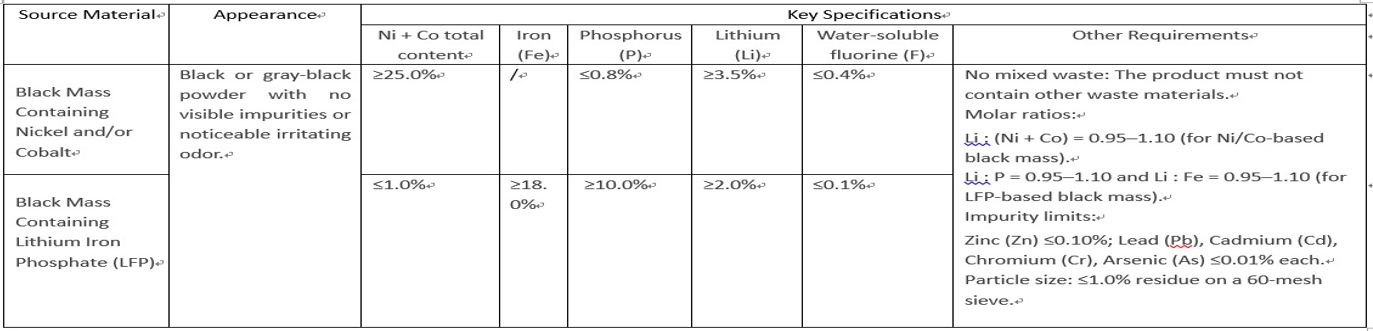
China’s lithium battery recycling industry is entering a key adjustment phase. Since August 1, “black mass” from spent lithium batteries has been officially recognized as a renewable raw material and unified under customs code 382499996. The new rules are stricter, setting higher performance requirements, banning mixed packaging, requiring double-layer packaging, and mandating strict inspections. Non-compliant batches face return shipments. On the market side, the sector is challenged by overcapacity, low utilization (around 30%), intense price competition, and shrinking profit margins. In response, companies are cutting staff, halting or reducing production, lowering processing fees, improving recovery rates, and shifting focus to black mass and smelting feedstock. At the same time, safety risks (such as LFP black mass dust hazards), long customs clearance cycles, and technical bottlenecks (like defluorination) remain significant hurdles. Despite these challenges, the industry still shows potential. New chemical processes can achieve nearly 100% recovery, while long-term demand from new energy vehicles and energy storage provides strong support. Industry experts and SMM emphasize that unified pricing, simplified customs procedures, enhanced workplace safety, and technological upgrades are crucial for sustainable development. Although ASEAN-sourced black mass is cheaper, it generally has lower quality and lower payable rates, with supply dominated by NCM black mass and limited LFP resources.

China’s lithium battery recycling sector is entering a critical adjustment phase. On August 1, regulators formally classified black mass, an intermediate product from spent lithium-ion batteries, as a recyclable raw material, covering both NCM and LFP types under customs code 382499996. The new rules go beyond existing national standards, setting stricter performance benchmarks, prohibiting mixed shipments, and requiring double-layer packaging. Damaged packaging must be reinforced with ton bags. Customs inspections are conducted under Announcements No. 43 and 23, with Ningbo pioneering advanced testing methods. While compliant shipments are cleared, excess impurities can lead to partial or even full-batch rejection. Enforcement has been particularly strict during the initial stage.

Beyond regulation, market conditions remain strained. Industry capacity utilization is only about 30%, leaving the sector trapped in overcapacity and fierce price wars. Transparent pricing has even caused domestic–international price inversions, further squeezing profits. To “break the spiral,” companies are downsizing staff, suspending or partially halting production, lowering processing fees, improving recovery rates, and shifting profit reliance toward black mass and smelting feedstock. Technological hurdles also persist. Fluoride removal still requires high-temperature calcination to meet standards, with even tougher thresholds overseas. Cooperation between recyclers and powdering mills under the Basel Convention often depends on trade associations to facilitate negotiations. Customs clearance currently takes 7–14 days, leading to calls for streamlined procedures to improve efficiency. Operational safety has become another pressing concern. Nano-grade LFP black mass dust poses significant health hazards, requiring workers to wear masks, gloves, and protective clothing, while maintaining strict cleaning routines. Packaging defects at the factory level can directly affect customs inspection and clearance. Industry participants stress the importance of checking official requirements on the China Quality website and call for alliances and unified pricing systems to reduce distortions and promote compliance.

In recent months, Chinese companies have been importing Southeast Asian black mass at lower prices, though quality lags behind Chinese standards, with a 5–10% difference in payable rates. Meanwhile, the rebound in lithium carbonate prices is lifting black mass valuations. Due to high-cost pressures from hydrometallurgical processes, some companies have turned to outsourcing. At the same time, new chemical processes have been developed that can detach copper foil and cathode or anode materials, achieving nearly 100% recovery. Despite these challenges, SMM believes China’s recycling sector is supported by strong long-term demand from energy storage and electric vehicles. Both policymakers and companies agree that unified pricing, streamlined customs procedures, improved worker safety, and technological upgrades are essential for sustainable growth. Moreover, SMM has observed that ASEAN markets generally have the lowest payable rates for black mass, with limited LFP resources as their supply is mainly focused on ternary black mass.
Data Source Statement: Except for publicly available information, all other data are processed by SMM based on publicly available information, market communication, and relying on SMM‘s internal database model. They are for reference only and do not constitute decision-making recommendations.

For any inquiries or to learn more information, please contact: lemonzhao@smm.cn
For more information on how to access our research reports, please contact:service.en@smm.cn
Related News
Guozong Zhongsheng's 200 MW ESS Project Kicks Off in Jinchang with 780 Mln Yuan Investment
14 hours ago
Guozong Zhongsheng's 200 MW ESS Project Kicks Off in Jinchang with 780 Mln Yuan Investment
Read More
Guozong Zhongsheng's 200 MW ESS Project Kicks Off in Jinchang with 780 Mln Yuan Investment
On March 8, the Guozong Zhongsheng 200 MW/800 MWh grid-side standalone ESS project officially broke ground at the Xipo PV Industrial Park in Jinchang City’s Jinchuan District. With a total investment of approximately 780 million yuan, the project will adopt the currently mature LFP electrochemical energy storage technology, and will mainly build 40 sets of 5 MW/20 MWh energy storage units, along with supporting auxiliary works such as one 330 kV step-up substation and eight 35 kV collector lines.
14 hours ago
First Grid-Forming ESS Project in Northern Hebei Goes Online
14 hours ago
First Grid-Forming ESS Project in Northern Hebei Goes Online
Read More
First Grid-Forming ESS Project in Northern Hebei Goes Online
Recently, the first grid-forming ESS project in the northern Hebei power grid—the Beijing Hengyuan Zhangbei County 300 MW/600 MWh standalone ESS power station—was officially connected to the grid and began generating electricity. The grid-forming ESS capacity is 50 MW/100 MWh, using Sungrow’s grid-forming technology, adding an adjustable “dam” to conventional new energy plants to make the “green electricity river” more controllable and stable. This strongly enhances the reliability of power supply in the Beijing-Tianjin-Hebei region and sets a new milestone for high-quality transmission of new energy.
14 hours ago
Amidst Middle East Conflicts: What is the Path Forward for China's Energy Storage Exports?
14 hours ago
Amidst Middle East Conflicts: What is the Path Forward for China's Energy Storage Exports?
Read More
Amidst Middle East Conflicts: What is the Path Forward for China's Energy Storage Exports?
Recent Middle East conflicts have disrupted the region's booming energy storage market, a major destination for Chinese exports. To assess the real impact on Chinese supply chains and project deliveries, we must analyze baseline demand amidst these geopolitical uncertainties.
14 hours ago