At a Glance
- Export restrictions target cathode materials and nonferrous metal processing tech
- Move could impact global EV manufacturers and supply chains
- China aims to maintain dominance in EV battery industry
On July 15, 2025, the Chinese Ministry of Commerce abruptly announced it would require government licenses for any transfer of eight key technologies for manufacturing electric vehicle batteries outside of China. The New York Times reports that the restrictions are effective immediately and apply to any overseas transfer through trade, investment, or technological cooperation.
The stringent new controls specifically target three core technologies related to lithium iron phosphate (LFP) batteries and five key technologies for producing lithium for all battery types. These technologies have become critical competitive advantages in the global EV market, with LFP batteries offering lower costs and improved safety profiles compared to traditional nickel-cobalt-manganese chemistries.
"By managing emerging technologies across the entire EV industry, China, already a leader, can further strengthen its competitive position against other nations," warned Tang Jin, a senior researcher at Japan's Mizuho Bank, in a Wall Street Journal report.
US-China trade relations deteriorate further
The US-China trade relationship, already under significant strain, has deteriorated dramatically since President Trump began implementing new tariff policies earlier this year. As we reported in April, China responded to US tariff increases with a sweeping 34% tariff on all products imported from the US, escalating the trade war between the world's two largest economies. These latest technology export controls represent a significant escalation beyond tariffs, moving the conflict into the realm of technological protectionism.
US battery manufacturing plans in jeopardy
These restrictions pose an immediate threat to US battery manufacturing initiatives. BlueOval Battery Park, Ford Motor Company's ambitious $3 billion factory in Michigan, designed to manufacture LFP batteries using technology from CATL, now faces uncertain prospects. According to the Times, Ford has declined to comment on how these new restrictions might derail this project.
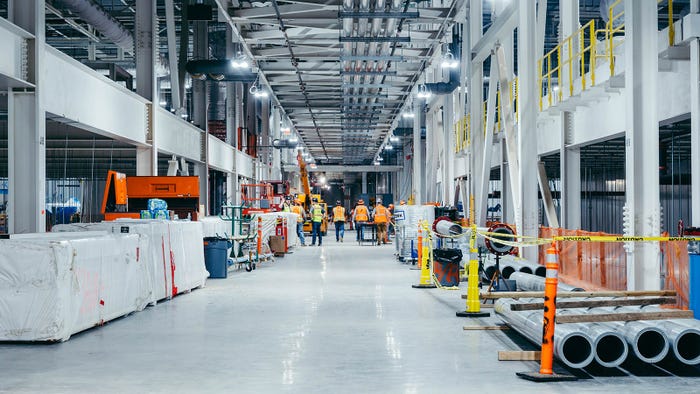
Ford's BlueOval Battery Park in Marshall, MI. Credit: Ford Motor Co.
The timing creates a perfect storm for US automakers who have already been struggling with supply chain disruptions since April, when Beijing tightened export restrictions on rare earth magnets essential for EV motors. This compounds the challenges created by Section 301 tariffs that came into effect on January 1, 2025, for electric vehicles and are extending to battery energy storage systems.
China's overwhelming dominance grows stronger
China's strategic move further entrenches its already commanding position in the global EV supply chain:
-
Chinese companies control approximately 65% of the world's lithium processing capacity
-
Chinese manufacturers account for around 70% of the global EV battery market
-
BYD and CATL, both Chinese companies, maintain a substantial lead in LFP battery technology
-
China has nearly 50 graduate programs focused on battery chemistry or metallurgy, compared to only a handful of professors working on batteries in the US
The research gap is particularly concerning, as Chinese institutions account for an overwhelming 65.4% of high-impact research publications on electric batteries as of 2023.
Critical technology now under lock and key
The restricted technologies represent innovations that have given Chinese batteries an insurmountable competitive edge. While LFP batteries were initially invented in the United States nearly 30 years ago, Chinese companies made crucial breakthroughs in the past five years that Western manufacturers have struggled to match.
BYD and CATL developed proprietary methods to increase the number of recharge cycles these batteries can withstand, pack more electricity into each battery, and mass-produce them efficiently. According to the Times, these innovations have enabled Chinese manufacturers to produce electric vehicles that are considerably cheaper than both electric and gasoline-powered cars made in other countries.
The competition between these Chinese giants continues to widen the technology gap. Just months ago, CATL unveiled its second-generation Shenxing battery, which can add 520 km (323 miles) of range in just five minutes of charging, with a total range of 800 km (497 miles) and peak charging power of 1.3 megawatts. This announcement came shortly after BYD had revealed its own fast-charging technology claiming 400 km (249 miles) of range in five minutes – fast enough that, in Inside EVs words, “it makes gas irrelevant” – showing how Chinese companies are rapidly outpacing Western competitors in battery innovation.
With access to Chinese technology now severely restricted, Western manufacturers have been urgently exploring alternatives to reduce dependence on Chinese battery technology. Companies outside China are accelerating development of advanced LMFP (lithium manganese iron phosphate) batteries and attempting to secure high-purity raw materials from Europe and North America to establish more independent supply chains.
Significant hurdles for US and EU battery strategy
The Times reports that the European Union has been pressing Chinese automakers and battery manufacturers to establish operations within the bloc as an unofficial condition for continued growth in sales of Chinese cars. The new restrictions could effectively block these efforts, forcing a complete rethinking of EU strategy.
For US manufacturers, the timing of these restrictions is particularly problematic, coming just days after Secretary of State Marco Rubio met with his Chinese counterpart, Wang Yi. Although Rubio (per the Wall Street Journal) described the meeting as productive and part of President Trump's broader effort to reshape global trade relationships, these new restrictions suggest China has no intention of easing its technological protectionism.
![[SMM Analysis] Ternary Cathode Payables May See Modest Increase in Q2](https://imgqn.smm.cn/usercenter/nVnLo20251217171728.jpg)