JFX: Future Development of Indonesia's Tin Industry Policy

Published: Jun 18, 2025 11:33
Source: SMM
At the Indonesia Critical Minerals Conference & Expo 2025 - Tin Session, Stephanus Paulus Lumintang, CEO of Jakarta Futures Exchange (JFX), shared insights on the topic of "The Future Development of Indonesia's Tin Industry Policy."
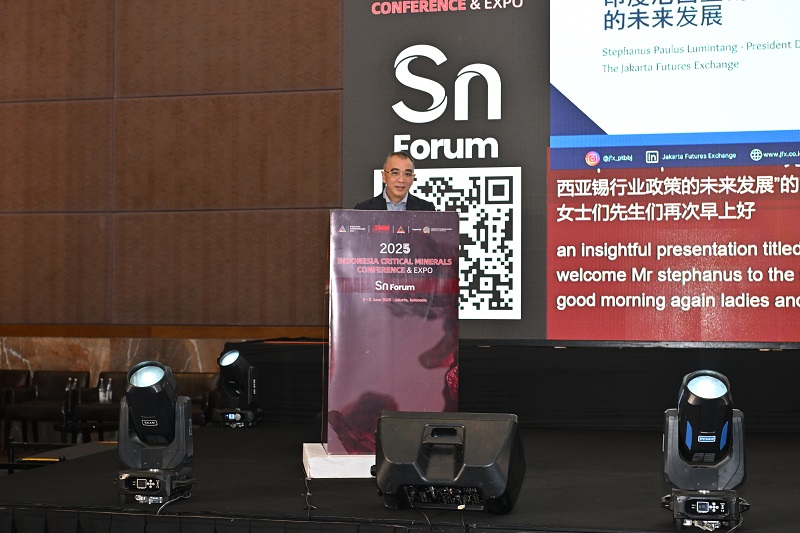
At the Indonesia Critical Minerals Conference & Expo 2025 - Tin Session, Stephanus Paulus Lumintang, CEO of Jakarta Futures Exchange (JFX), shared insights on the topic of "The Future Development of Indonesia's Tin Industry Policy."

Introduction to JFX
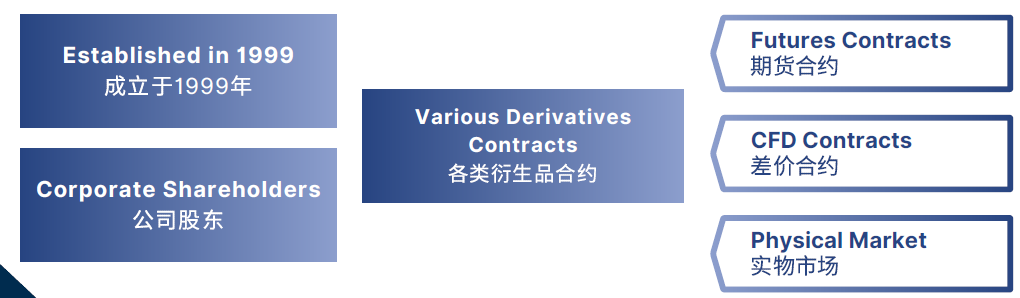
The Jakarta Futures Exchange (JFX) is the first futures exchange in Indonesia. Established on August 19, 1999, its foundation aims to bring significant benefits to the business community and serve as a hedging tool. The primary role of JFX is to provide facilities for its members to trade futures contracts at predetermined prices through effective interactions based on supply and demand within an electronic trading system. The establishment of JFX is based on Law No. 32 of 1997 concerning Commodity Futures Trading. JFX is committed to providing the best solutions and services for the PBK. The process of converting and utilizing the latest information technology has been optimized to respond to market demands and the dynamic business environment. JFX consistently innovates, develops products, enhances the capabilities and competencies across all functions and areas of the organization, and provides commodity trading infrastructure on an international scale. JFX is proud to be part of the system that drives transactions in the domestic and global commodity industries.

Outlook for Indonesia's Tin Industry Policy

►Current Policies: Restrictions on the export of raw tin to encourage domestic smelting; licensing and supervision from government agencies; environmental and community impact assessments required for operational activities.

►Drivers of Policy Change: Economic diversification and downstream industrial development; environmental sustainability and global ESG standards; strengthening Indonesia's position in the global commodity market.

►Future Policy Directions: Incentives for tin refining and alloy development; expansion of strategic reserves and the listing of futures contracts; integration of digital tools to enhance transparency and efficiency.

JFX's Role in Supporting Tin Policy Development

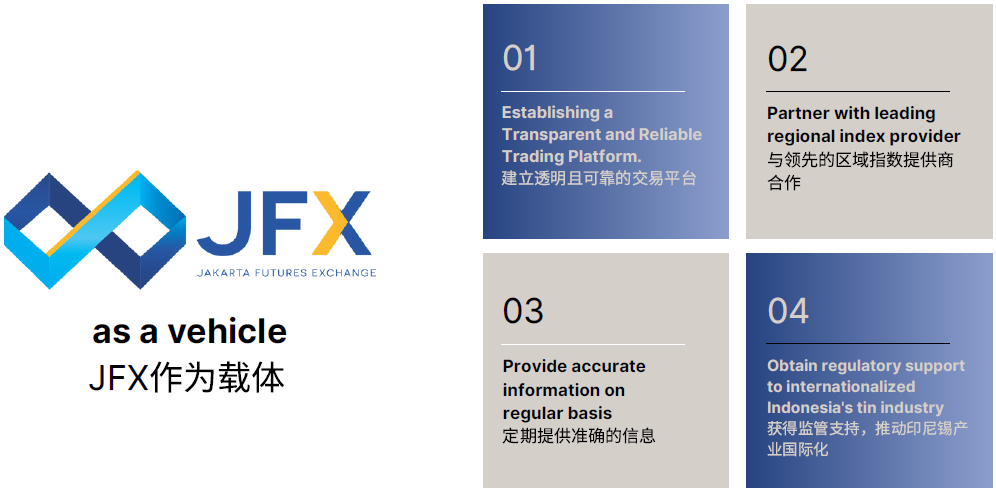
Promoting the establishment of a transparent and efficient tin trading platform; collaborating with regulators and industry stakeholders; launching new tin futures contracts to support pricing and hedging.

Impact of the Tin Exchange
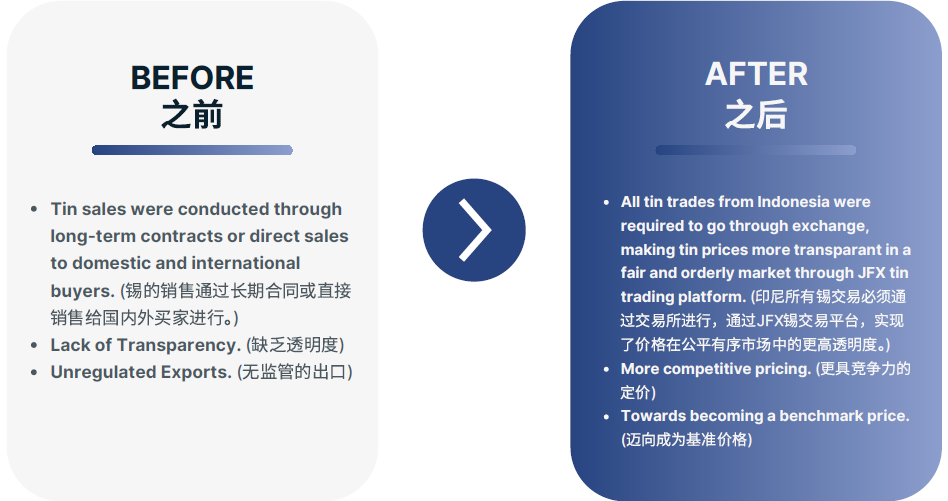
Indonesia as a Tin Price Benchmark
Data Source Statement: Except for publicly available information, all other data are processed by SMM based on publicly available information, market communication, and relying on SMM‘s internal database model. They are for reference only and do not constitute decision-making recommendations.

For any inquiries or to learn more information, please contact: lemonzhao@smm.cn
For more information on how to access our research reports, please contact:service.en@smm.cn
Related News
Shennan Circuits Reports Strong PCB, Packaging Substrate Business Growth & Project Progress
3 hours ago
Shennan Circuits Reports Strong PCB, Packaging Substrate Business Growth & Project Progress
Read More
Shennan Circuits Reports Strong PCB, Packaging Substrate Business Growth & Project Progress
Shennan Circuits disclosed its investor relations activity record. The PCB business benefited from growing demand for AI computing infrastructure hardware-related products, with factory capacity utilization rates staying high. The packaging substrate business, driven by demand boosts from storage and processor chip substrates, maintained the elevated capacity utilization rate levels seen since Q4 2025. For the Guangzhou packaging substrate project, the capacity ramp-up of BT-type packaging substrates progressed steadily. FC-BGA packaging substrates achieved mass production of products with 22 layers and below, while R&D and sampling of products with 24 layers and above advanced on schedule. The Nantong Phase IV and Thailand factory projects were successfully connected and put into production in H2 2025, with capacity currently ramping up steadily. Capital expenditure in 2026 will primarily focus on PCB and packaging substrate businesses, with key investments directed toward the Wuxi high-speed, high-density, and high-multilayer electronic circuit product project, the Guangzhou packaging substrate factory construction, as well as subsequent payments for the Nantong Phase IV and Thailand factory projects.
3 hours ago
Data: SHFE, DCE market movement (May 15)
6 hours ago
Data: SHFE, DCE market movement (May 15)
Read More
Data: SHFE, DCE market movement (May 15)
The following table shows the ferrous and nonferrous metals movement on the SHFE and DCE on 15 May , 2026
6 hours ago
[SMM Tin News Flash: Institution: Micro LED CPO Optical Transceiver Module Market Value Expected to Reach $848 Million by 2030]
7 hours ago
[SMM Tin News Flash: Institution: Micro LED CPO Optical Transceiver Module Market Value Expected to Reach $848 Million by 2030]
Read More
[SMM Tin News Flash: Institution: Micro LED CPO Optical Transceiver Module Market Value Expected to Reach $848 Million by 2030]
[SMM Tin News Flash: Institution: Micro LED CPO Optical Transceiver Module Market Value Expected to Reach $848 Million by 2030]
According to TrendForce's latest Micro LED industry research, generative AI is driving a rapid climb in demand for high-speed optical communications. Since Micro LED features an energy consumption of only 1-2 pJ/bit and a bit error rate (BER) of less than one ten-billionth, it is expected to become one of the three major short-distance high-speed transmission solutions for intra-rack applications in scale-up data center networks, alongside AEC (Active Electrical Cable) and VCSEL NPO (Vertical-Cavity Surface-Emitting Laser Near-Package Optics). Therefore, TrendForce estimates that the market value of Micro LED CPO optical transceiver modules will reach $848 million by 2030.
7 hours ago
JFX: Future Development of Indonesia's Tin Industry Policy - Shanghai Metals Market (SMM)