Middle East’s Largest Solar Plant Launched in Saudi Arabia by China Energy

Published: May 30, 2025 16:29
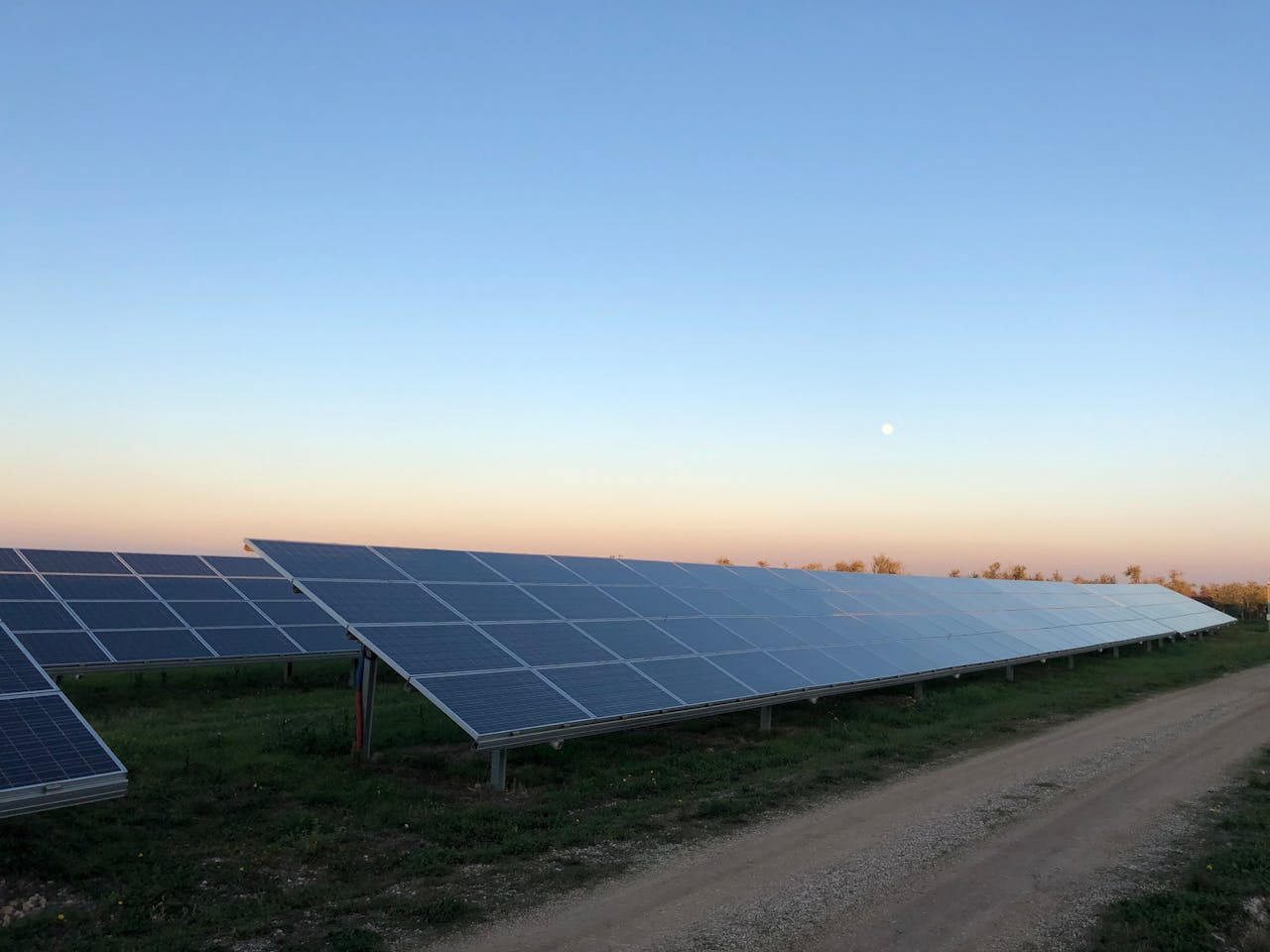
China Energy has officially commissioned the Shuaibah Solar Power Plant in Jeddah, Saudi Arabia, now the largest solar power facility in the Middle East with a total capacity of 2.6 GW.

China Energy has officially commissioned the Shuaibah Solar Power Plant in Jeddah, Saudi Arabia, now the largest solar power facility in the Middle East with a total capacity of 2.6 GW.

The project is expected to generate over 282 billion kilowatt-hours of electricity across its 35-year operational lifespan and will reduce carbon dioxide emissions by nearly 20 million tons annually. It incorporates advanced photovoltaic technology and automated systems.

Developed through a joint venture between China Energy, ACWA Power, and Badeel, the project supports Saudi Arabia’s Vision 2030 by reducing fossil fuel reliance and represents a major milestone in international cooperation for clean energy in the Gulf region.

Data Source Statement: Except for publicly available information, all other data are processed by SMM based on publicly available information, market communication, and relying on SMM's internal database model. They are for reference only and do not constitute decision-making recommendations.

For any inquiries or for more information, please contact: lemonzhao@smm.cn
For more information on how to access our research reports, please contact:service.en@smm.cn
Related News
[SMM Photovoltaic] Aiko Solar 72MW Ground-Mounted Project in Germany Successfully Grid-Connected
10 hours ago
[SMM Photovoltaic] Aiko Solar 72MW Ground-Mounted Project in Germany Successfully Grid-Connected
Read More
[SMM Photovoltaic] Aiko Solar 72MW Ground-Mounted Project in Germany Successfully Grid-Connected
[SMM Photovoltaic] Aiko Solar 72MW Ground-Mounted Project in Germany Successfully Grid-Connected
Aiko Solar recently reported that its 72MW large-scale ground-mounted PV power station project in Wettin-Löbejün-Mörbitz, Germany, jointly developed with their partners, has officially been connected to the grid, installing a total of 110,566 high-efficiency ABC solar modules.  Projections indicate that once fully operational, these modules will deliver up to 850 million kWh of clean electricity and secure an estimated €109 million in robust financial returns over the project's entire lifespan, while slashing 1.22 million tons of carbon dioxide emissions annually, successfully achieving a win-win outcome for both commercial value and ecological responsibility.
10 hours ago
[Solar: Mexico’s CFE awards around 6.71GW of PV capacity]
16 hours ago
[Solar: Mexico’s CFE awards around 6.71GW of PV capacity]
Read More
[Solar: Mexico’s CFE awards around 6.71GW of PV capacity]
[Solar: Mexico’s CFE awards around 6.71GW of PV capacity]
Mexico’s Federal Electricity Commission has awarded around 6.71GW of PV capacity in its first call for projects under mixed development schemes with private partners, making solar the dominant technology in a 7.41GW renewable energy package. The selected portfolio includes 37 renewable projects, comprising 33 solar PV projects and four wind projects, with total investment estimated at USD 7.4 billion. Awarded PV capacity was nearly double the initial 3.55GW requirement, while wind secured only around 700MW against a 2.85GW target, and no CSP projects were selected.
16 hours ago
[Solar: Bangladesh announces tax incentives to accelerate solar development]
16 hours ago
[Solar: Bangladesh announces tax incentives to accelerate solar development]
Read More
[Solar: Bangladesh announces tax incentives to accelerate solar development]
[Solar: Bangladesh announces tax incentives to accelerate solar development]
Bangladesh has announced a major policy package to accelerate solar development, including a 0% tax rate for the solar sector until 2035 and a 5% tax rebate on payments made against consumers’ solar electricity bills. The government will also reduce import duty, regulatory duty, supplementary duty and advance tax to 0% on key solar components, including inverters, lithium cells, batteries, PV modules, mounting structures, BESS, battery management systems, solar DC cables and thermal management systems. The policy aims to attract investment and support Bangladesh’s target of meeting 20% of electricity demand from renewables by 2030 and 30%-50% from clean energy by 2050.
16 hours ago