Weak downstream demand restricts upward momentum in stainless steel prices [SMM Stainless Steel Spot Daily Review]

Published: May 9, 2025 17:09
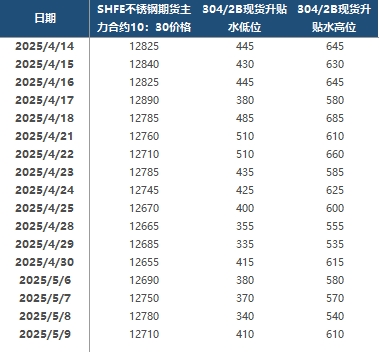
[SMM Daily Review of Stainless Steel Spot Market: Weak Downstream Demand Restricts Price Increase Momentum] SMM reported on May 9 that stainless steel prices rose slightly this week. Affected by the expectations of domestic interest rate cuts and RRR cuts, as well as the Sino-US negotiations, market confidence has somewhat recovered, and spot prices have risen slightly, with some enterprises attempting to raise prices. After the Labour Day holiday, a brief period of concentrated restocking brought a small peak in transactions. However, as the effects of the policies remained unclear, downstream procurement returned to a cautious wait-and-see attitude, and market activity rapidly cooled. Meanwhile, the operating rate of stainless steel mills remained high, while the prices of raw materials such as nickel and chromium continued to weaken. Despite the current low prices of stainless steel, there is still a lack of effective upward momentum. In the futures market, the most-traded 2506 contract rose slightly and then pulled back. At 10:30 a.m., SS2506 was quoted at 12,710 yuan/mt, down 70 yuan/mt from the previous trading day. In the Wuxi region, the spot premiums/discounts for 304/2B stainless steel ranged from 410 to 610 yuan/mt. In the spot market, the cold-rolled 201/2B coils in Wuxi and Foshan were both quoted at 8,050 yuan/mt; the cold-rolled trimmed 304/2B coils had an average price of 13,050 yuan/mt in Wuxi and 13,050 yuan/mt in Foshan; the cold-rolled 316L/2B coils were priced at 23,850 yuan/mt in Wuxi and 23,850 yuan/mt in Foshan; the hot-rolled 316L/NO.1 coils were quoted at 23,050 yuan/mt in both regions; and the cold-rolled 430/2B coils were both priced at 7,500 yuan/mt in Wuxi and Foshan. Currently, the supply side of the stainless steel market remains at highs. Facing the pressure of losses, producers are cutting back on severe losses by...

SMM reported on May 9 that stainless steel prices rose slightly this week. Influenced by the expectations of domestic interest rate cuts and RRR cuts, as well as the Sino-US negotiations, market confidence has somewhat recovered, and spot prices have risen slightly, with some enterprises attempting to raise prices. After the Labour Day holiday, a brief period of concentrated restocking brought a small peak in transactions. However, as the effects of the policies remained unclear, downstream procurement returned to a cautious wait-and-see stance, and market activity rapidly cooled. Meanwhile, the operating rate of stainless steel mills remained high, while the prices of raw materials such as nickel and chromium continued to weaken. Despite the current low prices of stainless steel, there is still a lack of effective upward momentum.

In the futures market, the most-traded contract 2506 rose slightly and then pulled back. At 10:30 a.m., SS2506 was quoted at 12,710 yuan/mt, down 70 yuan/mt from the previous trading day. In the Wuxi region, the spot premiums/discounts for 304/2B stainless steel ranged from 410 to 610 yuan/mt. In the spot market, the cold-rolled 201/2B coils in Wuxi and Foshan were both quoted at 8,050 yuan/mt; the average price of cold-rolled trimmed 304/2B coils was 13,050 yuan/mt in Wuxi and 13,050 yuan/mt in Foshan; the cold-rolled 316L/2B coils were priced at 23,850 yuan/mt in Wuxi and 23,850 yuan/mt in Foshan; the hot-rolled 316L/NO.1 coils were quoted at 23,050 yuan/mt in both regions; and the cold-rolled 430/2B coils were both priced at 7,500 yuan/mt in Wuxi and Foshan.

Currently, the supply side of the stainless steel market continues to fluctuate at highs. Facing the pressure of losses, producers have reduced the production of the heavily loss-making 300-series stainless steel and instead increased the output of 200-series and 400-series products to optimize the steel grade structure. However, influenced by recent policy changes, market uncertainty has significantly increased. Downstream enterprises are generally cautious, with procurement behavior becoming increasingly conservative and consumer demand remaining sluggish. This situation of supply-demand imbalance has become the main constraint on the current development of the stainless steel market.
Data Source Statement: Except for publicly available information, all other data are processed by SMM based on publicly available information, market communication, and relying on SMM's internal database model. They are for reference only and do not constitute decision-making recommendations.

For any inquiries or for more information, please contact: lemonzhao@smm.cn
For more information on how to access our research reports, please contact:service.en@smm.cn
Related News
Raw material prices generally pull back, unable to reverse the narrowing of stainless steel mill profits [SMM Analysis]
Jul 10, 2026 15:31
Raw material prices generally pull back, unable to reverse the narrowing of stainless steel mill profits [SMM Analysis]
Read More
Raw material prices generally pull back, unable to reverse the narrowing of stainless steel mill profits [SMM Analysis]
[SMM Analysis] Raw Material Prices Generally Pull Back, Fail to Alleviate Narrowing Stainless Steel Mill Profits Stainless steel prices and production costs both declined this week, squeezing steel mill profit margins. Using 304 cold-rolled products as the calculation benchmark, the profit margin based on current raw material costs stood at 1.71%, while the margin based on inventory cost accounting was 0.48%. On the nickel-based raw material cost side, high-grade NPI prices exhibited a falling and pulling back trend this week. SS futures continued to pull back during the week, drastically increasing cost pressure on China's stainless steel mills. Coupled with pessimistic market expectations for the near term, the low purchase tender price for high-grade NPI announced by a major stainless steel mill drove a broad decline in psychological price levels for market-wide purchases. However, upstream suppliers maintained a relatively strong willingness to hold prices firm, creating significant divergence between upstream and downstream players, leaving transactions mired in a sluggish pattern. As of this Friday, the imported price including tax for Indonesian high-grade NPI with 10%-12% nickel grades fell by 6 yuan per nickel unit, settling at 1,137 yuan/mtu. In the stainless steel scrap market, stainless steel scrap prices drifted lower this week. Dragged down by the decline in SS futures and mills' low high-grade NPI tender prices, overall market sentiment was pessimistic. Mills adopted a cautious purchasing stance, trading activity remained insufficient, and the price center continued to shift downward. Although stainless steel scrap still held an economic advantage over NPI, this could not offset the impact of sluggish end-use demand and pessimistic expectations. Under the resonance of multiple negative factors, the cost support role failed, and prices are likely to continue consolidating on a weak note in the short term. As of this Friday, mainstream 304 off-cuts prices in Shanghai fell by 250 yuan/mt, with the latest quotation at approximately 10,150 yuan/mt. From the chromium-based raw material cost side, high-carbon ferrochrome prices remained stable this week...
Jul 10, 2026 15:31
SS Weakness and Sluggish Demand: Stainless Steel Scrap Cost Advantages Fail to Counter Pessimistic Expectations [SMM Stainless Steel Scrap Market Weekly Review]
Jul 10, 2026 15:04
SS Weakness and Sluggish Demand: Stainless Steel Scrap Cost Advantages Fail to Counter Pessimistic Expectations [SMM Stainless Steel Scrap Market Weekly Review]
Read More
SS Weakness and Sluggish Demand: Stainless Steel Scrap Cost Advantages Fail to Counter Pessimistic Expectations [SMM Stainless Steel Scrap Market Weekly Review]
[SMM Stainless Steel Scrap Market Weekly Review] SS Weakness and Sluggish Demand: Stainless Steel Scrap’s Cost Advantage Struggles Against Bearish Expectations This week, prices of 304 stainless steel scrap off-cuts in east China pulled back, with a quotation range of 10,100-10,200 yuan/mt; prices for the same grade of stainless steel scrap in the Foshan area also fell back, ranging from 10,000-10,300 yuan/mt. From the raw material cost side analysis, the cost of producing stainless steel entirely from stainless steel scrap is currently about 14,218.64 yuan/mt, while the cost of using high-grade NPI reaches 14,972.65 yuan/mt, still maintaining a large cost spread. This week, stainless steel scrap prices drifted lower. SS futures pulled back throughout the week, with bearish sentiment spreading on the futures side, directly dragging down spot prices of stainless steel products slightly. The weak futures set the overall market tone. On the spot side, mainstream stainless steel mills adopted a cautious approach due to higher production costs and uncertain market outlook, as their published high-grade NPI tender prices were low, further weighing on sentiment in the nickel-based raw material and scrap markets. As a result, some stainless steel mills suspended purchases of stainless steel scrap during the week, market buying interest weakened noticeably, overall trading was subdued, and the price center of stainless steel scrap continued to shift lower. Overall, the cost advantage struggled to offset the suppression from bearish market expectations. This week, stainless steel scrap still held a significant economic advantage over high-grade NPI, and the cost substitution logic has not reversed, providing some bottom support for scrap prices. However, overall market sentiment remains weak, steel mill cost pressure…
Jul 10, 2026 15:04
[SMM Analysis] Futures Wild Swings and Sluggish Off-Season Trading Accelerate Stainless Steel Inventory Buildup
Jul 10, 2026 14:46
[SMM Analysis] Futures Wild Swings and Sluggish Off-Season Trading Accelerate Stainless Steel Inventory Buildup
Read More
[SMM Analysis] Futures Wild Swings and Sluggish Off-Season Trading Accelerate Stainless Steel Inventory Buildup
[SMM Analysis] Futures Wild Swings and Sluggish Off-Season Trading Accelerate Stainless Steel Inventory Buildup
[SMM Analysis] Futures Wild Swings and Sluggish Off-Season Trading Accelerate Stainless Steel Inventory Buildup SMM July 9 – This week, the pace of stainless steel social inventory buildup quickened, with the increase in core market inventory widening and inventory pressure becoming increasingly evident. Total inventory in the two core markets, Wuxi and Foshan, continued to rise, from 935,400 mt on July 2, 2026 to 943,700 mt on July 9, up 0.89% WoW, further reinforcing the off-season accumulation trend. This week, the stainless steel market remained in the traditional consumption off-season, with persistently weak end-user rigid demand and a marked acceleration in inventory buildup. During the week, SS futures were dominated by liquidity-driven disturbances, retreating after rapid rises amid wild swings. These futures fluctuations repeatedly unsettled spot market sentiment, with only sporadic concentrated transactions occurring and extremely poor sustainability; the market quickly reverted to the mediocre off-season trading activity. Meanwhile, major stainless steel mills ended their earlier efforts to hold prices firm and proactively lowered market guidance prices, further weakening overall bullish sentiment. Downstream end-users grew more cautious, with purchase willingness remaining subdued, sharply reducing the destocking efficiency of spot cargo. On the supply side, although the industry’s monthly production schedule pulled back somewhat, marginally easing the pressure of cargo release, this was insufficient to offset the bearish impact of significantly weaker off-season demand. The supply-demand mismatch intensified, ultimately driving the accelerated accumulation of stainless steel social inventories this week. Overall, the core factors behind the accelerated inventory buildup this week were wild swings in futures unsettling market sentiment, steel mills backing away from price support dampening spot confidence, and persistently sluggish end-user transactions in the off-season. ……
Jul 10, 2026 14:46