Dysprosium and Terbium Supplies Are Tight Overseas, Price Spread Between Rare Earths at Home and Abroad Widens [[SMM Analysis]]

Published: May 06, 2025 16:33 (GMT+8)
[SMM Analysis: Overseas Supply of Dysprosium and Terbium is Tight, Price Spread Between Domestic and Overseas Rare Earths Widens] On April 4, 2025, the Ministry of Commerce and the General Administration of Customs jointly issued an announcement to implement export controls on seven categories of medium-heavy rare earth-related items, including samarium, gadolinium, terbium, and dysprosium, covering various forms such as metals, alloys, and permanent magnet materials. As the dominant force in the global rare earth supply chain, China controls approximately 85% of the global smelting capacity. These controls directly led to an expansion of the supply gap for medium-heavy rare earths in overseas markets, with key varieties such as dysprosium and terbium being significantly affected.

SMM News on April 18: On April 4, 2025, the Ministry of Commerce and the General Administration of Customs jointly issued an announcement to implement export controls on seven categories of medium-heavy rare earth-related items, including samarium, gadolinium, terbium, and dysprosium, covering various forms such as metals, alloys, and permanent magnet materials.

As the dominant force in the global rare earth supply chain, China controls approximately 85% of the global smelting capacity. This control directly led to an expansion of the supply gap for medium-heavy rare earths in overseas markets, particularly affecting key varieties such as dysprosium and terbium. Developed countries like the US, Europe, Japan, and South Korea have a high degree of dependence on China's supply of medium-heavy rare earths. For example, 70% of the rare earths imported by the US come from China. As of now, within one month after the implementation of rare earth export controls, overseas prices for medium-heavy rare earths have surged rapidly. In the past month, the price of dysprosium oxide in Europe has nearly tripled, while the price of terbium oxide has more than doubled. However, domestic prices for dysprosium and terbium have remained stable, further widening the price spread between domestic and overseas markets.
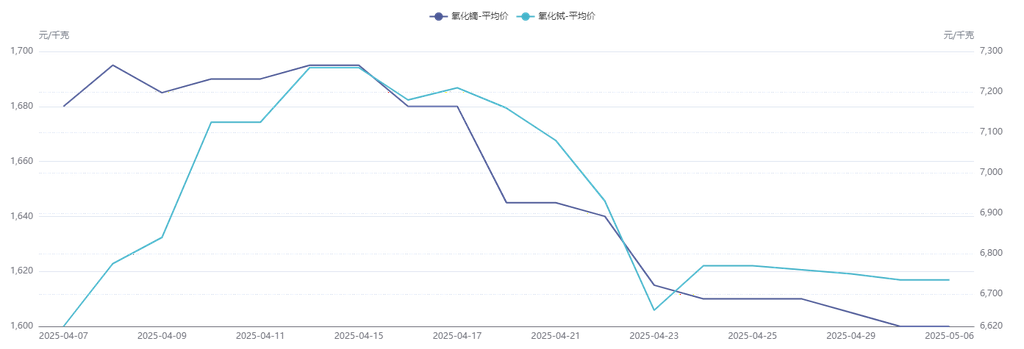
According to the SMM survey, some industry participants have high expectations for domestic dysprosium and terbium prices, believing that the sustained rise in overseas prices in the short term may spill over to the domestic market. Moreover, the current supply of rare earth ores from Myanmar remains very limited, and with the arrival of the rainy season in Southeast Asia, the domestic supply of medium-heavy rare earths may also decline. From the perspective of upstream producers, the domestic medium-heavy rare earth market may face a situation of weak supply and demand in the short term. Enterprises need to pay attention to the issuance of smelting and separation indicators as well as their own production rhythms. From the demand side, restrictions on the export of high-performance NdFeB permanent magnets may affect the international high-end manufacturing supply chain. However, it is worth noting that domestic policy-driven development of end-use industries may continue to drive the growth in demand for NdFeB, which will support the supply-demand balance of rare earth products.
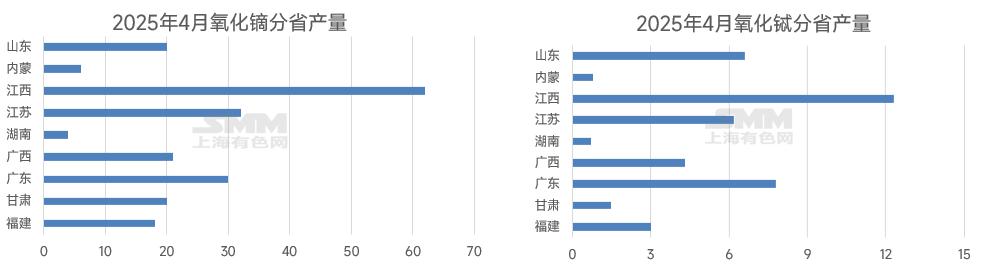
Considering all aspects, China still holds a dominant position in rare earths through its capacity and technological advantages. The reconfiguration of overseas supply chains may spur breakthroughs in alternative or recycling technologies, but it will be difficult to change China's dominant position in the short term. The supply shortage and price increases for dysprosium and terbium have become inevitable in the short term.

》Apply for a Free Trial of SMM Metal Industry Chain Database
Data Source Statement: Except for publicly available information, all other data are processed by SMM based on publicly available information, market communication, and relying on SMM's internal database model. They are for reference only and do not constitute decision-making recommendations.

For any inquiries or for more information, please contact: lemonzhao@smm.cn
For more information on how to access our research reports, please contact:service.en@smm.cn
Related News
SMM Rare Earth Afternoon Trading Comment on October 16
2 hours ago
SMM Rare Earth Afternoon Trading Comment on October 16
Read More
SMM Rare Earth Afternoon Trading Comment on October 16
2 hours ago
【SMM Analysis】Costs climb, quotes stall as PrNd metal margins slip back into the red
3 hours ago
【SMM Analysis】Costs climb, quotes stall as PrNd metal margins slip back into the red
Read More
【SMM Analysis】Costs climb, quotes stall as PrNd metal margins slip back into the red
Praseodymium-neodymium (PrNd) metal prices in China held near recent highs this week, edging higher before flattening out. As of October 16, PrNd metal was quoted at RMB 895,000-900,000/t on a delivered basis including 13% VAT, having touched RMB 903,000/t during the week. The weekly average of RMB 898,400/t was up just 0.10% from the previous week, based on the midpoint of daily high and low quotes.
3 hours ago
Prices outside China remained stable this week, with approvals and mergers progressing on the resource side [SMM Rare Earth Ex-China Weekly Review]
3 hours ago
Prices outside China remained stable this week, with approvals and mergers progressing on the resource side [SMM Rare Earth Ex-China Weekly Review]
Read More
Prices outside China remained stable this week, with approvals and mergers progressing on the resource side [SMM Rare Earth Ex-China Weekly Review]
Ex-China rare earth prices were largely stable this week, with only terbium oxide, terbium metal, and cerium oxide edging lower, while other products consolidated in a narrow range and actual transaction volumes were sluggish. On the resource side, Greenland's Tanbreez mining plan was approved through 2050, the US Colosseum mine faced a judicial delay, and Australia's Jupiter finalized its first indicated resources. Indonesia initiated cooperation talks on rare earths and phosphates with Gabon and Congo Republic. In terms of supply reshaping, Lynas acquired Meteoric for AUD 968 million, securing Brazil's largest ionic clay project, while Arafura raised the five-year offtake annual NdPr supply from the Nolans project to 850 mt. Midstream, the Japanese JV at Lofdal in Namibia is expected to complete approvals within 30 days, and Chile's Aclara molten salt electrolysis metallization demonstration plant commenced production, gradually filling the gaps in Western rare earth processing capabilities.
3 hours ago