

Technical Sharing: Manufacturing and Applications of High-Temperature, High-Strength, and High-Conductivity Copper Alloys [[SMM Copper Conference]]
On April 24, during the **CCIE-2025 SMM (20th) Copper Industry Conference & Expo – High-Quality Development Forum for Copper-Based New Materials**, co-hosted by **SMM Information & Technology Co., Ltd. (SMM)**, **SMM Metal Exchange Center**, and **Shandong AIS Information Technology Co., Ltd.**, with **Jiangxi Copper Corporation** and **Yingtan Port Holding Co., Ltd.** as chief sponsors, **Shandong Humon Smelting Co., Ltd.** as a special co-organizer, and **Xinhuang Group** and **Zhongtiaoshan Nonferrous Metals Group Co., Ltd.** as co-organizers, **Prof. Chang Yongqin, a doctoral supervisor from the University of Science and Technology Beijing**, shared insights on the manufacturing and applications of high-temperature-resistant, high-strength, and high-conductivity copper alloys.
**Industry Challenges and Current Status**
**High-Strength, High-Conductivity Copper Alloy Applications**
High-strength, high-conductivity copper alloys combine high strength with excellent electrical/thermal conductivity. They are primarily used in electronics, aviation, aerospace, NEVs, high-speed rail, power transmission, and other fields.
**Industry Challenges and Current Status**
**Pain Points**: Existing commercial high-strength, high-conductivity copper alloys experience significant drops in strength, fracture toughness, and severe high-temperature creep deformation when operating temperatures rise, failing to meet service requirements.
**Critical Needs**: Rapid advancements in nuclear fusion devices, continuous casting crystallisers, IC lead frames, NEV connectors, high-speed rail contact wires, and rocket combustion chamber liners urgently require enhanced high-temperature performance of these alloys, posing a "bottleneck" challenge.
**A. No Materials Meet Design Requirements**
**Performance Requirements**: High strength, thermal conductivity, elongation, thermal stability, neutron irradiation resistance, and low tritium retention.
**Pain Point**: Elevated service temperatures cause drastic reductions in strength, fracture toughness, and severe creep deformation, failing to meet component design needs.
**B. Existing Products Require Upgrades**
**R&D Needs**: Development of copper alloys with high strength, thermal conductivity, stability, and creep resistance at elevated temperatures.
**Pain Point**: Rising currents in NEV connectors increase material heating and operational temperatures, leading to degraded alloy performance and creep deformation, which cannot meet service demands.
**Projected Demand**: Domestic NEV connector demand for copper alloys is expected to reach **291,000 mt** by 2025, with a CAGR of 21.9% from 2021-2025. NEV connectors alone will require **247,000 mt** of copper alloys by 2025.
**Requirements**: High electrical conductivity and anti-aging performance at high temperatures are critical to ensure reliable operation, safety, extended lifespan, efficiency, and cost reduction.
**Melting Process for High-Temperature-Resistant, High-Strength, High-Conductivity Copper Alloys**
**Potential Customers**: Fusion reactor divertors, continuous casting crystallisers, rocket combustion liners, NEV connectors, IC lead frames, and resistance welding electrodes.
**R&D Breakthroughs**: The developed alloy addresses the urgent need for high-performance heat sink materials in fusion reactors and offers broad applications in industries like crystallisers, rocket liners, and NEVs, with significant market potential.
**Core Technologies**:
1. Precise control of element volatilization/loss via optimized vacuum melting parameters.
2. Thermomechanical processing tailored to composition for microstructure/performance control.
3. Innovative "multi-riser" mold design to improve yield.
**Composition Optimization Advantages**
**Objective**: Achieve high strength, electrical/thermal conductivity, and adequate plasticity at elevated temperatures.
**Challenge**: Balancing strength and electrical/thermal conductivity.
**Solution**: Composition design and thermomechanical processing to impede dislocation/grain boundary movement, ensuring stable microstructure and performance at high temperatures.
**Innovations**:
1. **Multi-functional alloying elements**: High-temperature solid solubility in copper, low-temperature precipitation of high-melting-point phases, reduced stacking fault energy (promoting twinning).
2. **Element coupling**: Combined V and Ti additions form stable Laves phases, enhancing high-temperature performance while minimizing conductivity loss.
3. **RE oxide additions**: Multicomponent interactions strengthen, toughen, and purify the alloy.
4. **Second-phase refinement**: Bimodal nano-precipitates form coherent/semi-coherent structures with the matrix, blocking dislocations; uniformly distributed Laves phases at grain boundaries impede grain motion.
5. **Low-Σ grain boundaries**: Introducing low-Σ (coincidence site lattice) boundaries improves machinability and plasticity.
**Synergistic enhancement of high-temperature strength and thermal conductivity achieved.**
**2.1 High-Temperature-Resistant, High-Strength, High-Conductivity Copper Alloy – CuCrZrTiV**
- **Elevated temperature performance**: Service temperature exceeds C18150 by 100°C; lifespan at 450°C is 9× longer.
- **Mid-temperature brittleness resolved**.
- **Excellent irradiation resistance**: Post-3 dpa Cu ion irradiation, only 5 nm faulted tetrahedra and 3.5 nm dislocation loops observed.
- **450°C/50 MPa creep rate: 2.89×10⁻¹⁰ s⁻¹; 450°C tensile strength: 371 MPa (14.6% elongation); thermal conductivity >300 W/m·K; superior thermal stability vs. IG-CuCrZr.**
Additional alloys discussed: CuCrZrHf (anti-creep) and CuHfSc (ultra-high conductivity).
**Mastered Core Technologies**
**Key Products**: High-temperature-resistant, high-strength, high-conductivity copper alloys.
**Validation**: 50 kg batch production and testing completed; deployed in ITER and continuous casting crystallisers.
**Powder Metallurgy Process for High-Temperature-Resistant Alloys**
**3.1 Ultra-High-Strength Cu-W Alloy**
- Room-temperature tensile strength ≥795 MPa; 450°C strength ≥289 MPa; softening temperature >1050°C (near copper’s melting point); no hardness degradation after 700°C/400 h annealing.
**Innovation**: Achieved record-high strength (795 MPa) with excellent thermal stability.
**3.2 Ultra-High-Temperature Ta-Series Alloy**
- CuTaZrY softening temperature exceeds 850°C (GlidCop-Al15 baseline) by ≥200°C.
**Stability Mechanism**: Bimodal shell-core nano-precipitates pin grain boundaries and dislocations.
**Conclusions**
1. **CuCrZrTiV alloy**: 450°C tensile strength reaches 395 MPa (exceeding IG-CuCrZr), with 600°C softening temperature (200°C higher than IG-CuCrZr) and resolved mid-temperature brittleness.
2. **CuCrZrHf alloy**: Balances thermal stability, conductivity, and creep resistance.
3. **CuHfSc alloy**: 623 MPa room-temperature strength, 95% IACS conductivity.
4. **Cu-W alloy**: 795 MPa strength (highest reported) with ductility and conductivity superior to existing PM copper alloys.
5. **CuTaZrY alloy**: Highest-reported softening temperature (>1050°C), 200°C above GlidCop-Al15, with high strength and thermal conductivity.
**View the CCIE-2025 SMM (20th) Copper Industry Conference & Expo Feature Report**
Data Source Statement: Except for publicly available information, all other data are processed by SMM based on publicly available information, market communication, and relying on SMM‘s internal database model. They are for reference only and do not constitute decision-making recommendations.
For any inquiries or to learn more information, please contact: lemonzhao@smm.cn
For more information on how to access our research reports, please contact:service.en@smm.cn
Related News
2 hours ago
"Fluctuating Copper Prices and Tight Supply Squeeze Secondary Copper Industry, Pressuring Upstream and Downstream"
Read More
"Fluctuating Copper Prices and Tight Supply Squeeze Secondary Copper Industry, Pressuring Upstream and Downstream"
This week, against the backdrop of fluctuating upward copper prices, the secondary copper industry chain showed a complex situation in which extremely tight upstream raw material supply coexisted with persistent negative margins for downstream finished products. In the secondary copper rod market, SMM data showed that the operating rate fell further to 5.45% this week, down 0.38 percentage points MoM and 25.43 percentage points YoY
2 hours ago
Apr 3, 2026 19:10
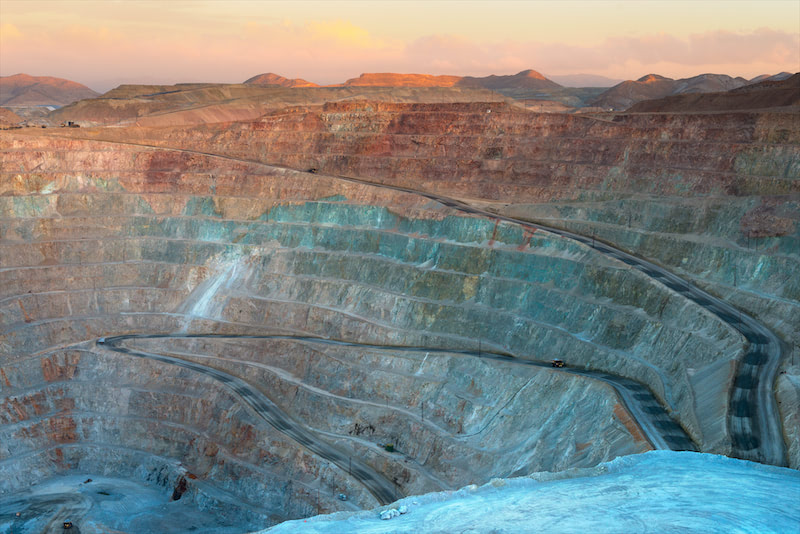
Chile's Water Crisis Threatens Atacama's Copper and Lithium Mining Amid 14-Year Drought
Read More
Chile's Water Crisis Threatens Atacama's Copper and Lithium Mining Amid 14-Year Drought
Chile’s most pressing crisis at present is the issue of water resources. The Atacama Desert in Chile is one of the driest regions in the world and also the core area for copper and lithium ore extraction. The local area has experienced a drought for as long as 14 years, and reservoir storage has fallen to only about 30%. For miners, water resources are not a secondary issue, but an indispensable key production factor in such processes as ore processing, dust suppression, and equipment cooling. The decline in ore grade has further exacerbated the predicament
Apr 3, 2026 19:10

Apr 3, 2026 19:09
Trump Adjusts Metal Tariffs, Applies 50% Rate to Consumer Prices Under Section 232, Details Unclear
Read More
Trump Adjusts Metal Tariffs, Applies 50% Rate to Consumer Prices Under Section 232, Details Unclear
US President Trump adjusted the national security tariffs on imports of steel, aluminum, and copper, lowering the tariff rates on derivative products made from these metals, streamlining compliance procedures, and preventing the declared value of imports from being understated.A senior Trump administration official said that, under a proclamation signed by Trump, the US would continue to maintain a 50% import tariff on imports of metal commodities such as steel, aluminum, and copper pursuant to Section 232 of the Trade Act of 1974, but would apply this rate to the price paid by US consumers. It is currently unclear how the selling price—and the resulting tariffs—would be determined.
Apr 3, 2026 19:09
Related News
"Fluctuating Copper Prices and Tight Supply Squeeze Secondary Copper Industry, Pressuring Upstream and Downstream"
Apr 05, 2026 02:04
Chile's Water Crisis Threatens Atacama's Copper and Lithium Mining Amid 14-Year Drought
Apr 03, 2026 19:10
Trump Adjusts Metal Tariffs, Applies 50% Rate to Consumer Prices Under Section 232, Details Unclear
Apr 03, 2026 19:09

Barrick Confirms 2028 Production Target for Reko Diq Copper-Gold Project in Pakistan Despite Budget Concerns
Apr 03, 2026 19:08