South Africa's mining production fell by 9.6% in February, which may impact the GDP in Q1 2025.

Published: Apr 25, 2025 11:52
According to data from Statistics South Africa, the country's mining production in February plummeted by 9.6%, indicating a concerning performance for the mining sector in Q1, which may negatively impact the actual GDP in the first quarter of this year.

According to data from Statistics South Africa, the country's mining production fell sharply by 9.6% in February, signaling a worrying performance for the mining sector in Q1, which may negatively impact the actual GDP for the first quarter of the year.

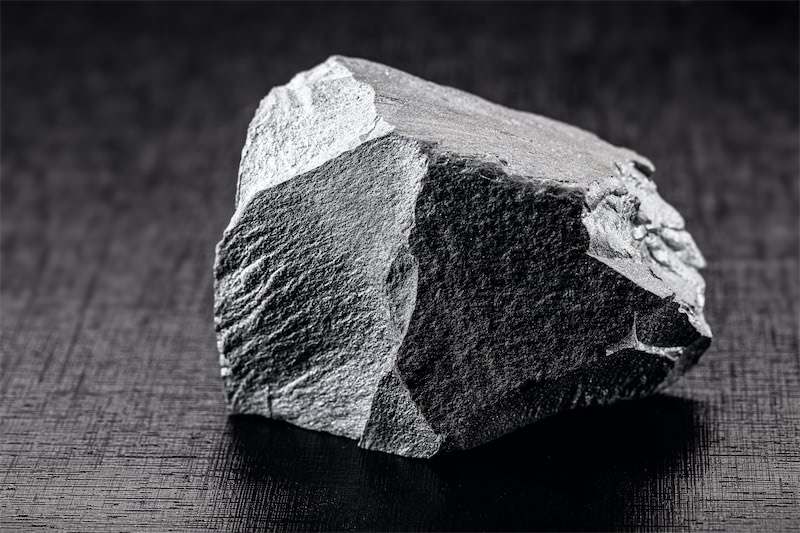
The data indicates that the overall decline in production was mainly due to a nearly 24% drop in platinum group metals (PGM) production and a more than 10% decrease in iron ore production. Following a 2.7% contraction in mining production in January, both mining production and its contribution to actual GDP are expected to decline in Q1 2025. Hugo Pienaar, chief economist at the Minerals Council South Africa, noted that although March production data has not yet been released, the January and February data already show a significant quarterly decline in mining production in the first quarter of 2025, and mining will have a major negative impact on actual GDP in the first quarter.

It is worth noting that despite the low prices of most commodities in 2024, the mining industry still made an important contribution to South Africa's GDP, accounting for about 6% (R433 billion). Last year, total mineral exports exceeded R774 billion, with significant tax contributions.

In the PGM sector, which is the largest employer group in South Africa's mining industry, production cuts are being made to adapt to an uncertain demand environment. However, since 2025, the rand prices of platinum, palladium, and rhodium have risen due to the expected slowdown in EV adoption outside China, which has provided some breathing space for PGMs used in internal combustion engine vehicles. However, tariff uncertainties have made major producers reluctant to increase production in the short term.

In terms of iron ore production, the decline is attributed to production cuts and business restructuring by companies such as Kumba Iron Ore, mainly due to rail transport constraints affecting exports rather than changes in market demand. As a subsidiary of Anglo American, one of the world's largest iron ore producers, the company has revised its production forecast for this year from the previous 39-41 million mt to 35-37 million mt. Efforts are being made to improve rail transport, but tangible results will take time. Ore producers have proposed granting third-party access to the lines of South Africa's state-owned transport group.

On a monthly basis, production declined in 9 out of 12 mining subcategories in February. Annabel Bishop of Investec stated that concerns about global economic growth triggered by US tariffs have negatively impacted commodity prices and related currencies, with the rand exchange rate also affected, further influencing fuel and food prices. However, given that South Africa's economy is driven by consumption growth and has a wide range of trading partners, the domestic economy is not expected to fall into recession.

Data Source Statement: Except for publicly available information, all other data are processed by SMM based on publicly available information, market communication, and relying on SMM‘s internal database model. They are for reference only and do not constitute decision-making recommendations.

For any inquiries or to learn more information, please contact: lemonzhao@smm.cn
For more information on how to access our research reports, please contact:service.en@smm.cn
Related News
Vietnam Imposes 27.83% Temporary Tariff on Certain Chinese Hot-Rolled Steel Products
Apr 3, 2026 18:40
Vietnam Imposes 27.83% Temporary Tariff on Certain Chinese Hot-Rolled Steel Products
Read More
Vietnam Imposes 27.83% Temporary Tariff on Certain Chinese Hot-Rolled Steel Products
On April 2, the Ministry of Industry and Trade issued Decision No. 612/QD-BCT, imposing a temporary anti-circumvention tariff of up to 27.83% on certain hot-rolled steel products from China. The measure applies to specific flat-rolled steel products (alloy or non-alloy), with thicknesses of 1.2–25.4mm and widths between 1,880mm and 2,300mm, that have not been further processed beyond hot rolling.
Apr 3, 2026 18:40
Risks in the Ferrous Metals Sector Began to Accumulate [SMM Steel Industry Chain Weekly Report]
Apr 3, 2026 18:25
Risks in the Ferrous Metals Sector Began to Accumulate [SMM Steel Industry Chain Weekly Report]
Read More
Risks in the Ferrous Metals Sector Began to Accumulate [SMM Steel Industry Chain Weekly Report]
This week, ferrous metals were in the doldrums. The main logic during the week remained weakening cost support. On Tuesday, Iran proposed charging transit fees for the Strait of Hormuz, while Trump made conciliatory remarks, saying that “even if the Strait of Hormuz remained largely closed, he would still be willing to end military action against Iran.” Market expectations for tighter crude oil supply weakened, and declines in the energy sector dragged down the coal sector, weakening the cost-side logic. During the week, inventories of the five major steel products continued to decline, but apparent demand remained at a low level for the same period in previous years, providing limited fundamental-driven momentum to futures. In the spot market, purchasing interest was average, mainly focused on restocking at low prices. Spot prices were relatively firm, and the spot-futures price spread widened somewhat......
Apr 3, 2026 18:25
MMi Daily Iron Ore Report (April 3)
Apr 3, 2026 18:23
MMi Daily Iron Ore Report (April 3)
Read More
MMi Daily Iron Ore Report (April 3)
Today, the DCE iron ore fluctuated in the doldrums, with the most-traded contract I2605 eventually closing at 799.5 yuan/mt, down 0.50% from the previous trading session. Spot prices fell by about 2-5 yuan from the previous trading day. Traders were moderately active in offering quotes, while steel mills mainly restocked to meet rigid demand; as of now, spot market transactions were mediocre.
Apr 3, 2026 18:23