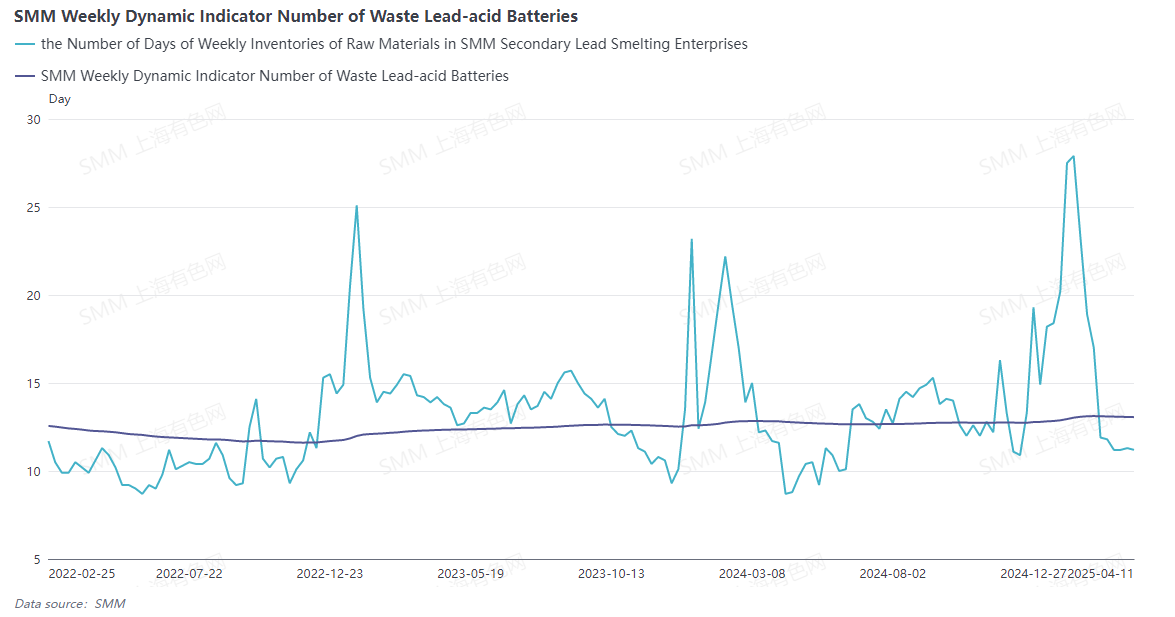
В апреле Китай остается в традиционном непиковом сезоне потребления свинцово-кислотных аккумуляторов. В то же время объем утилизации свинцово-кислотных аккумуляторов невелик, что приводит к дефициту сырья на рынке. По словам одной из плавилен в основном производственном регионе вторичного свинца, закупочная цена была повышена дважды на этой неделе, однако объем поставок составил всего два грузовика. Индекс напряженности запасов сырья SMM показывает, что количество дней запасов сырья на неделе для предприятий по плавке вторичного свинца примерно на два дня ниже динамического среднего значения.
Однако среди предприятий по плавке вторичного свинца не наблюдается широкой готовности к активному сокращению производства. Лишь несколько предприятий в провинциях Цзянси, Аньхой, Чжэцзян и Хэбэй отметили небольшое снижение объемов производства две недели назад. Некоторые компании указали, что сокращение производства приведет к росту производственных затрат, а полная остановка производства непосредственно повлечет за собой потери в связи с оплатой труда.
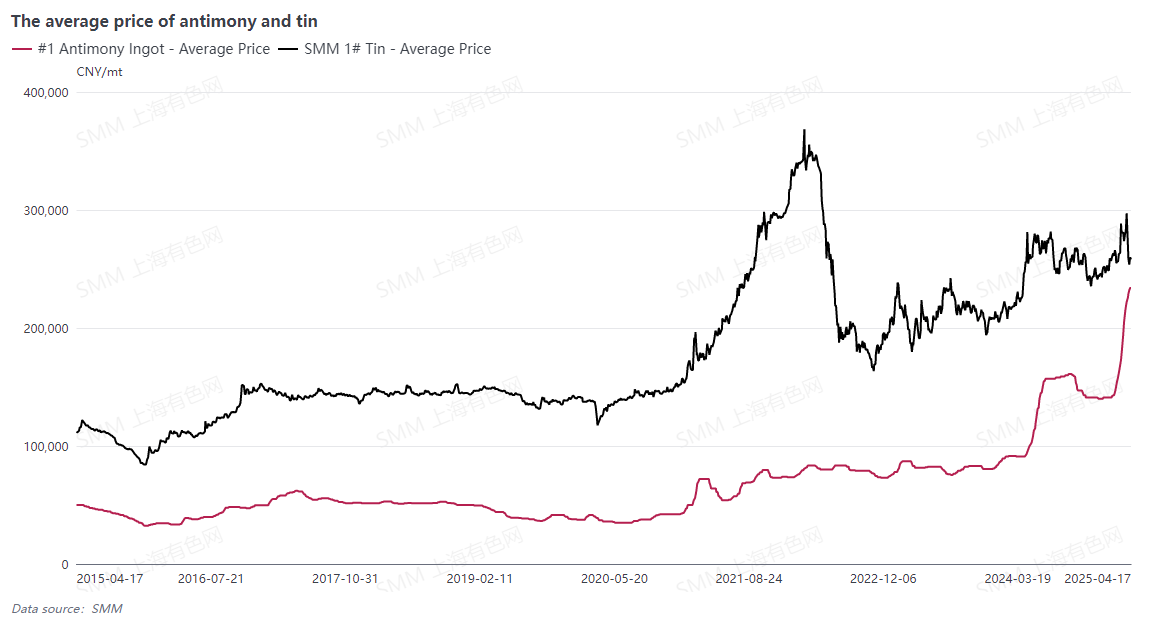
Кроме того, в последнее время цены на такие металлы, как сурьма и олово, остаются высокими. Предприятия по плавке вторичного свинца, осуществляющие комплексную переработку различных металлов, заявили, что текущий доход от побочной продукции едва может компенсировать убытки от плавки свинца. Если цена на свинец продолжит снижаться, а цена на утилизированные аккумуляторы продолжит расти, что приведет к росту убытков, которые не могут быть компенсированы доходом от побочной продукции, они рассмотрят возможность сокращения производства или остановки производства для проведения технического обслуживания.
Приближается праздник Первого мая, и ожидается, что производители аккумуляторов на нижнем уровне цепочки поставок запасутся сырьем до праздника. Однако рынок относительно пессимистично настроен в отношении масштабов их запасов. В предыдущие годы производители свинцово-кислотных аккумуляторов обычно брали отпуск на 2-3 дня во время праздника Цинмин. Однако в этом году большинство компаний взяли отпуск на 5-7 дней, а некоторые компании, которые взяли отпуск, еще не возобновили нормальное производство. SMM узнала, что многие производители свинцово-кислотных аккумуляторов на нижнем уровне цепочки поставок, как ожидается, сократят производство во время праздника Первого мая. В частности, одна из плавилен в Южном Китае заявила, что некоторые из ее клиентов на нижнем уровне цепочки поставок возьмут отпуск как минимум на 7 дней. Если большое количество компаний на нижнем уровне цепочки поставок возьмут отпуск, это неизбежно повлияет на производственный энтузиазм плавилен.
Таким образом, хотя в настоящее время среди предприятий по плавке вторичного свинца не наблюдается широкого активного сокращения производства, сочетание дефицита сырья, давления убытков и потенциального давления накопления запасов после того, как компании на нижнем уровне цепочки поставок возьмут отпуск, может вынудить предприятия по плавке вторичного свинца пассивно сократить объемы производства. Учитывая ожидаемое снижение как предложения, так и спроса на свинцовые слитки, внутренние цены на свинец, вероятно, останутся под давлением в краткосрочной перспективе и вряд ли продемонстрируют значительное восстановление, обусловленное фундаментальными факторами.
![Быки сокращают позиции, ночные фьючерсы на свинец упали на обеих сессиях [Утренний обзор рынка свинца SMM]](https://imgqn.smm.cn/usercenter/qnyHQ20251217171721.jpeg)
![Краткосрочные медвежьи факторы сходятся на ценах на свинец, в фокусе — ход возобновления производства на предприятиях вторичного свинца [Протокол утреннего совещания SMM по свинцу]](https://imgqn.smm.cn/usercenter/ojSqv20251217171720.jpeg)
![Цены на свинец немного выросли, затем откатились под давлением, колеблясь ниже дневной средней линии во второй половине торговой сессии [Краткий комментарий по фьючерсам на свинец]](https://imgqn.smm.cn/usercenter/lIHfM20251217171721.jpeg)