At the CLNB 2025 (10th) New Energy Industry Chain Expo - New Energy Industry Special Session hosted by SMM Information & Technology Co., Ltd. (SMM), Jing Zhang, an expert in automotive parts and PD batteries at Henkel Adhesives, shared insights on the topic of "Perspectives and Challenges on Sustainable, Circular, and Safe Batteries in Europe."

Europe's Path to Sustainable Development
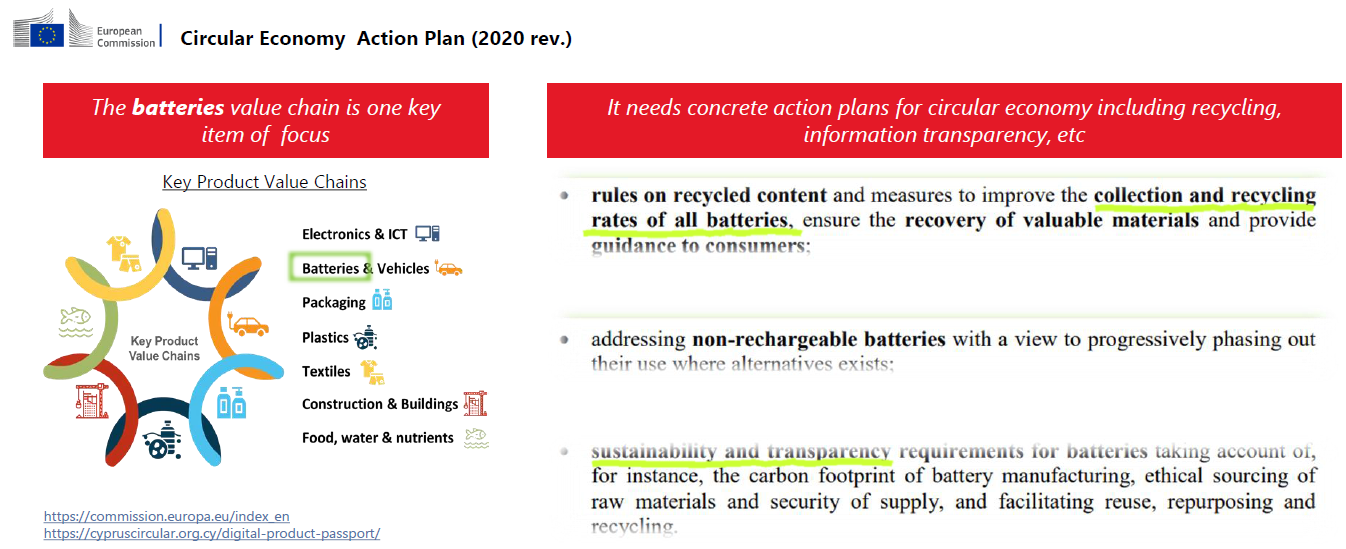
EU Circular Economy Action Plan
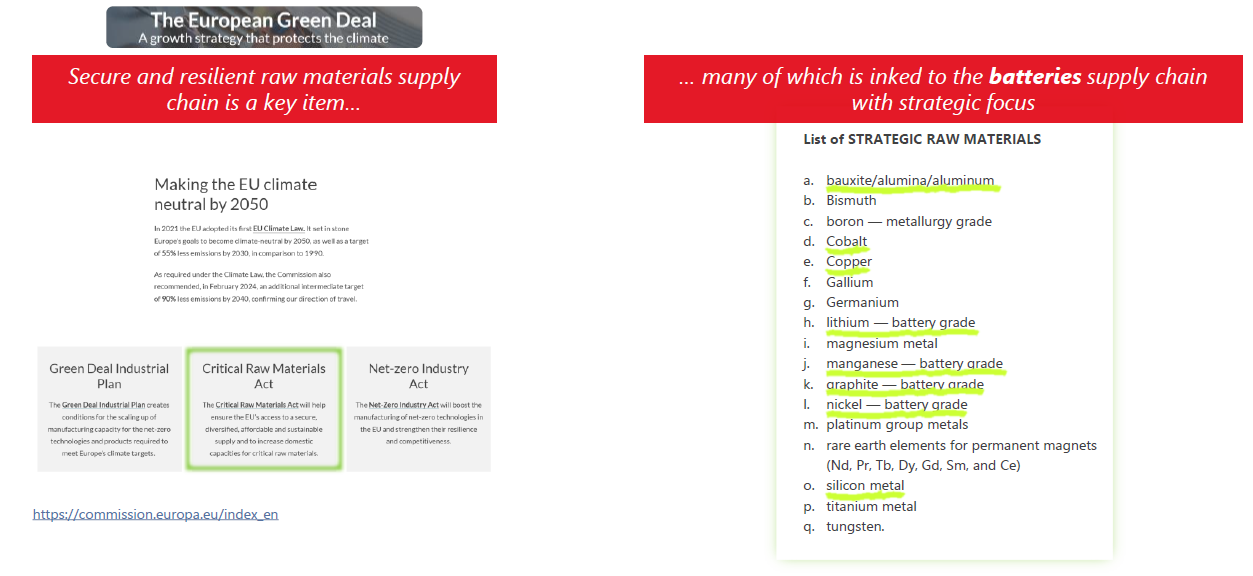
European Green Deal and Critical Raw Materials Act
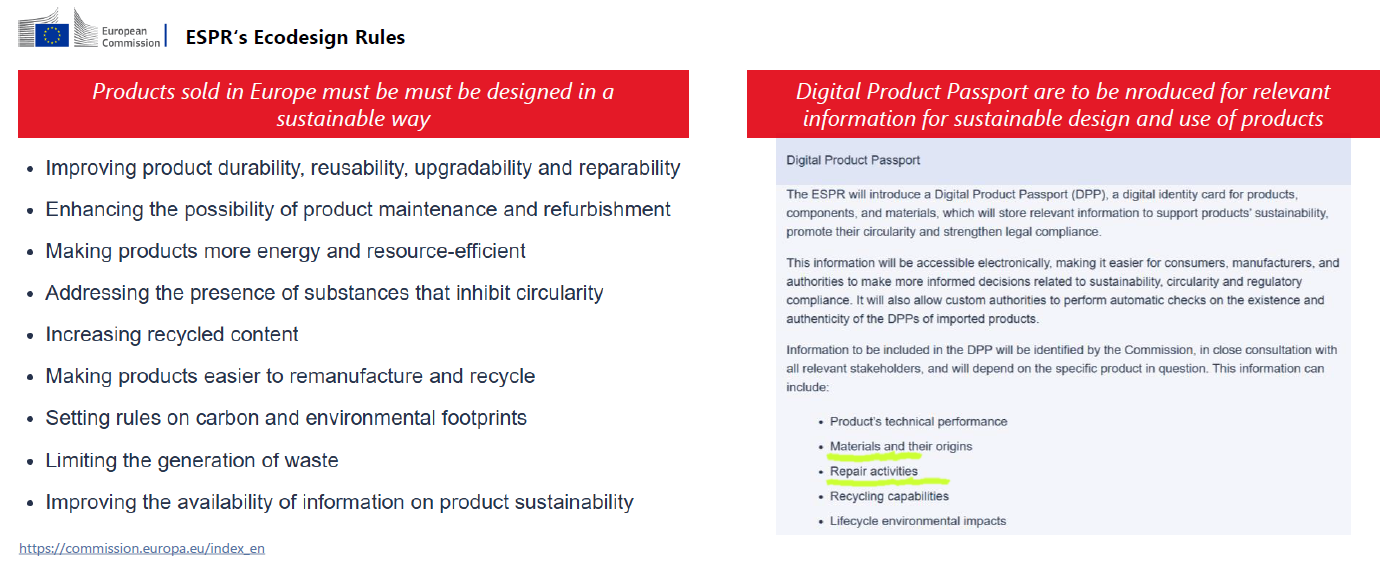
Ecodesign for Sustainable Products Regulation (ESPR)
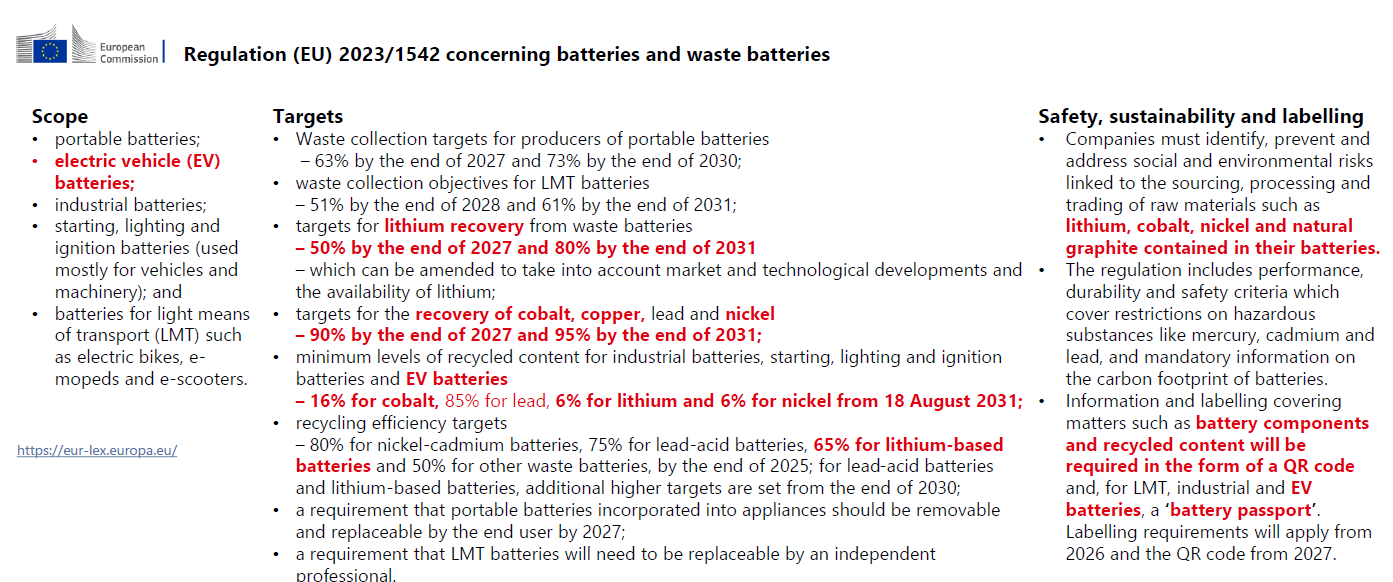
EU Battery Regulation
Challenges in Battery Innovation
From Module to Pack Design
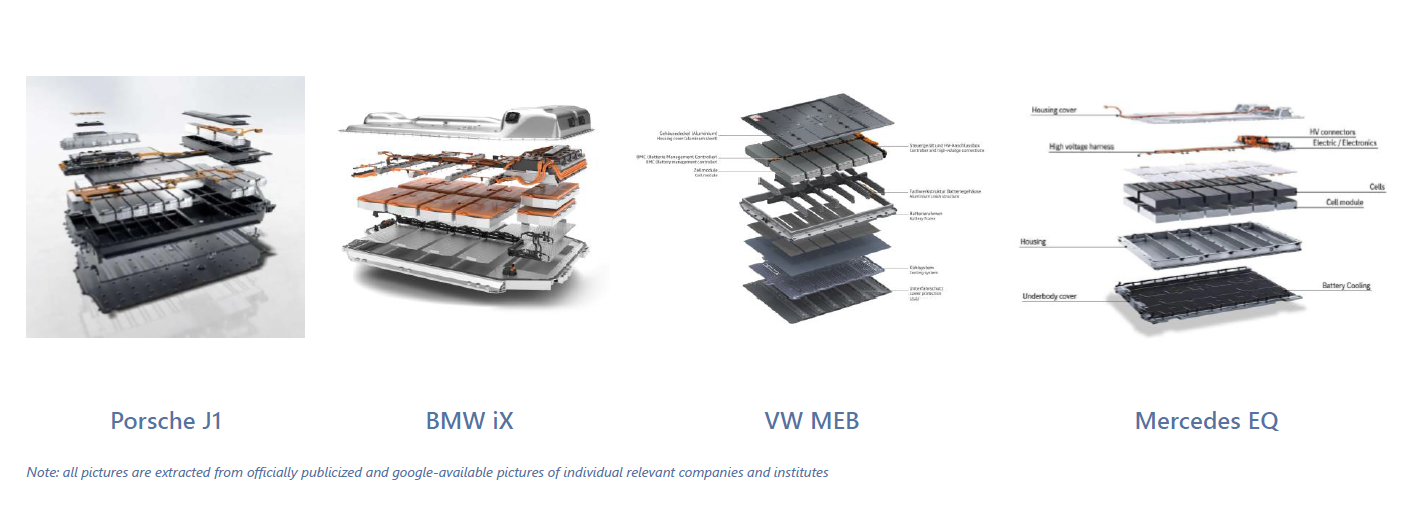
Batteries Can Be Easily Repaired by Replacing Modules
Battery Cell to Battery Pack/Auto Body/Chassis Design
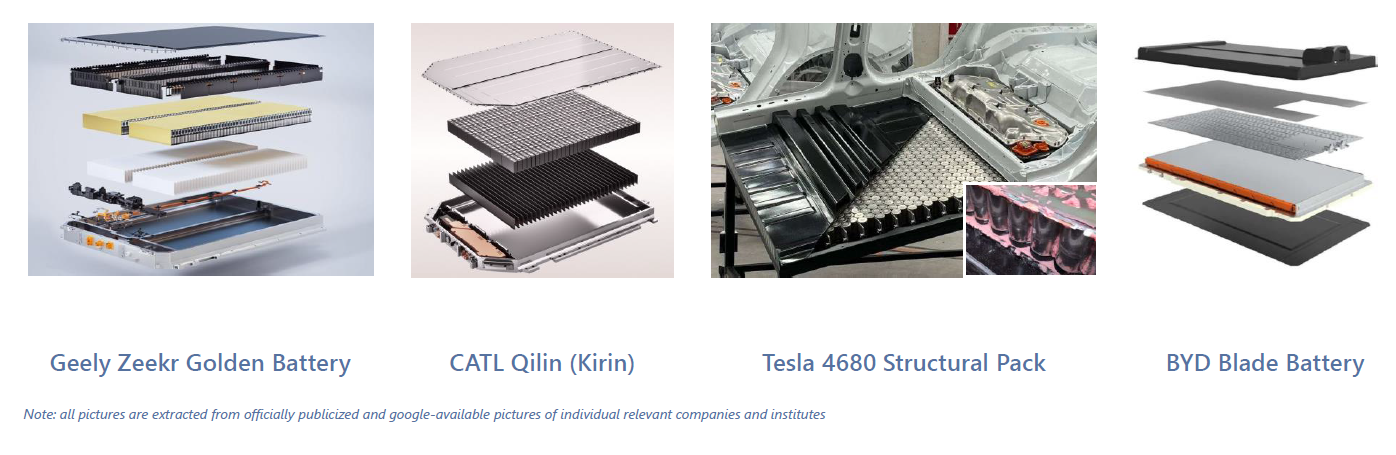
Batteries, due to their direct connection method, are difficult to repair. Therefore, the repairability of batteries is currently a fundamental and critical issue in the development of NEVs.
Debonding, Facilitating Sustainable Mobility
Leading Position of Adhesive Technology in Various Industries and Technical Fields
Mobility and Electronics Industry:Applicable to automotive OEMs and components, electric mobility, metal coils, electronics, semiconductor packaging, aerospace, industrial assembly, etc.;
Packaging and Consumer Goods:Food and beverage, hygiene, metal and flexible packaging, sports and fashion.
Craftsmen, Construction, and Professionals:DIY, craftsmen, construction, engineered wood, professional users in manufacturing and maintenance.
H-TDL Solutions
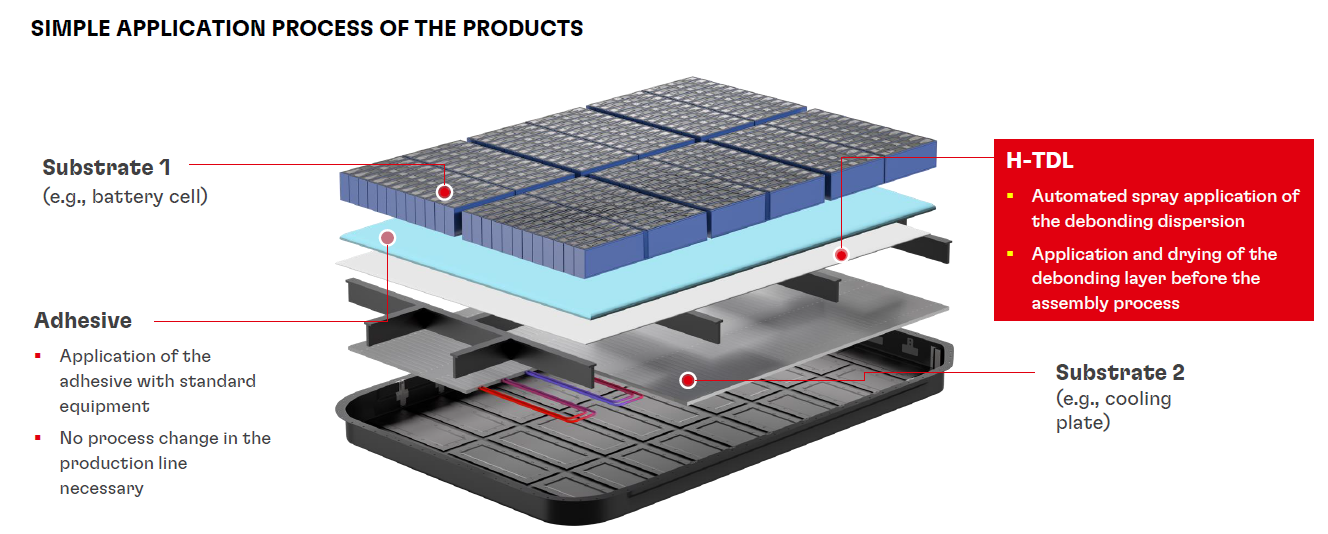
Principle: The peelable layer foams when heated, thus weakening the structure
The temperature of the battery cell during the peeling process is maintained below 60°C
►The peeling layer also acts as thermal insulation for the battery cell during expansion
►Irreversible mechanism: The battery stack can be directly removed after heating or substrate cooling
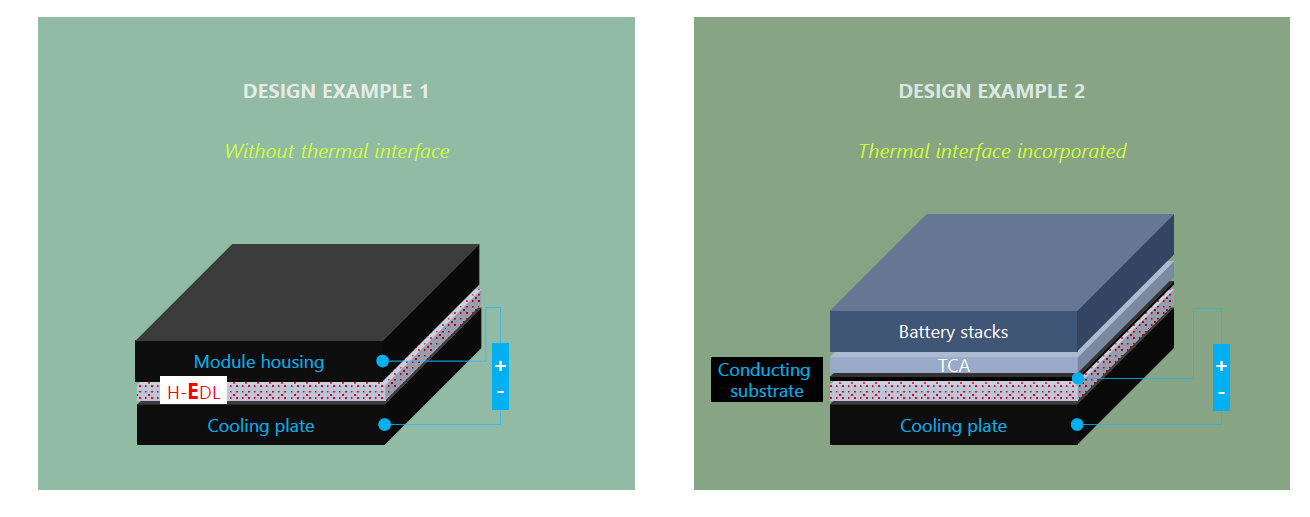
Electrically Triggered Weak Boundary Layer
During battery use, the structural level exhibits a strong bond state, and it is easy to debond using electricity at the end of its service life or repair life.
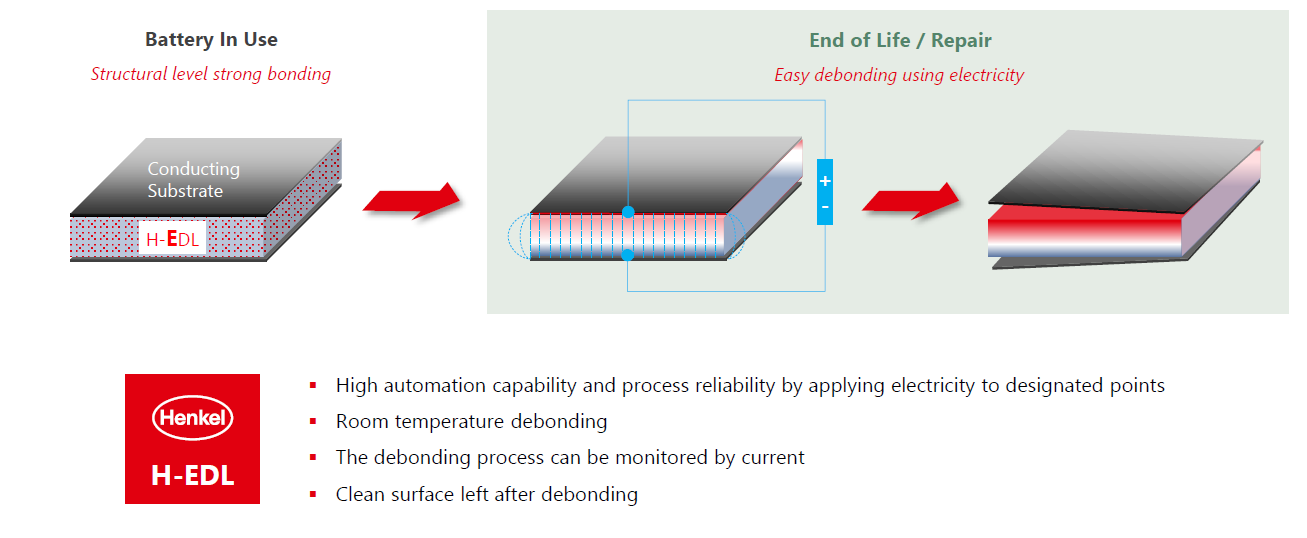
Debonding Design Modified According to Battery Design