Recently, the daily performance of SHFE copper has not been outstanding, but the futures price has been steadily climbing, continuously refreshing its stage highs, and is now not far from its historical peak. What has enabled copper prices to be so stable? Is the "engine" behind it still powerful?
The US Tariff Hike Expectation on Copper Continues, Driving Domestic Market with Strong US Copper Performance
The anticipation of the US imposing tariffs on imported copper can be traced back to early February, when the US announced plans to impose a 25% tariff on steel and aluminum products, sparking market expectations that the US might subsequently impose tariffs on copper. This would increase the import cost of US copper and potentially push up US inflation. As a result, US copper prices have been significantly stronger than LME and SHFE copper prices, although the market initially expected the tariff rate on copper to be around 10%-15%. Later, the new US President signed an executive order directing the Department of Commerce to investigate whether copper imports and foreign copper production pose risks to the US economy and national security. Some officials hinted that the US tariff on copper could reach 25%, significantly higher than previous expectations, which would further increase future copper import costs. The center of US copper prices continues to rise, and the premium over LME copper has recently stabilized above $1,000.
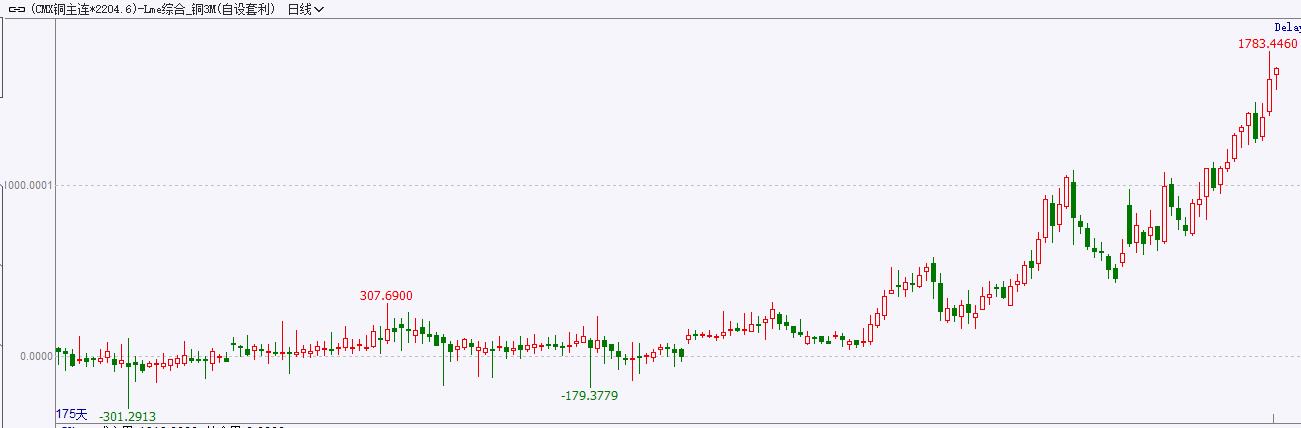
Mid-week, there were reports that the US government is rapidly conducting a review, and the US might impose tariffs on imported copper within weeks, several months earlier than expected. The US copper rally reignited, hitting a high of $5.374, a record since its listing, and the premium over LME copper also reached a historical high. The exceptional strength of US copper has created more arbitrage opportunities and boosted SHFE copper prices. Additionally, in anticipation of potential high tariffs, copper from around the world has been flowing into the US recently, leading to a continuous decline in LME copper inventories and persistently high cancellation rates. Meanwhile, domestic refined copper exports in February showed signs of recovery, which might reduce domestic supply and also support SHFE copper prices. Currently, the premium of US copper over LME copper remains high, indicating that the market is still trading on related expectations. However, the recent pullback in US copper prices suggests that as the tariff policy approaches implementation, market divergence has increased, and uncertainty has also risen. Caution is needed regarding the potential impact of sentiment pullback and possible expectation gaps after the policy is implemented.
Tight Ore Supply Extends to Smelting Sector, Focus on Domestic Smelter Operations During Maintenance Season
The long-term contract processing fees agreed between domestic smelters and overseas miners at the end of last year were only slightly above $20/dmt, already hinting that the tight supply of domestic copper ore would continue this year. From the production guidance of major overseas miners for 2025, the new copper ore production is also lower than previous expectations. Since the beginning of this year, the spot processing fees for domestic copper concentrates have continued to decline, falling into negative territory in early February and failing to stabilize, instead continuing to drop, recently reaching below -$20, repeatedly setting record lows. Under such extremely low processing fees, domestic smelters face increasing production pressure, and the profits from long-term contract benchmarks are also very limited, exacerbating the difficulties for smelters. Mid-month, news from Tongling indicated that its smelters have taken measures such as production cuts, early and extended maintenance, and unplanned major repairs, leading to expectations of reduced domestic refined copper supply, which once boosted copper prices.
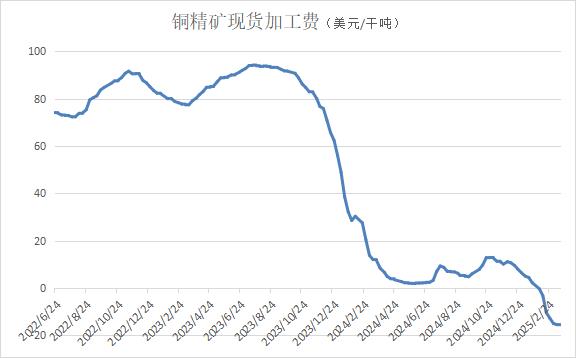
Recently, there have been many disruptions in the ore sector. Early last week, Freeport Indonesia announced that it had obtained an export permit for 1.27 million mt of copper concentrates, and further attention is needed on whether Indonesian copper ore exports to China will increase. The restart of First Quantum's Cobre Panama mine, which the market is closely watching, remains difficult. Regardless, as of now, the negative spot processing fees for copper concentrates continue, and Q2 is traditionally the period for concentrated maintenance of domestic smelters. Further attention is needed on the trend of processing fees and the maintenance schedules and production arrangements of other smelters. If more supply disruption news emerges, copper prices will still have upward momentum.
Compared to domestic smelters, overseas smelters have higher costs, and some companies are facing tight cash flow. Recently, Glencore announced that its Altonorte smelter in Chile has declared force majeure on copper shipments, and it is reported that the smelter has suspended production. Chile is one of the main sources of US copper imports, and with global copper flowing into the US, supply disruptions from Chilean smelters could lead to tighter copper supply and demand in other regions.
Domestic Refined Copper Social Inventory Declines, but the Pace of Decline Slows
"Golden March and Silver April" is traditionally the peak demand season for the domestic copper market, and with recent favorable domestic policies and a stable start to the national economy, as an industrial base metal, domestic refined copper social inventory has been continuously declining since early March. Along with the continuous rise in copper prices, the decline continues, and current social inventory levels are lower than the same period last year. However, it is worth noting that the decline in inventory is not only due to downstream rigid demand but also to increased exports from smelters. As mentioned earlier, overseas copper prices have been relatively stronger than domestic prices recently, and there is a trend of copper flowing into the US, leading to increased export momentum from domestic smelters. Therefore, the decline in inventory cannot be entirely attributed to robust downstream demand.
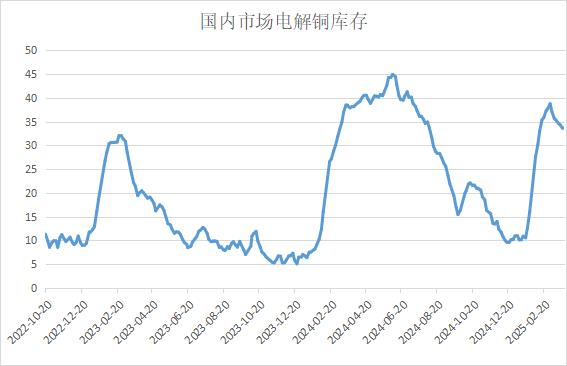
Recently, SHFE copper has been on a continuous upward trend under multiple factors, with futures prices steadily breaking through the 80,000 yuan mark. High prices have made downstream procurement more cautious, and spot prices have shifted from a slight premium to a slight discount, with the price difference between primary metal and scrap widening, potentially increasing the substitutability of copper scrap consumption. The latest institutional data shows that the decline in domestic refined copper social inventory has slowed, and even SMM data shows a slight increase in social inventory compared to Monday. The acceptance of high prices by downstream companies still needs attention.
Overall, the expectation of the US imposing tariffs on imported copper has made US copper prices exceptionally strong, greatly driving SHFE copper prices. The copper market's own supply and demand fundamentals also provide strong support, with tight ore supply already affecting smelters, and downstream demand remains resilient during the peak season. Copper prices have been steadily breaking through. Now, as the tariff policy is about to be implemented, market uncertainty has increased, with US copper prices consolidating at high levels and SHFE copper prices pulling back. However, unless the US tariff on copper is significantly lower than expected, copper prices are still more likely to rise than fall.