Recent Energy Storage Fires in the U.S., Germany, and U.K. Raise Safety Concerns

Published: Mar 17, 2025 10:45 (GMT+8)
In recent days, three energy storage system fires or explosions were reported in the United States, Germany, and the United Kingdom, drawing renewed attention to safety concerns in the sector.

In recent days, three energy storage system fires or explosions were reported in the United States, Germany, and the United Kingdom, drawing renewed attention to safety concerns in the sector.

On February 18, a fire occurred at the Moss Landing energy storage facility in the U.S., marking its fourth incident. The fire lasted over eight hours, damaging more than 70% of the equipment. The fire occurred at the same location as a similar fire one month earlier, indicating a possible reignition. The previous incident was attributed to a failure in the internal fire suppression system, which led to the destruction of 40% of the battery units. Reports indicate that the battery cells were supplied by LG Energy Solution.

On February 19, an explosion at a residential property in northern Germany was preliminarily linked to an overcharged home solar storage system using LG Energy Solution lithium-ion batteries (9.8kWh or 7kWh), not lithium iron phosphate (LFP). On the same day, a fire broke out at an under-construction energy storage site in East Tilbury, Essex, U.K., caused by a malfunctioning battery unit.

Preliminary analyses point to LG Energy Solution’s nickel manganese cobalt (NMC) batteries in multiple recent cases. Media reports indicate that over 70 thermal runaway incidents involving LG Energy Solution’s storage batteries have been recorded in recent years, leading to multiple recalls. In contrast, LFP batteries are known for their higher thermal stability.
Data Source Statement: Except for publicly available information, all other data are processed by SMM based on publicly available information, market communication, and relying on SMM's internal database model. They are for reference only and do not constitute decision-making recommendations.

For any inquiries or for more information, please contact: lemonzhao@smm.cn
For more information on how to access our research reports, please contact:service.en@smm.cn
Related News
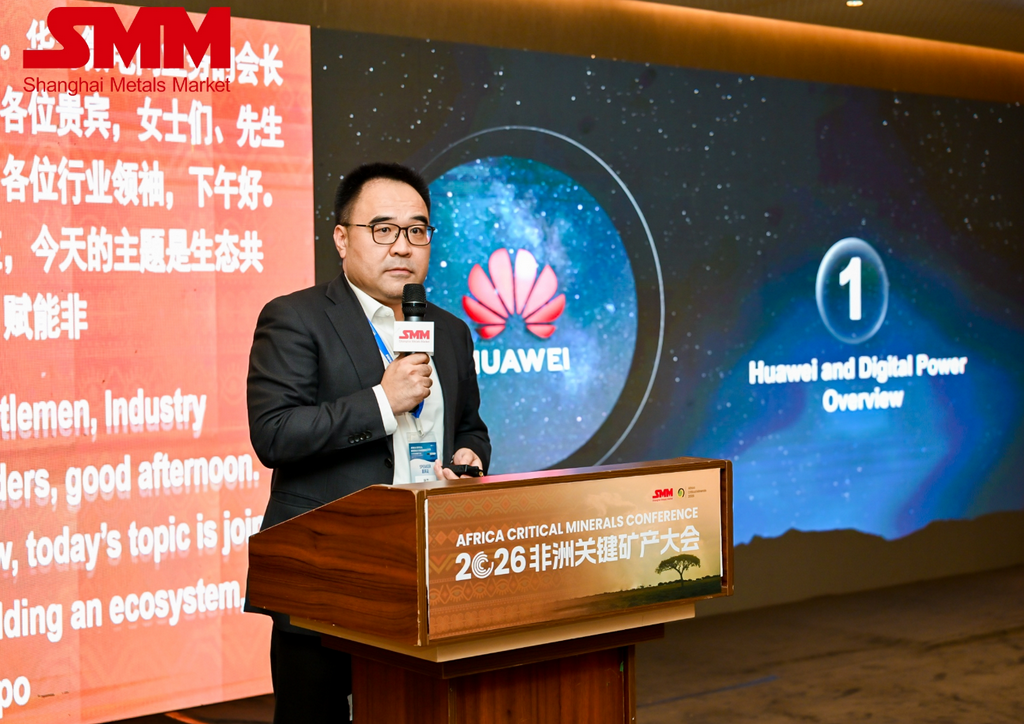
Huawei Pursues Africa Green‑Mining Partnerships and Holds Business Talks with ZESCO at SMM ACM 2026
15 hours ago
Huawei Pursues Africa Green‑Mining Partnerships and Holds Business Talks with ZESCO at SMM ACM 2026
Read More
Huawei Pursues Africa Green‑Mining Partnerships and Holds Business Talks with ZESCO at SMM ACM 2026
15 hours ago
[ESS: Pylontech's 588Ah/601Ah large-format ESS cells enter mass production]
18 hours ago
[ESS: Pylontech's 588Ah/601Ah large-format ESS cells enter mass production]
Read More
[ESS: Pylontech's 588Ah/601Ah large-format ESS cells enter mass production]
[ESS: Pylontech's 588Ah/601Ah large-format ESS cells enter mass production]
Pylontech held a mass-production ceremony for its 588Ah and 601Ah large-capacity ESS cells at its Hefei base on Sep 21. Cumulative output has exceeded 100MWh, and the cells are already used in its new PyOcean 6.25MWh and 8MWh utility-scale systems, which have won orders and shipped. The 601Ah cell reaches 425.8Wh/L volumetric energy density, over 12,000 cycles and 96.5% energy efficiency. The Hefei line is 100% automated in core processes, with full lifecycle traceability for every cell.
18 hours ago
Envision Energy Energizes Morocco’s First Large-Scale LFP Battery System
Sep 22, 2026 08:33 (GMT+8)
Envision Energy Energizes Morocco’s First Large-Scale LFP Battery System
Read More
Envision Energy Energizes Morocco’s First Large-Scale LFP Battery System
Envision Energy announced on September 21 that it had successfully energized a 25 MW/125 MWh LFP battery system at OCP Green Energy’s Benguerir mining site in Morocco. The system is undergoing testing before commercial operation and will shift surplus daytime solar power to peak-demand hours. It is designed to reduce the site’s peak-hour electricity bill by approximately 25%.
Sep 22, 2026 08:33 (GMT+8)