Recently, three fire or explosion incidents occurred at ESS power stations in the US, Germany, and the UK within two days, once again bringing energy storage safety issues into the spotlight and sounding the alarm for the ESS sector.
On February 18, the Moss Landing ESS power station in the US, claimed to be one of the world's largest battery energy storage facilities (Phase I: 1.2 GWh), experienced its fourth fire, just one month after the previous incident at the same location, which could be described as a "re-ignition." Reports indicate that this fire burned for over eight hours, destroying more than 70% of the station's equipment. The previous fire a month earlier was caused by a "failure in the internal fire suppression system, leading to uncontrolled ignition," which destroyed approximately 40% of the ESS batteries. It was reported that the battery cells used in this project were supplied by LG Energy Solution.
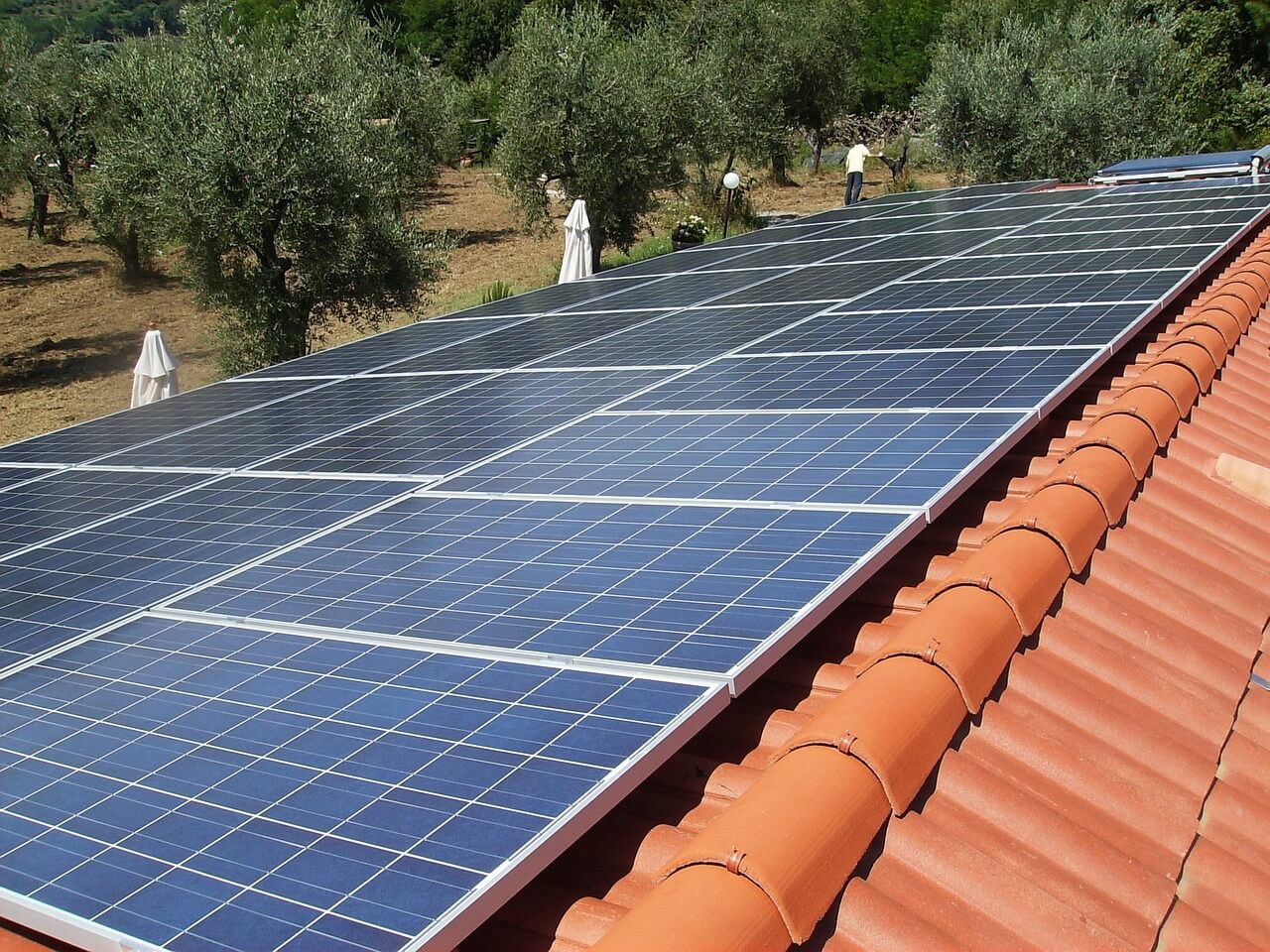
Coincidentally, the next day, a severe explosion occurred in a standalone villa in northern Germany. Preliminary investigations by local fire departments indicated that the explosion was caused by the PV energy storage system installed in the house. It is speculated that on a sunny day, the solar cell storage system became overcharged after being fully charged and failed to feed excess energy back to the power grid, leading to the explosion. However, officials stated that "the cause of the incident is still under investigation." Notably, reports suggest that a technical personnel from LG Energy Solution confirmed that the household ESS used LG's lithium-ion batteries with a storage capacity of 9.8 kWh or 7 kWh, but not LFP batteries.
On the same day, February 19, a fire broke out at an under-construction ESS power station in East Tilbury, Essex, UK. The fire was caused by a malfunction in a battery cell within the containerized energy storage system.
ESS safety is, in fact, a comprehensive "major topic," with the intrinsic safety of battery cells being the most critical aspect. Consequently, whenever a fire or explosion occurs, people often focus on "what type of battery cells were used" and "who manufactured the battery cells." Based on preliminary conclusions regarding the causes of these three recent overseas ESS power station/system fire or explosion incidents, it is evident that ESS equipment requires enhanced risk management in design, construction, and operation and maintenance.
At the battery cell level, two of the incidents directly pointed to LG Energy Solution, which primarily uses ternary battery technology. Media reports indicate that over the past few years, ESS batteries supplied by LG Energy Solution have caused more than 70 thermal runaway incidents globally, leading to multiple recalls of "problematic" battery cells. It is well known that, from a material perspective, ternary lithium battery technology has a thermal runaway temperature of only 120-140°C, significantly lower than that of LFP batteries. Once a short circuit or overcharging occurs, it can easily trigger a chain reaction, releasing flammable gases and causing fires, explosions, or uncontrollable re-ignitions. Therefore, China generally opts for the safer LFP battery route over ternary material batteries in ESS projects.
Domestic Large-Scale Tenders Raise Thresholds to Ensure "Quality" of Power Stations
In recent years, China's ESS market has fallen into a vicious cycle of low-price cut-throat competition, with ESS prices hitting record lows. This has led to a mix of suppliers, some of whom cut corners to reduce costs, creating safety hazards for ESS power stations. Robin Zeng, Chairman of CATL, has called for the industry to avoid "chaos," stating that "as a key infrastructure for energy transition, the ESS sector cannot rely on 'low quality and reduced configurations' to achieve 'low prices,' as this lacks economic viability and sustainability."
Amid calls to prioritize "value competition" over "price competition," since H2 last year, major tender owners, including the "Five Majors and Six Minors," have collectively revised tender rules and raised thresholds.
Lowering the weight of price factors and introducing comprehensive indicators such as technical performance, safety certifications, and operation and maintenance capabilities have become major trends. By the end of last year, some central state-owned enterprises had reduced the price weight from 45% to 35%, shifting from a "lowest-price winning model" to a "central parity rate winning model." For example, a recent tender specified a mechanism where bids "lower than or equal to 90% of the maximum price limit" and "lower than or equal to 95% of the arithmetic average of all valid bids" would be rejected. This mechanism aims to balance product price and quality by rejecting bids that are too low and trigger red-line mechanisms.
Additionally, central state-owned enterprises have become stricter in their requirements for bidders' past performance, R&D capabilities, equipment-related detection certifications, and battery production dates.
For instance, PowerChina's 16 GWh ESS framework procurement and CGN New Energy's 10.5 GWh ESS framework procurement projects explicitly stated that cascade utilization batteries and inventory batteries would not be accepted, and battery production dates must not be more than three months earlier than the actual supply date of the project. Furthermore, PowerChina required bidders to provide 20 years of operational maintenance and repair services for the equipment.
In terms of independent R&D capabilities and performance, "bidders must possess independent R&D and production capabilities for at least one of battery cells, PCS, EMS, or BMS" has become a basic requirement. Regarding past performance, most tender owners require bidders to have completed single projects of over 100 MWh, with some requiring over 200 MWh. For example, China Huaneng requires bidders to have accumulated domestic ESS performance of no less than 1.5 GWh (LFP batteries), with battery cell supply capacity of no less than 2 GWh domestically.
The continuously increasing tender thresholds have "ruthlessly" excluded small and medium-sized enterprises with insufficient strength or qualifications, further concentrating market share among top-tier enterprises. This, to some extent, helps ensure the quality and safety of tendered products.
Fire Safety Standards Tighten
To prevent safety incidents at ESS power stations, stricter fire safety standards have been established globally in recent years, showing an overall "tightening" trend.
Domestically, data shows that approximately 20 provinces (cities) have included ESS power stations as key units for fire safety.
At the national level, China has explicitly prohibited the use of ternary materials in medium and large ESS power stations and has been continuously improving national standards. In July 2023, the "GB/T 42288-2022 Safety Regulations for Electrochemical ESS Power Stations" was implemented. This new national standard filled the gap in safety configuration standards for electrochemical ESS power stations, introducing mandatory safety configuration requirements. It emphasized the transition from the cabin level to the PACK level to address major risk sources such as battery cell thermal runaway. Additionally, the new standard introduced concepts such as pre-warning, system linkage, precise fire suppression, and prevention of re-ignition, ensuring ESS safety from various aspects.
At the local level, various regions have been continuously improving regulations related to ESS safety. Since the end of last year, local policies on ESS fire safety have become stricter and more detailed.
For example, in December 2024, Jiangsu Province plans to include large electrochemical ESS power stations with a rated power of 100 MW or above as key units for fire safety. Changzhou, Jiangsu, proposed that ESS power station projects cannot proceed with construction until safety facility designs pass review. Zhenjiang, Jiangsu, specified that "the total rated energy of all battery cabins within a single fire protection unit should not exceed 10 MWh, and the fire separation distance between battery cabins in adjacent fire protection units should not be less than 3 meters."
Previously, the Guangdong Provincial Fire and Rescue Corps issued the first domestic fire safety standard document specifically for the electrochemical ESS sector. Considering the long extinguishing time, high difficulty, and complex environment of lithium battery-related fires, this safety technical standard provided detailed regulations on automatic fire suppression systems for room-type ESS power stations, prefabricated cabin-type lithium-ion battery ESS power stations, fire separation distances between lithium-ion/sodium-ion battery prefabricated cabins (cabinets), and the length and height of firewalls.
It is worth noting that while ESS battery cells and systems are trending toward larger scales and higher energy densities, application scenarios are becoming increasingly complex and diverse, imposing higher safety requirements on ESS systems. From the battery cell, mechanical components, and electrical equipment levels to the design, transportation, installation, application, and retirement of products, as well as the operation and maintenance of ESS power stations and policy supervision, the entire industry must work together to strictly ensure quality. ESS practitioners, in particular, must always uphold a safety-first mindset, rejecting irrational price competition to ensure product quality and safety.