》View SMM Aluminum Product Prices, Data, and Market Analysis
》Subscribe to View SMM Historical Metal Spot Prices
SMM February 14 News
On February 10 local time, US President Donald Trump signed an executive order announcing a 25% tariff on all aluminum and steel imports to the US. Trump also stated on the same day that the policy would have "no exceptions or exemptions" and that tariffs on automobiles, chips, and pharmaceuticals would be considered in the future.
The announcement of this tax policy caused a stir in the market. In addition to concerns about major US importers such as Canada and Mexico (related analysis available at https://mp.weixin.qq.com/s/k679JjmWKeE7DZ-Py9XLQA), there was significant attention on its impact on Chinese exports.
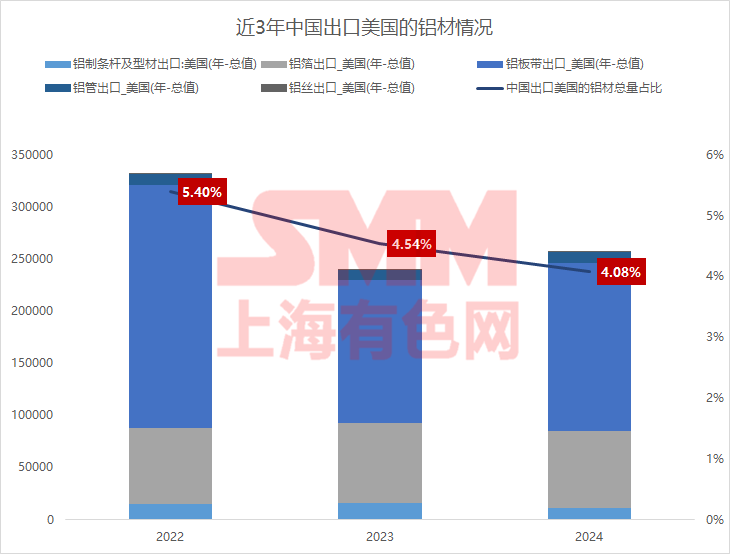
First, China's direct aluminum semis exports to the US:
According to data from the General Administration of Customs, China's aluminum semis exports to the US in 2024 totaled approximately 257,000 mt, up 7% YoY. China's total annual aluminum semis exports in 2024 reached 6.303 million mt, up 19.2% YoY. In terms of proportion, China's direct exports to the US accounted for only about 4.1% of the total.Therefore, the volume of China's aluminum semis directly exported to the US is limited, and its impact on China's overall annual export volume is minimal.
Second, China's direct aluminum product exports to the US:
According to customs data, China's aluminum product exports to the US in 2024 totaled 524,000 mt, up 17.3% YoY. China's total aluminum product exports in 2024 reached 3.205 million mt, up 17.3% YoY. In terms of proportion, China's direct exports to the US accounted for 16.5%. Compared to aluminum semis, aluminum product exports to the US have a greater impact on China's overall exports. However, from a global demand perspective, there are still many alternative overseas markets besides the US. Coupled with the advantages of competitive pricing and the price spread between domestic and overseas markets, China's capacity remains highly competitive.
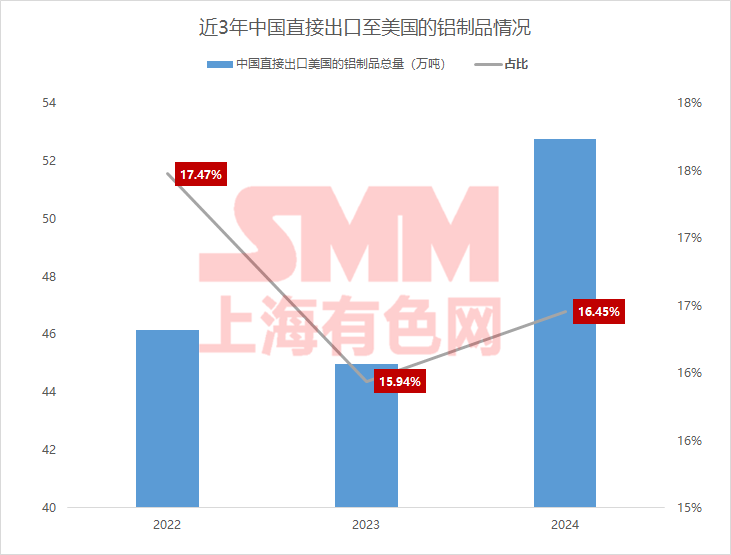
Additionally, SMM has learned that domestic enterprises have not expressed significant negative feedback on this policy. They indicated that in the short term, changes in tax policy may require renegotiation of processing fees, and order volumes may slightly decline. However, in the long term, the US's domestic capacity is unlikely to meet its demand, and new capacity will take time to develop. As a result, the demand for aluminum products imported from China and other regions will persist, which may ultimately drive up aluminum prices in the US and increase procurement costs for US end-users.
Furthermore, China's direct aluminum semis exports to Mexico and Canada:
According to customs data, China's aluminum semis exports to Mexico and Canada in 2024 totaled 885,000 mt, up 24.4% YoY. China's total annual aluminum semis exports in 2024 reached 6.303 million mt, up 19.2% YoY. In terms of proportion, China's direct exports to Mexico and Canada accounted for 14.06% in 2024. The 25% tariff, which Trump stated would have "no exceptions or exemptions," significantly impacts Canada and Mexico as major aluminum semis suppliers. The increased tariffs will lead to higher costs for US end-users, potentially reducing US aluminum demand. This could weaken export volumes from Canada and Mexico, indirectly affecting demand for Chinese aluminum semis.
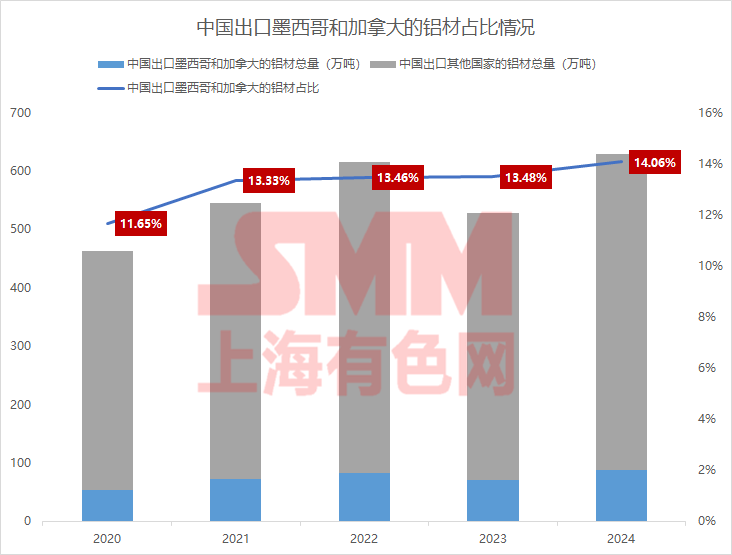
In summary, the US's 25% tariff on all aluminum and steel imports has a limited impact on China's aluminum product exports. However, it may raise spot premiums in the US and further increase procurement costs for US domestic enterprises. Additionally, attention should be paid to the risks of changes in US domestic consumption demand and the trends in demand from other overseas markets.