Myanmar Ore Supply Disruption Continues: What Is the Impact on the Rare Earth Market? [SMM Analysis]

Published: Feb 13, 2025 15:12
[SMM Analysis: How Does the Continued "Supply Disruption" of Myanmar Ore Impact the Rare Earth Market?] After the Chinese New Year holiday, the rare earth market has shown an overall strengthening trend. Separation enterprises have indicated that the issue of tight ore supply is becoming increasingly prominent, with some raw ore separation enterprises experiencing production cuts or shutdowns due to difficulties in procuring raw materials.

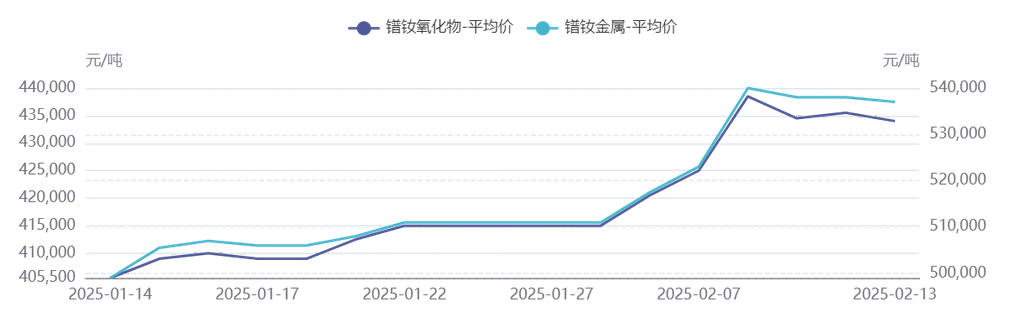
SMM, February 5: After the Chinese New Year holiday, the rare earth market has shown an overall strengthening trend. Separation enterprises have reported that the issue of tight mine supply is becoming increasingly prominent, with some raw ore separation enterprises experiencing production cuts or shutdowns due to difficulties in procuring raw materials. Against this backdrop, suppliers have intensified their reluctance to sell rare earth raw materials, leading to the first post-holiday price surge in the rare earth market amid tight supply.
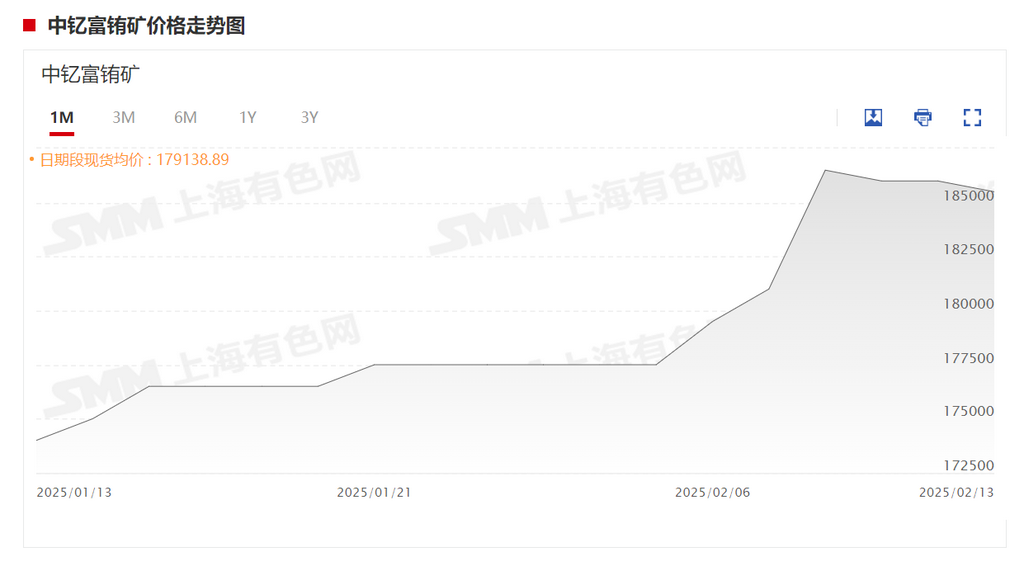
What is the current supply situation of Myanmar ore? According to multiple ore trading companies, the current cost of Myanmar ore is relatively high: the tax-related costs for local operations and imports alone amount to 70,000 yuan per mt. Additionally, most mining sites rely on gasoline generators for power supply, and gasoline prices in Myanmar are significantly higher than those in China. Coupled with the high electricity consumption of mining sites, this has caused a substantial increase in the cost of Myanmar ore. Under the current circumstances of difficulties in importing Myanmar ore, miners are unwilling to sell at low prices, making the supply of ion-adsorption ore in the rare earth market tight and low-priced sources hard to find.
》Apply for a Free Trial of the SMM Metal Industry Chain Database

With the rapid surge in rare earth oxide prices, the market has shown evident concerns about high prices. It is understood that the order prices accepted by downstream magnetic material enterprises before the Chinese New Year were generally low, which has led buyers to adopt a wait-and-see attitude toward the soaring raw material prices, with relatively low acceptance. Meanwhile, some traders have taken advantage of the price surge to sell off inventory, which caused rare earth prices to pull back slightly after a brief spike this week. However, most industry insiders believe that the likelihood of a significant drop in rare earth prices is relatively small, and they predict that prices are expected to gradually stabilize in the near term. Furthermore, considering the sustained global demand for rare earths and the complexity of the supply chain, rare earth prices are likely to remain supported for some time to come.
Data Source Statement: Except for publicly available information, all other data are processed by SMM based on publicly available information, market communication, and relying on SMM‘s internal database model. They are for reference only and do not constitute decision-making recommendations.

For any inquiries or to learn more information, please contact: lemonzhao@smm.cn
For more information on how to access our research reports, please contact:service.en@smm.cn
Related News
Frontier Secures $20 Million and Signs Rare Earth Offtake Agreement
20 hours ago
Frontier Secures $20 Million and Signs Rare Earth Offtake Agreement
Read More
Frontier Secures $20 Million and Signs Rare Earth Offtake Agreement
Luxembourg-based Frontier Rare Earths today announced it successfully obtained a $20 million investment from South Africa's Industrial Development Corporation (IDS) and signed an offtake agreement with France's Carester. The company has now initiated the final feasibility study for its South African magnet-use rare earth and battery-grade manganese project. Frontier Rare Earths is currently advancing the development of the Zandkopsdrift project in South Africa. The project is expected to achieve an annual capacity of approximately 3,038 mt of Pr-Nd oxide, 114 mt of dysprosium oxide, and 25 mt of terbium oxide over the first 25 years.
20 hours ago
US Provides $565 Million in Financing for Brazilian Rare Earth Project
20 hours ago
US Provides $565 Million in Financing for Brazilian Rare Earth Project
Read More
US Provides $565 Million in Financing for Brazilian Rare Earth Project
Serra Verde, a Brazilian rare earth element producer, announced today that the US International Development Finance Corporation (DFC) offered it a financing package worth $565 million, which also includes an option for the US government to acquire a minority stake in the company. Serra Verde’s Pela Ema ionic clay deposit in Brazil is scheduled to begin commercial production in 2024, with an expected annual output of 5,000 mt of total rare earth oxides, including dysprosium, erbium, neodymium, and praseodymium. Serra Verde plans to use the funds to refinance existing loan facilities and expand production capacity. The project aims to increase total rare earth oxide production to 6,500 mt per year by 2027.
20 hours ago
US DFC Offers $565M Financing to Brazilian Rare Earth Project
20 hours ago
US DFC Offers $565M Financing to Brazilian Rare Earth Project
Read More
US DFC Offers $565M Financing to Brazilian Rare Earth Project
[SMM Flash: US Provides $565 Million in Financing for Brazilian Rare Earth Project] Serra Verde (a Brazilian rare earth element producer) announced today that the US International Development Finance Corporation (DFC) has provided it with a financing package worth $565 million, which also includes an option for the US government to acquire a minority stake in the company. Serra Verde's Pela Ema ionic clay deposit in Brazil is scheduled to commence commercial production in 2024, with an expected annual output of 5,000 mt of total rare earth oxides, including elements such as dysprosium, erbium, neodymium, and praseodymium. Serra Verde plans to use the funds to refinance existing loan facilities and expand production capacity. The project aims to increase the annual production of total rare earth oxides to 6,500 mt by 2027.
20 hours ago