In December 2024, imports of high-carbon ferrochrome reached 259,600 mt, while domestic ferrochrome supply surplus led to a decline in import volumes [SMM Analysis].

Published: Jan 23, 2025 16:18 (GMT+8)
SMM Analysis: High-Carbon Ferrochrome Imports at 259,600 mt in December 2024, Domestic Ferrochrome Supply Surplus and Decline in Import Volume According to Chinese customs statistics, China's high-carbon ferrochrome imports in December 2024 were 259,600 mt, down 51,100 mt MoM, a decrease of 16.45%; up 37,200 mt YoY, an increase of 16.74%. From January to December 2024, China's total high-carbon ferrochrome imports reached 3.6576 million mt, up 415,900 mt YoY, an increase of 12.83%.

SMM, Dec 20:

According to Chinese customs statistics, China's imports of high-carbon ferrochrome in December 2024 reached 259,600 mt, down 51,100 mt MoM, a decrease of 16.45%; up 37,200 mt YoY, an increase of 16.74%. From January to December 2024, China's total imports of high-carbon ferrochrome amounted to 3.6576 million mt, up 415,900 mt YoY, an increase of 12.83%. By country, in December, China imported 140,300 mt of high-carbon ferrochrome from South Africa and 83,700 mt from Kazakhstan. In December, imports of high-carbon ferrochrome through ordinary trade amounted to 202,300 mt, while Entry and Exit Goods in Bonded Control Areas and Entrepot Trade by Customs Special Control Area accounted for 55,600 mt.
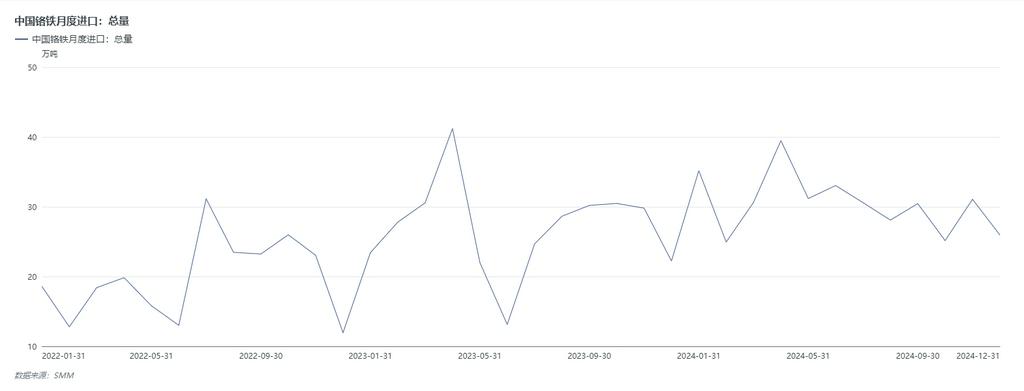
According to SMM, throughout the year, domestic supply of high-carbon ferrochrome remained in surplus, leading to a continuous decline in procurement prices by stainless steel mills. From August 2024 to January 2025, tender prices cumulatively dropped by 2,000 yuan/mt (50% metal content), reducing the attractiveness of overseas ferrochrome. With the approach of the year-end and the Chinese New Year holiday, market transactions have gradually weakened. Stainless steel mills have started annual maintenance and production cuts, resulting in decreased demand for ferrochrome. Although ferrochrome prices have recently rebounded slightly due to pre-holiday stockpiling demand, the previous supply surplus has kept market sentiment pessimistic. Moving forward, close attention should be paid to the production and consumption trends of stainless steel.

Data Source Statement: Except for publicly available information, all other data are processed by SMM based on publicly available information, market communication, and relying on SMM's internal database model. They are for reference only and do not constitute decision-making recommendations.

For any inquiries or for more information, please contact: lemonzhao@smm.cn
For more information on how to access our research reports, please contact:service.en@smm.cn
Related News
[SMM Coal Flash] India Orders 112 Captive Coal Plants to Maximise Power Output Through Year-End
19 hours ago
[SMM Coal Flash] India Orders 112 Captive Coal Plants to Maximise Power Output Through Year-End
Read More
[SMM Coal Flash] India Orders 112 Captive Coal Plants to Maximise Power Output Through Year-End
[SMM Coal Flash] India Orders 112 Captive Coal Plants to Maximise Power Output Through Year-End
India has ordered 112 captive coal-fired power plants with capacity of at least 50 MW to operate at maximum capacity from October 1 through December 31, as the government prepares for an expected increase in electricity demand. The September 25 directive, issued by the federal power ministry under emergency provisions of the Electricity Act, covers captive plants primarily serving aluminium smelters, steel mills, cement plants and oil refineries, including facilities operated by Vedanta, Tata Steel, Hindalco, JSW Steel and others. Generators have also been instructed to sell surplus electricity through power exchanges and submit weekly reports covering generation, captive consumption, available capacity and coal stocks. The measure comes as nearly 40% of India’s coal-fired plants are operating with critically low fuel inventories, amid stronger power demand linked to hotter-than-usual weather.
19 hours ago
[SMM Coal Flash] Bayan Resources Lifts Force Majeure as Three Subsidiaries Secure Revised 2026 RKAB
19 hours ago
[SMM Coal Flash] Bayan Resources Lifts Force Majeure as Three Subsidiaries Secure Revised 2026 RKAB
Read More
[SMM Coal Flash] Bayan Resources Lifts Force Majeure as Three Subsidiaries Secure Revised 2026 RKAB
[SMM Coal Flash] Bayan Resources Lifts Force Majeure as Three Subsidiaries Secure Revised 2026 RKAB
Indonesia’s PT Bayan Resources Tbk (BYAN) has lifted the force majeure previously declared over coal supply obligations after three subsidiaries — PT Tiwa Abadi (TA), PT Tanur Jaya (TJ) and PT Fajar Sakti Prima (FSP) — received full approval for their revised 2026 RKAB from the Ministry of Energy and Mineral Resources (ESDM) on September 23. The approvals allow the three companies to resume preparations for coal mining operations, while Bayan can restart coal transportation and sales. The force majeure had been declared on September 11 after delays in the revised RKAB approvals prevented the subsidiaries from legally continuing production and affected deliveries under their Coal Supply Agreements.
19 hours ago
[JFE Steel expects 600,000-tonne output cut after typhoon damage]
Sep 26, 2026 20:36 (GMT+8)
[JFE Steel expects 600,000-tonne output cut after typhoon damage]
Read More
[JFE Steel expects 600,000-tonne output cut after typhoon damage]
[JFE Steel expects 600,000-tonne output cut after typhoon damage]
Japan's JFE Steel expects its output to fall by about 600,000 tonnes after heavy rain and Typhoon No. 25 damaged facilities at its East Japan Works in the Chiba area. The company said the impact is likely to be prolonged because the typhoon caused additional damage after August downpours in Chiba. Several facilities were flooded in August; restoration has proceeded with safety first and operations resumed gradually, but blast furnaces have yet to return to normal. Typhoon No. 25 brought further flooding at some facilities there, with repairs under way. JFE said the estimated cut may change with restoration progress and it is still assessing impacts on output and earnings. Some deliveries have been delayed and the company is coordinating with customers to limit supply disruption.
Sep 26, 2026 20:36 (GMT+8)