

According to the SMM survey, China's total iron phosphate production in 2024 reached 1.886 million mt, up 63% YoY. Among this, non-integrated enterprises produced 934,000 mt, accounting for 49.5% of the total production.
I. Overview of 2024 Market Prices and Trends
Market Slump at the Beginning of the Year, Reduced Supply: At the start of 2024, affected by the Chinese New Year holiday, the operating rate of iron phosphate enterprises declined, leading to reduced production. Market demand did not show significant improvement, resulting in insufficient production momentum in February. Meanwhile, downstream LFP enterprises continued to push for cost reductions, creating significant price pressure for iron phosphate producers.
Demand Recovery Mid-Year, Increased Supply: In Q2, with substantial demand growth from downstream LFP cathode plants and battery cell manufacturers, the NEV market's price war significantly boosted vehicle sales data, gradually reviving demand for iron phosphate. Starting in March, iron phosphate enterprises received a notable increase in orders, leading to higher operating rates and a significant rise in market supply.
Rising Costs and Prices at Year-End: By year-end, due to rising raw material prices and changes in the supply-demand relationship, the cost of iron phosphate increased. Coupled with robust year-end demand from downstream sectors aiming to boost sales, this gave long-struggling iron phosphate enterprises the confidence to stand firm on quotes. As a result, iron phosphate prices showed an upward trend in late December, with a relatively optimistic outlook for 2025 demand.
II. Analysis of Industry Pain Points in 2024—Severe Cut-Throat Competition, Difficulties in Increasing Revenue Despite Higher Production
Severe Losses: Due to raw material price fluctuations, supply-demand imbalances, and low-price bidding, iron phosphate enterprises faced prolonged losses. Despite efforts to negotiate better terms during order discussions, the results were minimal, severely squeezing profit margins.
Intense Price Competition: Downstream LFP enterprises continued to push for cost reductions, intensifying price competition among iron phosphate producers. To secure market share, some enterprises resorted to low-price strategies, further exacerbating profitability challenges in the industry.
Significant Supply-Demand Fluctuations: Influenced by policy adjustments and market demand changes, the supply-demand relationship in the iron phosphate market fluctuated significantly. This instability posed major challenges to production planning and inventory management, increasing market risks.
In Q4, the iron phosphate market experienced a "once-in-a-century" year-end peak season. High-quality iron phosphate remained indispensable in LFP production, with its supply still tight and prices relatively high.
III. 2025 Iron Phosphate Market Outlook—Dynamic Growth, Forging a New Chapter of Excellence
In 2025, additional iron phosphate capacity is expected to come online, primarily from well-established enterprises in the industry. After years of development, the industry structure has become relatively stable, leaving little room for new entrants without significant resource or product advantages to stand out in the highly competitive market.
From the market changes throughout 2024, it is evident that resource advantages play a crucial role in iron phosphate production. Phosphorus resources, represented by industrial-grade monoammonium phosphate and phosphoric acid, and iron resources, represented by ferrous sulphate, are key raw materials in iron phosphate production. Enterprises with phosphorus resource advantages are expected to pose challenges to those without such advantages in 2025. Iron phosphate enterprises need to strengthen collaboration across the industry chain, not only with upstream resource suppliers but also with downstream cathode, battery, and OEM manufacturers. Since iron phosphate is critical to the performance and quality of LFP, the validation period for iron phosphate used in NEVs typically exceeds six months. Effectively securing downstream end-user customers will enable enterprises to gain a competitive edge in the market, achieve resource sharing, and complement each other's strengths. Additionally, expanding downstream customer bases to diversify risks, reducing reliance on a single customer, and monitoring downstream customers' cash flow and payment cycles will help mitigate operational risks.
At the same time, enhancing technological innovation and cost control is essential. By reducing production costs through innovation and improving product quality and performance, enterprises can fundamentally strengthen their market competitiveness. Optimizing production processes and minimizing unnecessary waste will further enhance profitability.
Reflecting on the twists and turns of the 2024 iron phosphate market, it exhibited a complex and volatile landscape. Facing challenges such as prolonged losses, price competition, and supply-demand fluctuations, enterprises are actively seeking solutions and exploring future trends in 2025 to formulate sound market strategies, address potential risks, and seize growth opportunities. Only by forging ahead and striving relentlessly can iron phosphate enterprises secure a foothold in the fiercely competitive market.
As the industry becomes increasingly consolidated, the survival of the fittest in capacity allocation grows more intense. Enterprises must compete in multiple dimensions, including capital, technology, management, and resources, enduring the test of time. Only by overcoming hardships and navigating the intricate commercial landscape can they eventually look back and marvel at their journey through perilous peaks, awaiting the moment when success blossoms.
[SMM Analysis] 2024 Iron Phosphate Market Review: Overcoming Challenges and Looking Forward to a Bright Future
According to the SMM survey, China's total iron phosphate production in 2024 reached 1.886 million mt, up 63% YoY. Among this, non-integrated enterprises produced 934,000 mt, accounting for 49.5% of the total production.
Data Source Statement: Except for publicly available information, all other data are processed by SMM based on publicly available information, market communication, and relying on SMM‘s internal database model. They are for reference only and do not constitute decision-making recommendations.
For any inquiries or to learn more information, please contact: lemonzhao@smm.cn
For more information on how to access our research reports, please contact:service.en@smm.cn
Related News
![[SMM Analysis] ITC Rejects Tariffs on Chinese Graphite Anodes, Final Duties Not Imposed](https://imgqn.smm.cn/usercenter/lzgUR20251217171731.jpg)
Mar 13, 2026 19:55
[SMM Analysis] ITC Rejects Tariffs on Chinese Graphite Anodes, Final Duties Not Imposed
Read More
[SMM Analysis] ITC Rejects Tariffs on Chinese Graphite Anodes, Final Duties Not Imposed
[SMM Analysis] On March 12, 2026, the US International Trade Commission (ITC) ruled against imposing tariffs on graphite imports from China. Below is the complete timeline of the US anti-dumping and countervailing duty (AD/CVD) investigation into China’s active anode material (graphite anode) imports, the duty rates at each stage, and the latest outcome as of March 12, 2026.
Mar 13, 2026 19:55
Mar 13, 2026 17:48
NDRC Approves Hami-Dunhuang Third 750 kV Transmission Line Project
Read More
NDRC Approves Hami-Dunhuang Third 750 kV Transmission Line Project
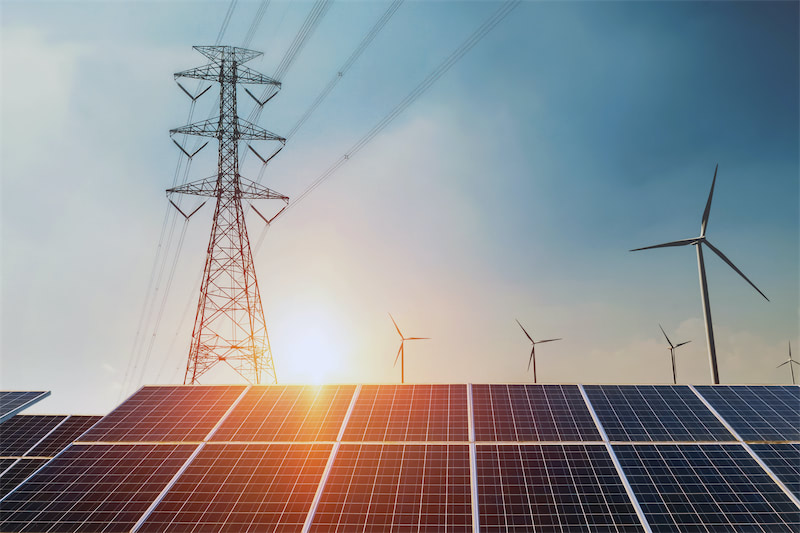
Recently, the National Development and Reform Commission (NDRC) issued the Reply on the Approval of the Hami–Dunhuang Third 750 kV Transmission Line Project, formally approving the Xinjiang Hami–Dunhuang Third 750 kV Transmission Line Project. The implementation of this project was of great significance for improving the backbone structure of the main power grid in Northwest China, strengthening the mutual support capacity between the Gansu and Xinjiang power grids, and enhancing Xinjiang’s capacity to absorb new energy. According to previously disclosed environmental impact assessment information, the project had a total static investment of 1.3509 billion yuan and was scheduled for completion in March 2027.
Mar 13, 2026 17:48
Mar 13, 2026 17:44
Jijing UHV DC Project Enters Final Feasibility Stage, Aiming for 2029 Operation
Read More
Jijing UHV DC Project Enters Final Feasibility Stage, Aiming for 2029 Operation
On March 12, it was learned from State Grid Jilin Electric Power Co., Ltd. that the project to transmit power from the Songliao Clean Energy Base in Northeast China to North China (the “Jijing UHV DC Project”) officially entered the final stage of the feasibility study. According to the plan, the project is expected to complete project approval in 2026, enter the substantive construction phase in 2027, and be completed and put into operation in 2029.
Mar 13, 2026 17:44
Related News
[SMM Analysis] ITC Rejects Tariffs on Chinese Graphite Anodes, Final Duties Not Imposed
Mar 13, 2026 19:55
NDRC Approves Hami-Dunhuang Third 750 kV Transmission Line Project
Mar 13, 2026 17:48
Jijing UHV DC Project Enters Final Feasibility Stage, Aiming for 2029 Operation
Mar 13, 2026 17:44
China Launches 2026 Pilot Program for County-Level EV Charging Infrastructure Improvements
Mar 13, 2026 17:37