Port Pick-Up Volume Expected to Increase Next Week, Providing Some Support to Iron Ore Spot Prices [SMM Brief Commentary]

Published: Jan 3, 2025 17:20
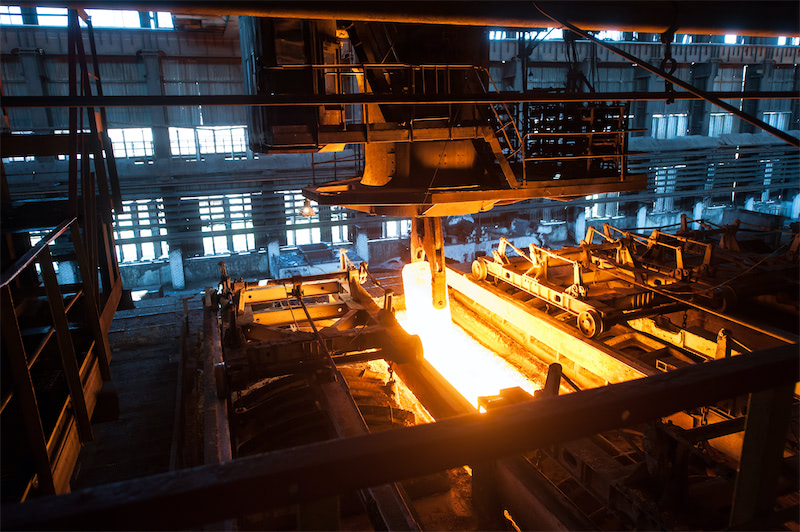
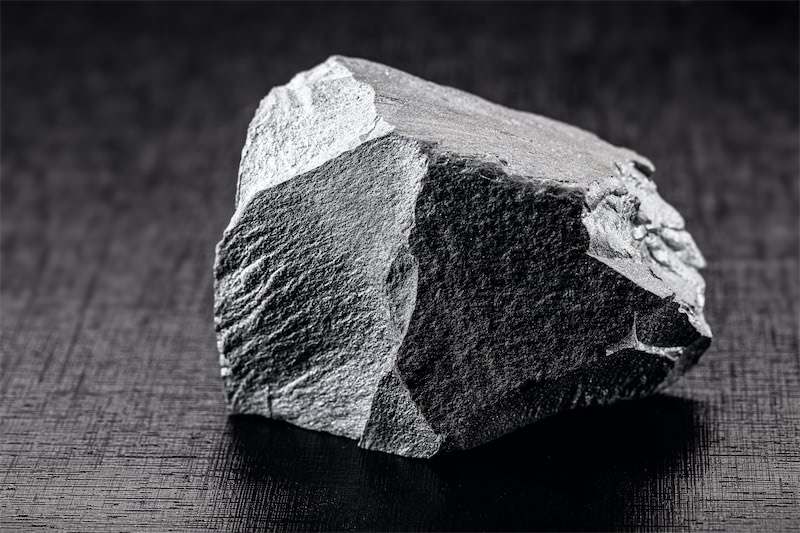
Today, iron ore futures dropped significantly. The most-traded I2505 contract closed at 764, down 2.18% for the day. Traders showed moderate willingness to sell. Steel mills have started pre-holiday restocking, with procurement volume increasing significantly WoW. Transaction prices ranged at 780 yuan/mt, down 10-15 yuan/mt from yesterday. Looking ahead to next week, port arrivals are expected to increase slightly. As year-end approaches, steel mills may accelerate restocking, port pick-up volume may rise, and port inventory may show a destocking trend, providing support for spot prices...

》View SMM Steel Product Prices, Data, and Market Analysis

》Subscribe to View SMM Historical Metal Spot Prices

Today, DCE iron ore futures dropped significantly. The most-traded I2505 contract closed at 764, down 2.18% for the day. Traders showed moderate willingness to sell. Steel mills began pre-holiday restocking, with procurement volume increasing significantly WoW. In Shandong, mainstream transaction prices for PB fines were around 763-768 yuan/mt, down 10-15 yuan/mt from yesterday; in Tangshan, PB fines transaction prices were 780 yuan/mt, also down 10-15 yuan/mt from yesterday. As of January 3, according to SMM monitoring, total inventory at 35 ports reached 145.22 million mt, up 2.4 million mt WoW and up 25.92 million mt YoY. The daily port pick-up volume of imported ore averaged 3.08 million mt, down 47,000 mt WoW but up 140,000 mt YoY. During this period, port arrivals increased slightly; on the demand side, pig iron production from steel mill blast furnaces declined, and restocking pace was not evident, leading to a slight decrease in port pick-up volume. Overall, port inventory increased slightly this week. Looking ahead to next week, port arrivals are expected to increase slightly. As year-end approaches, steel mills may accelerate restocking, which could lead to an increase in port pick-up volume and a potential destocking trend at ports, providing support for spot prices.
Data Source Statement: Except for publicly available information, all other data are processed by SMM based on publicly available information, market communication, and relying on SMM's internal database model. They are for reference only and do not constitute decision-making recommendations.

For any inquiries or for more information, please contact: lemonzhao@smm.cn
For more information on how to access our research reports, please contact:service.en@smm.cn
Related News
【Firmer Coal Prices Prompt PTBA to Raise Output Target; H2 Production Must Reach 30.1 Mt to Meet Full-Year Plan】
31 mins ago
【Firmer Coal Prices Prompt PTBA to Raise Output Target; H2 Production Must Reach 30.1 Mt to Meet Full-Year Plan】
Read More
【Firmer Coal Prices Prompt PTBA to Raise Output Target; H2 Production Must Reach 30.1 Mt to Meet Full-Year Plan】
Indonesian state-owned coal producer PTBA has slightly raised its 2026 production target to 49.55 million tonnes from 49.5 million tonnes, while setting full-year sales and transportation targets at 49.51 million tonnes and 41 million tonnes, respectively. The production target was increased by only 50,000 tonnes, or approximately 0.1%, giving the adjustment itself very limited direct significance for market supply. More importantly, PTBA’s first-half production fell 10% year on year to 19.45 million tonnes. To meet its full-year target, the company must produce approximately 30.1 million tonnes in the second half, around 54.8% more than its first-half output. It must also sell about 28.41 million tonnes during the period, approximately 34.6% above first-half sales, meaning that the production recovery must be supported by sufficient transportation and sales capacity. PTBA’s second-quarter production increased 94% from the previous quarter, while sales rose 8%, indicating that operations had begun to recover. Its first-half average selling price increased 14% quarter on quarter and 10% year on year, helping revenue rise 8% to 22.03 trillion rupiah and net profit attributable to the parent increase 218% to 2.65 trillion rupiah. Stronger prices and profitability have increased the company’s incentive to raise production and sales. PTBA’s domestic sales fell 9% year on year to 10.77 million tonnes in the first half, while exports increased 5% to 10.33 million tonnes. The company also intends to strengthen export sales.
31 mins ago
【Sasol Plans to Cut External Coal Purchases in FY2027 and Raise Own-Mine Output to 34 Million Tons by 2028】
33 mins ago
【Sasol Plans to Cut External Coal Purchases in FY2027 and Raise Own-Mine Output to 34 Million Tons by 2028】
Read More
【Sasol Plans to Cut External Coal Purchases in FY2027 and Raise Own-Mine Output to 34 Million Tons by 2028】
South Africa’s Sasol plans to increase investment in its own coal mines to secure feedstock for its Secunda Operations while reducing coal purchases from third-party suppliers. The company produced 28.4 million tons of coal from its own mines in FY2026 and expects this to increase to between 30 million and 32 million tons in FY2027, before rising further to 34 million tons by 2028. Meanwhile, Sasol expects its external coal purchases to decline from 8.8 million tons in FY2026 to between 5 million and 7 million tons in FY2027. This represents a reduction of between 1.8 million and 3.8 million tons, or approximately 20.5% to 43.2%. The change primarily reflects Sasol’s substitution of externally purchased coal with own-mine production and does not indicate an equivalent decline in its overall coal requirements. The company said that increasing the share of own-mine coal would help maintain consistent coal quality, secure feedstock supplies and improve cost competitiveness. Sasol invested R1 billion to convert the Twistdraai export-coal washing plant into a destoning facility. The facility is now delivering processed coal with sinks below 12%. Improved coal quality, higher gasifier availability and the absence of a shutdown in FY2026 collectively supported an increase in annual output at Secunda Operations to a five-year high of 7.2 million tons. With a scheduled shutdown planned for FY2027, the company expects the facility to produce between 7.2 million and 7.4 million tons during the year. Mining capital expenditure increased from R2.9 billion in FY2024 to R4.1 billion in FY2026 and is expected to rise by a further R1 billion to R1.5 billion in FY2027, including investment in a shaft-replacement project. In addition, Sasol is assessing the production of methane-rich gas from coal as a bridge supply for industrial customers that could face a gas supply shortage from 2028 onward. However, the project still requires greater long-term pricing certainty and further regulatory assessment, and the company has not yet made a final investment decision.
33 mins ago
【Sical Logistics Wins Five-Year Indian Mining Contract Covering About 9.1 Million Tonnes of Coal】
33 mins ago
【Sical Logistics Wins Five-Year Indian Mining Contract Covering About 9.1 Million Tonnes of Coal】
Read More
【Sical Logistics Wins Five-Year Indian Mining Contract Covering About 9.1 Million Tonnes of Coal】
Indian integrated logistics and engineering services company Sical Logistics has secured a five-year mining contract worth approximately ₹5.3473 billion from Central Coalfields Limited for heavy earth-moving and mining operations at the SDOC Mine in Bokaro district, Jharkhand. The contract covers the re-handling of approximately 20.14 million cubic metres of overburden, the removal of around 33.65 million cubic metres of hard overburden, and the extraction of approximately 9.104 million tonnes of coal from a 143-hectare working area. The contract value includes an 18% goods and services tax, while the execution period is 1,825 days. A simple five-year average would place the contracted coal volume at approximately 1.82 million tonnes per year.
33 mins ago