Why Would Japanese Smelters Negotiate Another BM Figure with Antofagasta? [SMM Analysis]

Published: Dec 25, 2024 17:01
[SMM Analysis: Why Did Japanese Smelters Negotiate a Separate BM Figure with Antofagasta?] However, after the negotiation results between Chinese smelters and Antofagasta were finalized, the negotiation results between Japanese smelters and Antofagasta are also imminent. According to market rumors, one Japanese smelter, with an annual trade volume of approximately 50,000 mt of ore with Antofagasta, is highly likely to follow the result of $21.25. Another Japanese smelter, with an annual trade volume of 300,000-400,000 mt of ore with Antofagasta, was the first to reach an agreement with Antofagasta at $25. The last Japanese smelter, with an annual trade volume of over 300,000 mt of ore with Antofagasta, is still in negotiations and is demanding a BM figure above $30 for next year.

》View SMM Copper Prices, Data, and Market Analysis

》Subscribe to View SMM Historical Spot Metal Prices

       During the month, Jiangxi Copper Corporation, China Copper, Tongling Nonferrous Metals, and Jinchuan Group finalised the 2025 copper concentrate long-term contract TC benchmark at $21.25/mt and 2.125¢/lb. The 2024 copper concentrate TC long-term contract benchmark was set at $80/mt and 8.0¢/lb.

       However, following the conclusion of negotiations between Chinese smelters and Antofagasta, the negotiation results between Japanese smelters and Antofagasta are also imminent. According to market rumors, one Japanese smelter, with an annual trade volume of approximately 50,000 mt with Antofagasta, is likely to follow the $21.25 result. Another Japanese smelter, with an annual trade volume of 300,000-400,000 mt with Antofagasta, was among the first to agree on a $25 benchmark. The last Japanese smelter, with an annual trade volume of over 300,000 mt with Antofagasta, is still in negotiations and is demanding a benchmark above $30 for next year.

       Historically, the benchmark figures quoted by Antofagasta/Freeport to smelters in China, Japan, and South Korea have remained largely consistent, with minimal differences. However, due to the significant supply-demand gap for copper concentrates next year, the forms and outcomes of long-term contracts have become more diverse. Since the last century, Japan and South Korea, with their advanced economies in Asia, had the largest demand for copper concentrates annually. As a result, Japan became the primary negotiator with Antofagasta/Freeport each year. With the subsequent economic growth of China and the expansion of its nonferrous metals industry, China replaced Japan as the primary negotiator with Antofagasta/Freeport. For a long period in the 21st century, smelters in Japan and South Korea had to accept the benchmark results negotiated between China and Antofagasta/Freeport. So why is there such a strong subjective stance from Japanese and South Korean smelters in this year's negotiations with Antofagasta?

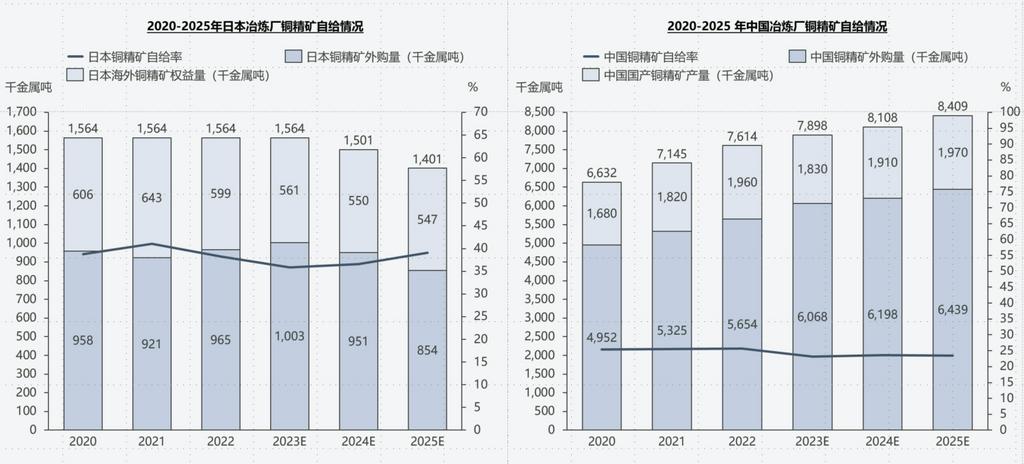
       Japanese and South Korean smelters have long recognized the scarcity of domestic resources, which cannot meet the demands of their industrial development. As a result, smelting enterprises in Japan and South Korea began investing in mines in regions such as the Americas and Australia early on. However, instead of participating in mine dividends, they secured mining rights to address the issue of insufficient domestic resources.
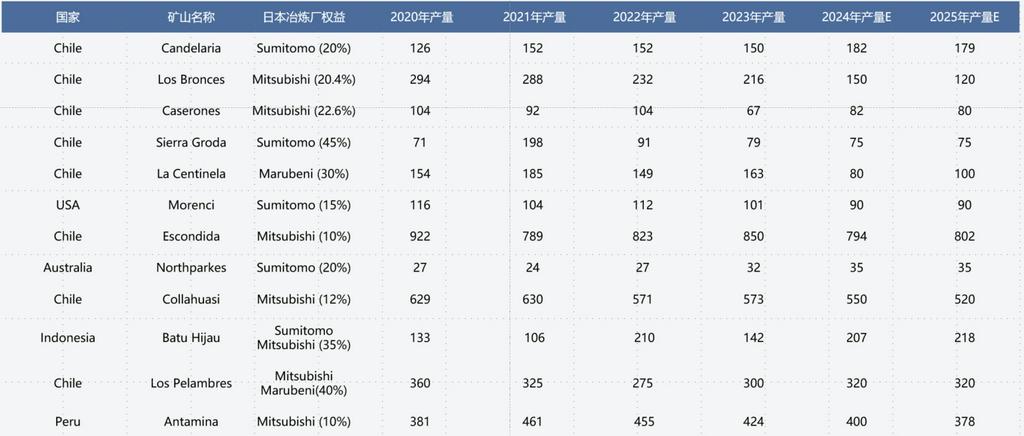
       Comparing the raw material self-sufficiency rates of China and Japan, it is evident that Japan's copper concentrate self-sufficiency rate can be maintained at 40%-50%, while China's rate is only around 25%. In other words, the raw material structure of Chinese smelters is far more dependent on external sources compared to Japanese smelters. Therefore, Japanese smelters, compared to their Chinese counterparts, have greater leverage to negotiate a benchmark figure with Antofagasta when facing significant supply shortages in the future.
》Click to View the SMM Copper Industry Chain Database


Data Source Statement: Except for publicly available information, all other data are processed by SMM based on publicly available information, market communication, and relying on SMM‘s internal database model. They are for reference only and do not constitute decision-making recommendations.

For any inquiries or to learn more information, please contact: lemonzhao@smm.cn
For more information on how to access our research reports, please contact:service.en@smm.cn
Related News
SMM Chinese New Year Holiday Survey on Processing Enterprises in 2026—Enamelled Wire
2 hours ago
SMM Chinese New Year Holiday Survey on Processing Enterprises in 2026—Enamelled Wire
Read More
SMM Chinese New Year Holiday Survey on Processing Enterprises in 2026—Enamelled Wire
As the Chinese New Year break approaches, the holiday schedules and production plans of enamelled wire enterprises have been largely finalized. SMM has surveyed multiple enamelled wire manufacturers, and the results are summarized as follows:
2 hours ago
What Are Brass Bar Enterprises' Expectations After the Chinese New Year?
2 hours ago
What Are Brass Bar Enterprises' Expectations After the Chinese New Year?
Read More
What Are Brass Bar Enterprises' Expectations After the Chinese New Year?
[SMM Brass Billet Bar] Regarding post-holiday production resumptions, brass bar enterprises generally expect a slow recovery in market demand. In the initial phase of production resumptions, the focus will be on digesting existing inventory and fulfilling a small number of orders. Large-scale raw material procurement and production are expected to be postponed until after the Lantern Festival.
2 hours ago
2026 Brass Bar Chinese New Year Break Arrangements
2 hours ago
2026 Brass Bar Chinese New Year Break Arrangements
Read More
2026 Brass Bar Chinese New Year Break Arrangements
[2026 Brass Bar Chinese New Year Break Arrangements] The break period is generally extended, with significant differences in scale: According to SMM, most brass billet enterprises plan to take a break from February 7 to February 12, and will resume production gradually on February 24 (the eighth day of the first lunar month). The break duration generally ranges from 12 to 17 days, longer than last year YoY.
2 hours ago
Why Would Japanese Smelters Negotiate Another BM Figure with Antofagasta? [SMM Analysis] - Shanghai Metals Market (SMM)