Recently, the topic of "Carrot Run" has frequently trended on social media, impacting traditional taxis and ride-hailing services and sparking thoughts on deeper industrial upgrades and iterations. Can autonomous driving truly replace human-operated driving? How can the safety of autonomous driving be ensured? These related topics have garnered significant attention online.
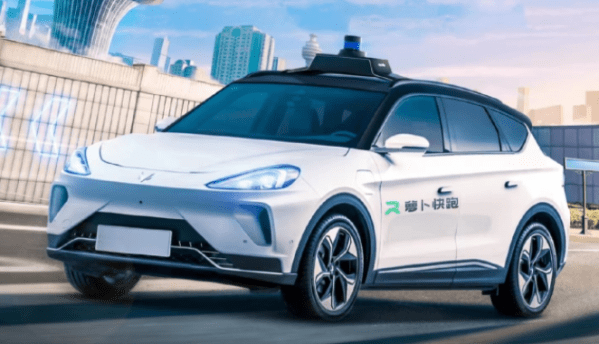
It is reported that the main operating model of Carrot Run in Wuhan is the fifth-generation product of Baidu's Apollo, with each vehicle costing as much as 480,000 yuan. According to the ride-hailing industry regulations, the vehicle's service life is 8 years, translating to a daily depreciation cost per vehicle of about 160 yuan. Additionally, there are labour costs for safety personnel, electricity prices, and daily operating expenses such as car washes, making the operating cost of Carrot Run far exceed 370 yuan. At this stage, autonomous taxis can only attract users through subsidies in their pricing strategy. Carrot Run needs to improve service quality while further reducing operating costs to achieve sustainable development.
Recently, Baidu released Carrot Run sixth-generation autonomous vehicle equipped with Apollo sixth-generation intelligent system solution, with the overall vehicle cost reduced by 60% compared to the fifth generation, priced at around 204,600 yuan. According to the Carrot Run plan, it aims to achieve full coverage in Wuhan by 2024 and plans to deploy 1,000 sixth-generation mass-produced autonomous vehicles.
How was such a significant cost reduction achieved? Apart from the high cost of the autonomous driving system, the top radar costs about 80,000 yuan, and each sector radar costs 10,000-20,000 yuan. With the development of LiDAR technology, future costs may drop to 8,000 yuan or even lower. The cost of vehicle controllers and chips is also high. Previously, Nvidia's truck chips were used, costing tens of thousands of yuan, but future use of edge computing could reduce costs to over 20,000 yuan. Other sensors, such as high-wave radar, ultrasonic radar, and cameras, cost about 30,000-40,000 yuan.
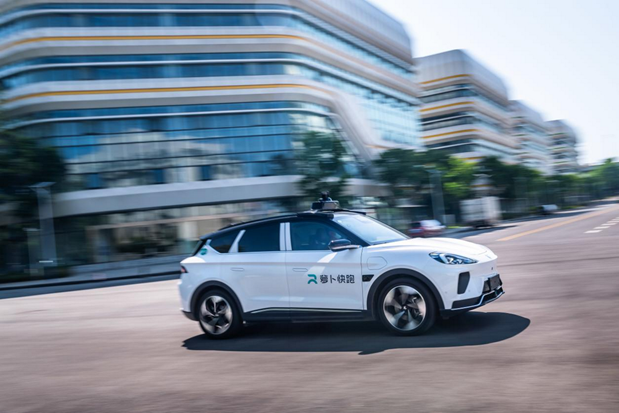
Given the high hardware costs, cost reductions must be achieved in other areas, such as battery technology. According to the 381st batch of vehicle announcements by the Ministry of Industry and Information Technology (MIIT), the vehicle is manufactured by JMEV and launched under the "Yichi" brand. It is a "battery-swappable pure electric multipurpose passenger vehicle" with dimensions of 4,765 x 1,885 x 1,715 mm and a wheelbase of 2,830 mm. It is equipped with a 110 kW motor from BYD FinDreams Power and an LFP battery from SVOLT Energy, supporting battery swapping. The vehicle has a range of 380 km, but with fully automated fast battery swapping, it can run all day without significant range anxiety. The entire battery swapping process is completed autonomously by the vehicle, usually within five minutes, and can be shortened to three minutes with direct battery swapping. The frequency of battery swapping depends on the daily mileage and does not affect orders. The batteries at the swapping stations are pre-charged to ensure the vehicle can continue operating at any time.
In terms of EV batteries, SVOLT Energy's L600 147Ah LFP short-blade battery is adopted. SVOLT Energy claims that the short blade + stacking design concept offers high safety performance and cost advantages. The short-blade stacked battery cells have passed a series of national safety performance tests, such as overcharge, impact, and vibration. Autonomous vehicles may require higher standards for battery safety and durability.
In recent years, the rapid penetration of NEVs has been closely related to the increase in ride-hailing services. NEVs, with their low electricity prices and low per-kilometer costs, have gradually won over ride-hailing drivers, who can still earn higher profits than with fuel vehicles after platform commissions. The era of autonomous driving has begun. Undoubtedly, autonomous driving will still choose electrification, bringing new growth points to the new energy lithium battery market. To better reduce battery costs, SMM believes that most models will still choose LFP batteries as the main battery type due to their low cost and safety advantages. Additionally, LFP batteries have made significant progress in range in recent years. As autonomous driving technology matures and is increasingly used in more cities in China, the related industrial chain will also flourish, bringing new growth points to the lithium battery market.