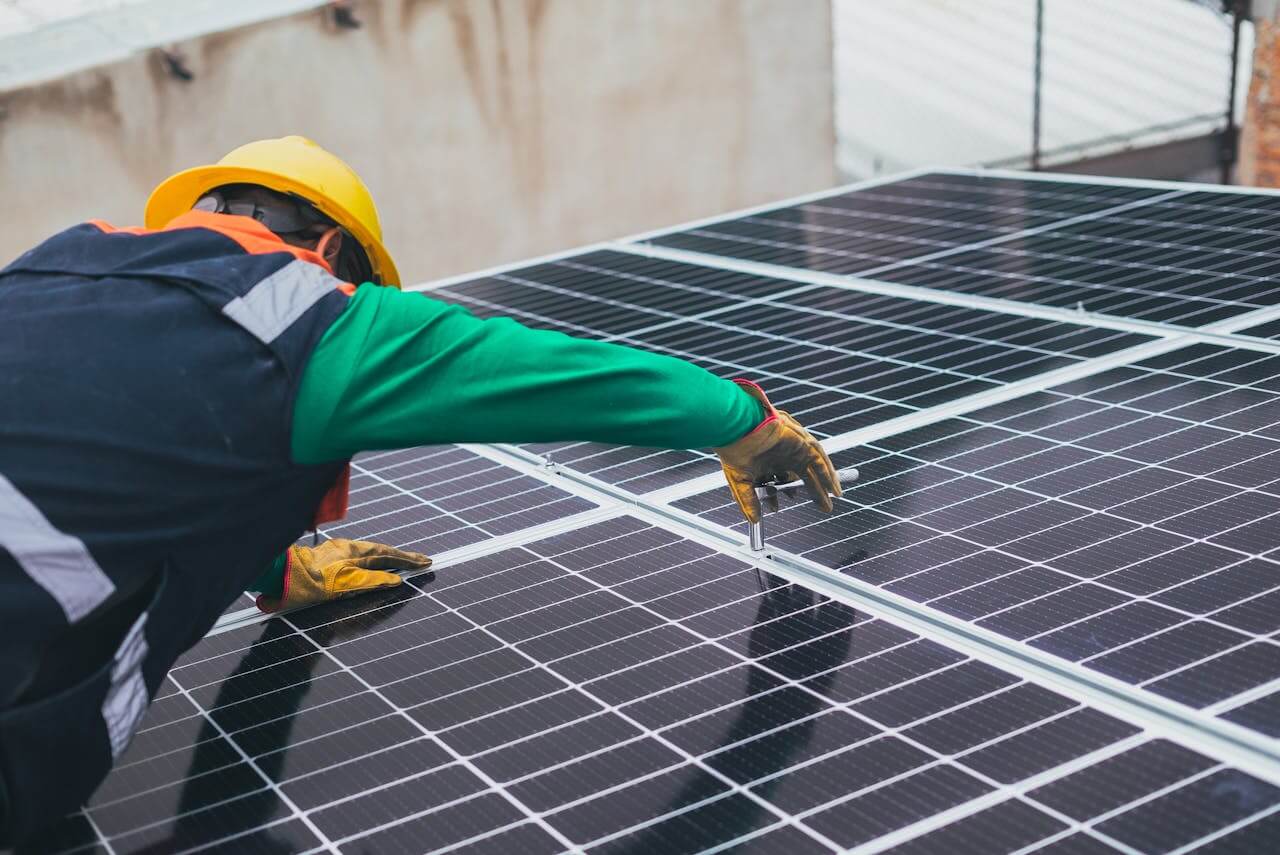
Last month, the Indian government announced plans to install rooftop photovoltaic power generation systems in 10 million households to reduce household electricity bills and strengthen national energy security. The scheme is called Pradhanmantri Surydaya Yojana announced by Prime Minister Narendra Modi. "This will not only reduce the electricity bills of the poor and middle class but will also make India self-reliant in the energy sector," the Prime Minister said in a statement. The long-term vision, he said, is for every Indian home to have its own roofing system. Based on the average household size in India, approximately 45 million people are expected to benefit from the scheme.
Recently, while presenting the 2024-25 mid-term budget to Parliament, Finance Minister Nirmala Sitharaman said that rooftop solar power generation for 10 million households in India will enable them to receive up to 300 units of free electricity per month.
By generating free solar power and consuming it themselves, and selling excess electricity to distribution companies, they expect to save INR 15,000 to INR 18,000 (USD 181-217) per year. It will also enable electric vehicle charging while creating entrepreneurship and employment opportunities for young people with technical skills in manufacturing, installation and maintenance, she added.
In this budget, the government has also allocated a budget of 85 billion Indian rupees ($1.02 billion) for grid-connected PV projects, which is higher than the revised budget of 47.57 billion Indian rupees ($574 million) for the 2023-24 fiscal year. This is an interim budget, and the policy will be clearer after the new government announces its annual budget in July 2024.
If India is to meet its target of installing 500GW of renewable energy by 2030, photovoltaics will play a key role. Ground power station projects have always been the main driving force for India's installed capacity. According to India's Ministry of New and Renewable Energy (MNRE), as of December 2023, the country's total ground-mounted solar photovoltaic power generation capacity was 56.92GW, while grid-connected rooftop photovoltaic power generation capacity was 11.08GW. Driven by the wave of power auctions, ground power station photovoltaic projects are expected to continue to maintain high growth. For distributed PV projects, especially rooftop PV, the commercial and industrial sector is expected to issue more favorable grid opening rules in an increasing number of regions. Meanwhile, the announcement of new plans will further support rooftop PV installations, with distributed PV installations expected to triple between 2030.
India's initial goal was to achieve 100GW of installed photovoltaic capacity by December 31, 2022, including 40GW of rooftop photovoltaic capacity. The current deadline to achieve this goal has been extended to March 31, 2026.

![[SMM Brief] PV module bidding capacity from 9.14-9.20 was 5,444.44 MW, with an average winning bid price of 0.73 yuan/W](https://imgqn.smm.cn/usercenter/LlMgj20251217171739.jpg)
![Canada Lifts Solar Trade Duties: Can Chinese Modules Win a Bigger Share? [SMM Analysis]](https://imgqn.smm.cn/usercenter/VqcvE20251217171739.jpg)