

In 2023, the industrial metal markets, including aluminium, experienced a year marked by prolonged waiting and uncertainty. The shadow of elevated interest rates has affected the world economy, and the eagerly anticipated rebound in demand from China, particularly in its real estate sector, has yet to materialize as expected. As a result, prices for base metals have remained relatively stagnant for significant periods during the year. The aerospace industry stands out as an exception despite the cautious market climate due to its strong demand for aluminium.
Boeing and Airbus: Sustainable material aluminium remains vital for aircraft production
The aviation and aerospace sectors faced significant hardships during the covid pandemic, with widespread repercussions felt from major aerospace corporations to smaller suppliers. Drastic production reductions and raw material shortages were the industry's shared burdens due to the public health crisis. The global decline in air travel demand, brought about by lockdowns and restrictions, also led to a substantial decrease in new aircraft manufacturing.
However, air travel has seen an impressive resurgence, with global air traffic rebounding around 95-97 per cent of pre-pandemic levels. Notably, domestic air travel in the United States has not only recovered to pre-pandemic levels but has exceeded them by 9 per cent, as reported by IATA. Since emerging from the pandemic, the demand for air travel has outstripped the industry's ability to produce new aircraft, resulting in a considerable backlog of orders for new planes.
Aerospace companies are now faced with the dual challenges of meeting this soaring demand while recovering from supply chain disruptions caused by the pandemic. They are also actively implementing measures to prevent such disruptions from occurring in the future.
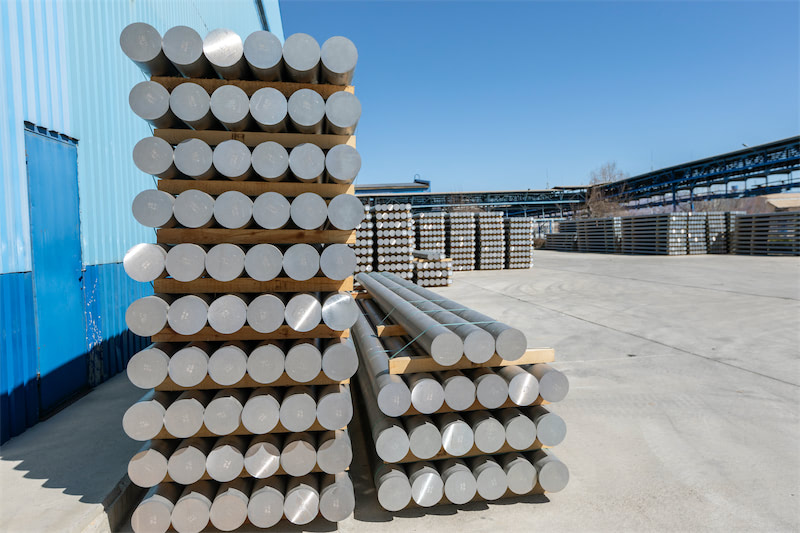
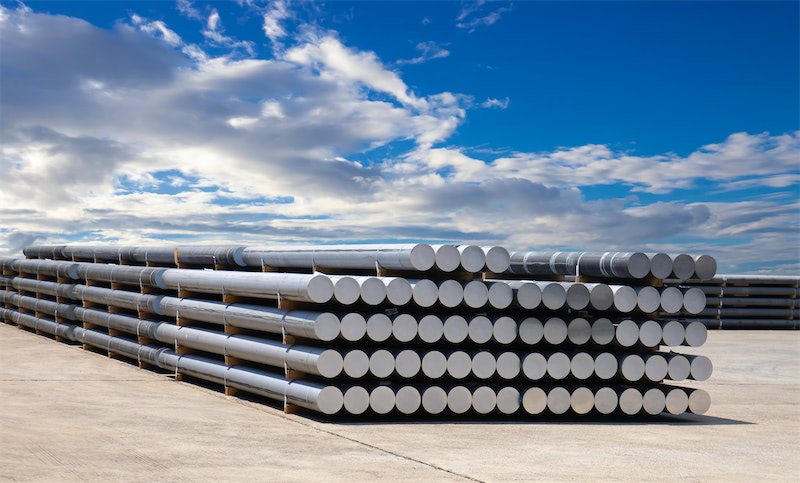
The utmost accountability for most aircraft production at the original equipment manufacturer (OEM) level is carried out by two major companies, i.e., Boeing and Airbus. In conjunction with their extensive supply chains, these industry leaders heavily depend on aluminium as a crucial material for aircraft manufacturing. Roughly 25 per cent of global aluminium production is dedicated to the transportation sector, with a significant portion of this demand coming from aerospace manufacturers. At a more detailed level, aluminium is utilised in 80 per cent to 90 per cent of the components needed to produce an aircraft. This highlights the essential role that aluminium plays in the aerospace industry.
However, the recent self-made sanctions against Russia, a significant aluminium producer, have made sourcing this vital material increasingly challenging.
According to a statement from Airbus, "Airbus uses aluminium as a major material for its product design, leveraging its characteristics of strength combined with lightweight. Aluminium is mainly used for aerostructure elements such as fuselage, wing skins, and mechanical parts."
source:https://www.alcircle.com/news/boeing-and-airbus-sustainable-material-aluminium-remains-vital-for-aircraft-production-101711
Boeing and Airbus: Sustainable material aluminium remains vital for aircraft production
In 2023, the industrial metal markets, including aluminium, experienced a year marked by prolonged waiting and uncertainty.
Data Source Statement: Except for publicly available information, all other data are processed by SMM based on publicly available information, market communication, and relying on SMM‘s internal database model. They are for reference only and do not constitute decision-making recommendations.
For any inquiries or to learn more information, please contact: lemonzhao@smm.cn
For more information on how to access our research reports, please contact:service.en@smm.cn
Related News
21 hours ago
Fed Governor Milan Pushes for Over 100 Basis Points Cut, Contradicts Barkin on Caution
Read More
Fed Governor Milan Pushes for Over 100 Basis Points Cut, Contradicts Barkin on Caution
Federal Reserve Governor Milan pointed out that it is necessary for the US Fed to cut interest rates by more than 100 basis points this year. At the same time, he is very much looking forward to the performance of Kevin Warsh as Fed Chairman. However, Richmond Fed President Barkin emphasized that monetary policy must remain cautious until inflation fully pulls back to the target level, thereby ensuring the stability of the labour market.
21 hours ago
21 hours ago
Democratic Senators Demand Delay in Fed Nomination Amid Criminal Investigation
Read More
Democratic Senators Demand Delay in Fed Nomination Amid Criminal Investigation
All 11 Democratic members of the US Senate Banking Committee jointly sent a letter to the committee's chairman, Tim Scott, requesting that all nomination processes for the prospective Fed Chairman, Kevin Warsh, be postponed until the criminal investigation into current Fed Chairman Powell and other board members is concluded. However, Scott stated that Warsh's confirmation was a done deal.
21 hours ago
21 hours ago
Fed to Keep Large Banks' Capital Levels Unchanged, Postpones Stress Test Reforms Until 2027
Read More
Fed to Keep Large Banks' Capital Levels Unchanged, Postpones Stress Test Reforms Until 2027
The US Fed has announced that it will maintain the capital levels of large banks unchanged during the upcoming stress test cycle (corresponding to the 2026 cycle). At the same time, the US Fed is planning multidimensional reforms to this annual test, aiming to enhance its transparency. The US Fed's Vice Chair for Supervision, Bowman, revealed that adjustments to the stress capital buffer requirements for large banks will be postponed until 2027. This move is intended to provide the US Fed with sufficient time to evaluate potential flaws that may be exposed in its testing models when assessing banks' financial conditions under simulated economic downturn scenarios.
21 hours ago
Related News
Fed Governor Milan Pushes for Over 100 Basis Points Cut, Contradicts Barkin on Caution
Feb 07, 2026 17:24
Democratic Senators Demand Delay in Fed Nomination Amid Criminal Investigation
Feb 07, 2026 17:23
Fed to Keep Large Banks' Capital Levels Unchanged, Postpones Stress Test Reforms Until 2027
Feb 07, 2026 17:23
Toyota Plans to Boost Hybrid and PHEV Production to 6.7M Units by 2028
Feb 07, 2026 17:22