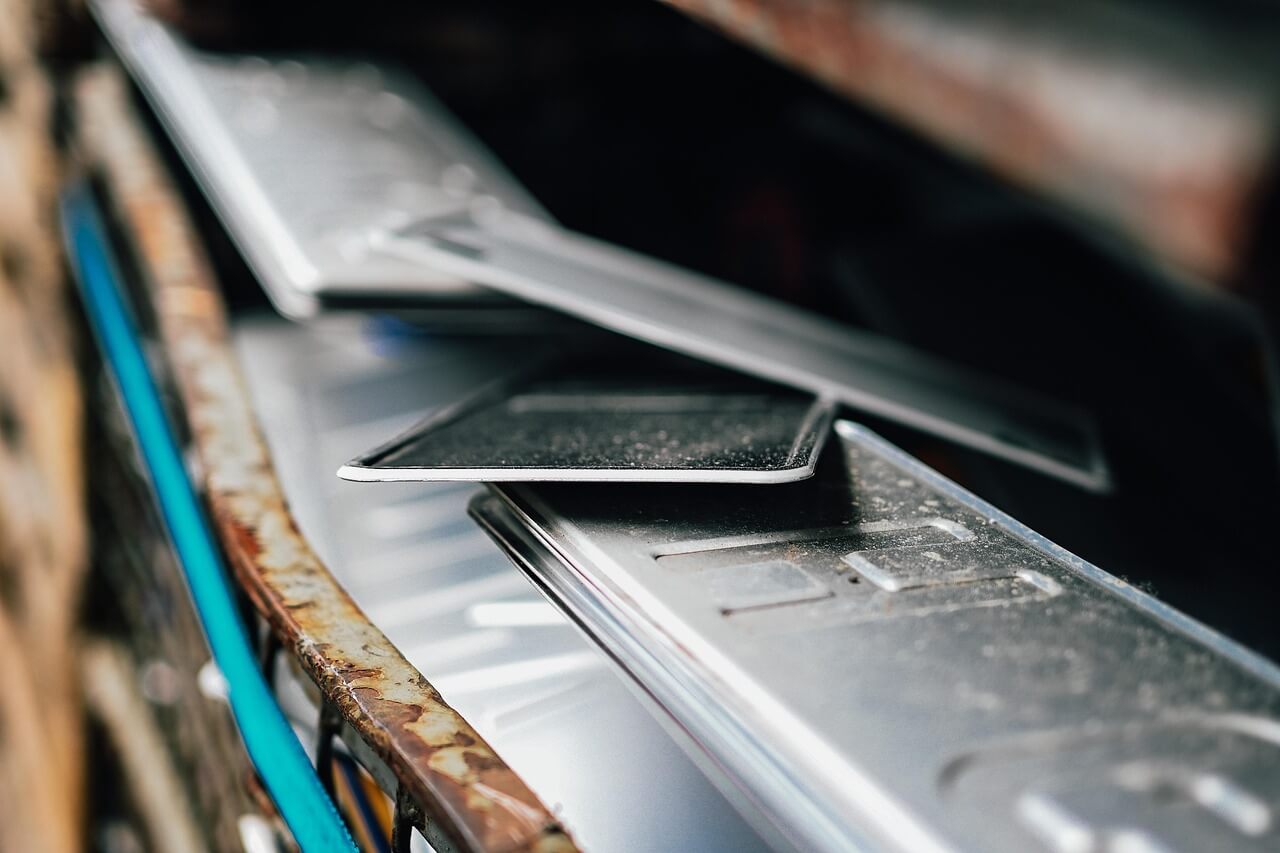
For many years, the aircraft and aerospace industries have heavily depended on using aluminium alloys. The pioneering aircraft would not have been able to achieve flight without applying aluminium alloys in their engines. The Sputnik satellite, launched by Soviet Russia (presently Russia), successfully endured its journey through the scorching outer atmosphere and into space due to its aluminium-based construction. Even in contemporary times, NASA continues to employ an advanced aluminium-lithium hybrid in the cutting-edge Orion spacecraft.
Aluminium alloys for aerospace applications
Aluminium alloys play a pivotal role in engineering commercial aeroplanes and intricate space-bound shuttles. These alloys are most frequently utilized in constructing fuselages, wings, and supporting structures, providing an array of advantages for aircraft and spaceflight engineering fields. A wide range of aluminium alloys, denoted by their AA designations, are accessible for the aerospace sector, with each alloy tailored to provide distinct features and compositions to address specific application requirements:
AA 7068: The most robust alloy currently in use seamlessly marries exceptional strength with minimal weight, rendering it a prime choice for military applications demanding materials capable of enduring the harshest of environments.
AA 7050: One of the aerospace industry's most coveted alloys surpasses AA 7075 in corrosion resistance and significantly excels in durability.
AA 7075: Comprising primarily of zinc, aluminium alloy 7075 has found extensive use in diverse aircraft components dating from history, and it continues to be a widely favoured alloy in contemporary manufacturing due to its robust strength akin to steel and ease of machinability.
AA 1100, AA 1145, and AA 3003: Fin stock manufacturing commonly utilizes various techniques to achieve highly efficient heat transfer, among other benefits.
AA 5052: This alloy, belonging to the non-heat-treatable category, stands out as the most robust option. It boasts excellent flexibility and can easily take on various shapes and forms. Additionally, AA 5052 demonstrates exceptional resistance to saltwater corrosion when employed in marine environments, making it an ideal choice.
AA 6061: This alloy is widely popular among amateur and hobbyist aircraft builders and finds frequent use in the aerospace sector for crafting wings and fuselages.
AA 2024: Mainly consisting of copper, AA 2024 is frequently employed to achieve excellent strength-to-weight ratios. It finds its most common application in the fabrication of wings and fuselages, owing to the stringent tensile strength demands placed on these critical components.
AA 2014: It is the second-most favoured alloy in aerospace engineering and boasts remarkable strength and durability. Its primary drawback, however, is its limited resistance to corrosive elements. Consequently, AA 2014 is typically employed for the internal components of aircraft rather than in their external structural factors.
Global Aluminium Industry Key Trends 2030
Conclusion
In aerospace applications, aluminium alloys are chosen to address the challenges of sub-zero temperatures experienced in the frigid vacuum of space. Conversely, aluminium alloys used in aircraft construction are favoured for their robustness and resistance to various forms of corrosion. The exceptional stability of these alloys makes them well-suited for use in mechanical components, which further benefit from aluminium's remarkable electrical conductivity.
source:https://www.alcircle.com/news/aluminium-alloys-for-aerospace-applications-exploring-high-performance-alloys-100399
Aluminium alloys for aerospace applications: Exploring high-performance alloys
For many years, the aircraft and aerospace industries have heavily depended on using aluminium alloys.
데이터 출처 설명: 공개 정보를 제외한 모든 데이터는 SMM이 공개 정보, 시장 커뮤니케이션 및 SMM 내부 데이터베이스 모델을 기반으로 가공한 것입니다. 본 자료는 참고용이며 의사결정 권고를 구성하지 않습니다.
문의 사항이 있거나 자세한 정보를 원하시면 아래로 연락해 주시기 바랍니다: lemonzhao@smm.cn
리서치 보고서 열람 방법에 대한 자세한 내용은 아래로 문의하시기 바랍니다:service.en@smm.cn
관련 뉴스
![A00 소폭 하락, 알루미늄 스크랩 전반적 안정세 [알루미늄 스크랩 일일 리뷰]](https://imgqn.smm.cn/usercenter/yOYEC20251217171653.jpg)
11시간 전
A00 소폭 하락, 알루미늄 스크랩 전반적 안정세 [알루미늄 스크랩 일일 리뷰]
더 보기
A00 소폭 하락, 알루미늄 스크랩 전반적 안정세 [알루미늄 스크랩 일일 리뷰]
11시간 전
12시간 전
신장 보위안 알루미늄, 준둥 경제구에서 연간 15만 톤 생산능력 프로젝트 추진
더 보기
신장 보위안 알루미늄, 준둥 경제구에서 연간 15만 톤 생산능력 프로젝트 추진
신장 보위안 알루미늄 유한공사는 연산 15만 톤 규모의 신형 알루미늄 반제품 프로젝트 건설을 전력으로 추진하고 있다. 신장 준둥 경제기술개발구 화샤오산 알루미늄 다운스트림 산업단지에 위치한 이 프로젝트는 총투자 1억 8천만 위안, 부지 면적 64무이다. 총 건축 면적 2만 3천 제곱미터의 표준화 생산 작업장 2개 동을 건설할 계획이다. 생산 라인 구성 측면에서 이 프로젝트는 알루미늄 봉 생산 라인 2개, 주조 압연 알루미늄 코일·스트립 생산 라인 8개, 냉간 압연 알루미늄 코일·스트립 생산 라인 1개를 갖추게 된다. 프로젝트가 전면 완공되어 가동되면 연간 알루미늄 선 6만 톤, 알루미늄 코일 9만 톤의 생산 능력을 갖출 것으로 예상된다.
12시간 전
![[ADC12 가격 일일 리뷰] 알루미늄 선물 고점에서 등락; ADC12 현물 강세 속 보합](https://imgqn.smm.cn/usercenter/FHiZE20251217171722.jpeg)
12시간 전
[ADC12 가격 일일 리뷰] 알루미늄 선물 고점에서 등락; ADC12 현물 강세 속 보합
더 보기
[ADC12 가격 일일 리뷰] 알루미늄 선물 고점에서 등락; ADC12 현물 강세 속 보합
[ADC12 가격 일일 코멘터리: 알루미늄 선물 고점 횡보, ADC12 현물 강보합] 알루미늄 합금 2611 계약은 오늘 23,430위안/톤에 개장하여 장중 저점인 23,320위안/톤에서 지지를 받은 후 점진적으로 반등했으며, 하루 종일 23,320~23,560위안/톤 범위에서 등락을 거듭하다가 23,435위안/톤에 마감하여 0.11% 상승했다.
12시간 전