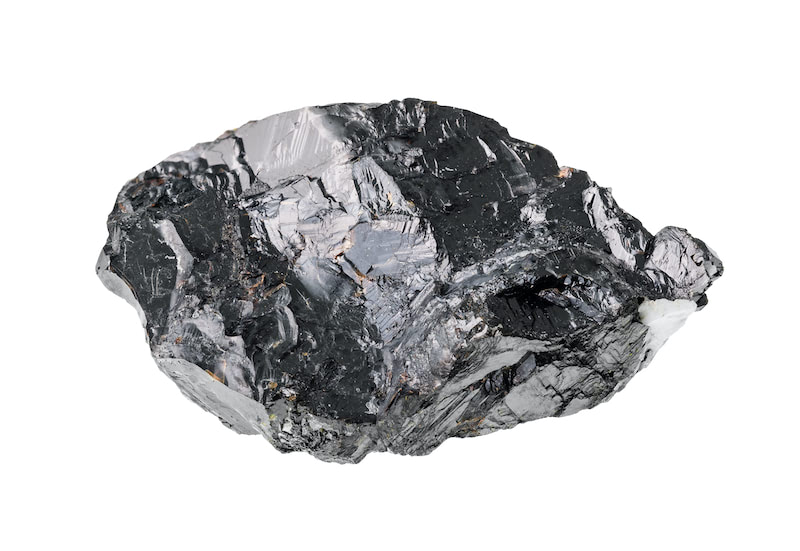
As a significant consumer and producer of zinc, China has been grappling with the declining quality of zinc ores due to long-term over-mining. This situation forebodes a severe shortage of zinc resources in the future, giving rise to the secondary refined zinc industry. The volume of secondary refined zinc within China has been progressively increasing, with the total output of zinc elements in 2022 reaching approximately 5.97 million mt. Notably, secondary refined zinc production in China constituted 23% of thea overall zinc production.
The primary sources of raw materials for secondary refined zinc can be categorized into new scrap and old scrap. New scrap pertains to waste originating from smelting and processing activities. This includes zinc slag and zinc ash, as well as offcuts from industries such as galvanizing, copper materials manufacturing, zinc die-casting, and zinc material processing, and battery production. It also encompasses zinc slag from lead and copper smelting systems. The inconsistent zinc content across various types of scrap complicates the recycling process.
On the other hand, old scrap comprises blast furnace ash, converter ash, electric furnace steel ash, discarded zinc die-casting parts, and scrap brass. Given the high and stable zinc content present in the dust from steel mills' electric furnaces, it has emerged as the raw material of choice for global secondary refined zinc enterprises.
In China, the production of secondary refined zinc largely employs pyrometallurgical processes during the preliminary stages and hydrometallurgical processes in the subsequent stages. The foremost treatment of secondary refined zinc materials usually involves pyrometallurgical techniques such as the rotary kiln, bottom-blowing furnace, and circulating fluidized bed methods.
Leveraging the relatively low boiling point of zinc (907°C), secondary zinc oxides like secondary zinc oxide, calcined zinc, zinc slag, and zinc ash are reduced and vaporized into zinc vapor under high-temperature conditions. This process allows for the extraction of zinc from other solids and is expelled along with the flue gas. During vaporization, zinc vapor is prone to oxidation, forming zinc oxide particles, which are collected in the flue gas treatment system along with dust.
The production of secondary refined zinc ingots mainly employs hydrometallurgical techniques. Due to their high leaching efficiency and the consistent grade of the resulting zinc ingots, these techniques are preferred by about 80% of the industry. The fundamental principle of this process involves immersing waste materials into a solution, followed by leaching, purification, electrolysis, and crystallization to produce refined zinc. Depending on the leaching agent used, this process can be categorized as either acid leaching or ammonia leaching.
In the secondary refined zinc industry, acid leaching process are well-established, accounting for 80% of the total hydrometallurgical capacity. However, ammonia leaching process, a more recent advancement, constitute only 20% of the total hydrometallurgical capacity. While ammonia leaching process presents several advantages, the journey towards achieving technical maturity is fraught with certain challenges:
- Determining the optimal ammonia concentration that facilitates complete participation during both zinc dissolution and electrolysis. This concentration should not result in severe air pollution in the production environment due to the high volatility of NH3·H2O.
2、Striking a balance between the zinc content in the solution, the occurrence of crystallization faults, and leaching rates.
3、Ensuring minimal consumption of zinc powder in the subsequent purification process after lead dissolution, thereby achieving cost-effective purification.
4、Identifying a suitable additive to combat the problem of dendritic growth on the cathode surface during electrolysis so as to achieve a smooth zinc surface that is easy to separate.
As The 14th Five-Year Plan of the People’s Republic of China unfolds, the methodologies for secondary refined zinc production are poised for continuous advancement. The acid and ammonia-based zinc refining processes will persistently address technical challenges, aiming to enhance the recovery of valuable metals and expedite China's progression towards peak carbon emissions and carbon neutrality. For more comprehensive information on the secondary refined zinc industry, keep an eye out for the SMM 2023 China Secondary Refined Zinc Analysis Annual Report.
The SMM China Secondary Refined Zinc Analysis Annual Report delivers an expert interpretation of current hot topics and the implications of major macroeconomic policies, The SMM China Secondary Refined Zinc Analysis Annual Report provides expert commentary on the latest hot topics and the impact of significant macroeconomic policies. The report delivers a thorough analysis that spans the entire secondary refined zinc supply chain. It explores market dynamics of upstream raw materials, including secondary zinc oxide, zinc calcine, zinc ash, and zinc slag. The report reviews the progress of dominant firms in the secondary refined zinc sector, assesses the prevalent production techniques, and forecasts future demand trends in downstream sectors such as infrastructure, transportation, and consumer electronics. This extensive report presents a deep dive into the present state and future outlook of national production capacity and output, import and export dynamics, domestic market share held by leading enterprises, and production cost structures of prominent companies. It stands as an essential guide for businesses throughout the secondary refined zinc industry to devise prescient strategic plans. For further information, please reach out to Zhang Yuting, the Project Manager of the Nonferrous Consultation team, on 18701906042. We invite you to subscribe to The SMM China Secondary Refined Zinc Analysis Annual Report, which is available in both English and Chinese.
SMM stands as an authoritative provider of professional consultation services in the non-ferrous industry in China. Their comprehensive product portfolio encompasses a wide array of services such as industry supply and demand price analyses, supply chain management studies, market surveys, on-the-ground research, expert industry reports, tailored research reports, industry planning documents, and industry whitepapers, among others. In response to evolving market conditions, these reports can be updated on a quarterly, semi-annual, or annual basis.

![End-use demand underperforms, zinc oxide operating rates edge down [SMM Zinc Oxide Weekly Review]](https://imgqn.smm.cn/usercenter/tAyyp20251217171754.jpg)
![Die-casting zinc alloy operating rates trend lower, expected to decline further next week [SMM die-casting zinc alloy weekly review]](https://imgqn.smm.cn/usercenter/EviJV20251217171754.jpg)