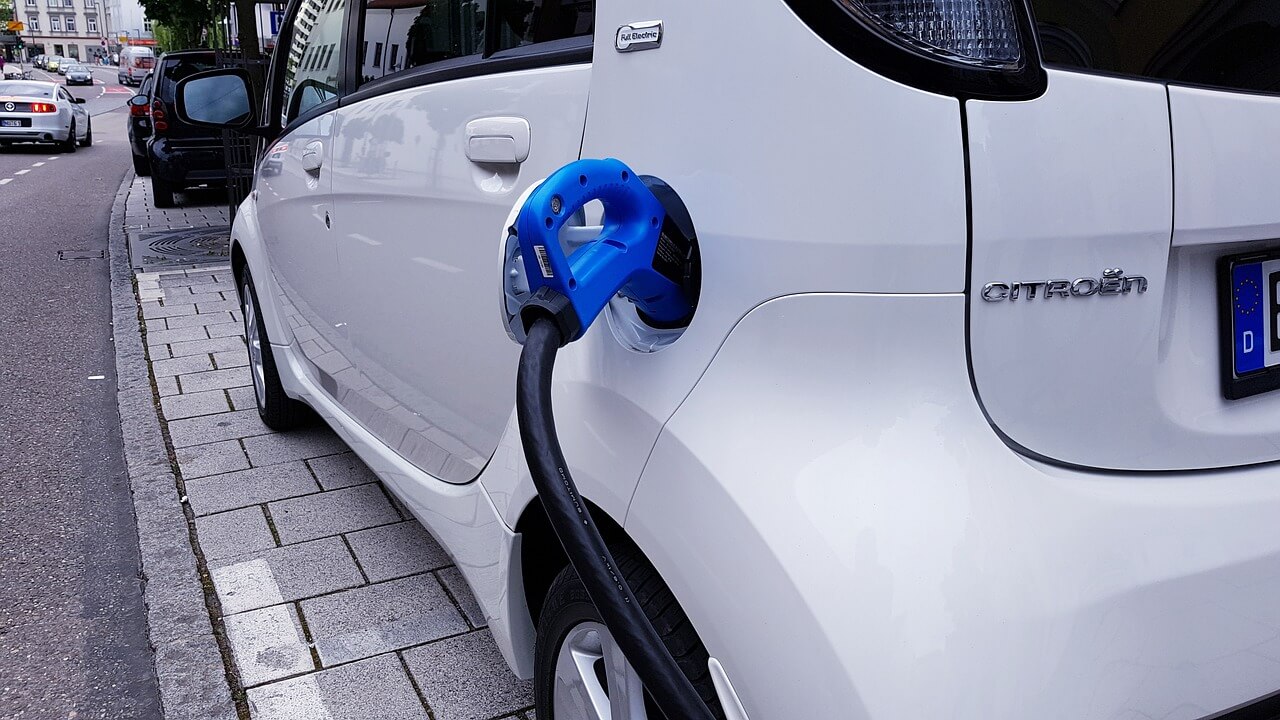
SHANGHAI, Sep 22 (SMM) - Recently, it is announced at the 2022 National Innovation and Entrepreneurship Week’s "Lithium Metal Battery Innovation Technology Forum” that, an automated lithium metal battery manufacturing production line with international competitiveness is officially launched in Hefei city, Anhui province! It is reported that the lithium metal battery is developed and manufactured by the start-up company Mengwei Technology. It is its third-generation product, and the first automated lithium metal battery production line in China and even in the world. It marks another major progress in the large-scale mass production achieved by a new generation of power battery technology enterprises through independent R&D. The energy density of lithium metal batteries off this production line exceeds 500Wh/kg, which is expected to more than double the cruising range of electric vehicles in the future.
The energy density of the third-generation product delivered by Mengwei Technology has increased from 450Wh/kg to 500Wh/kg, with better test performance under low pressure and wide temperature difference conditions in the near space environment. Mengwei Technology has completed the delivery of the 6th batch of lithium metal battery products, which will be used in a new generation of high-altitude long-endurance aircraft. Lithium metal batteries use pure lithium metal as the anode material and use solid electrolytes instead of liquid electrolytes. Solid-state batteries are considered to be the most promising new generation of lithium-based power batteries because they can substantially improve the energy density and safety. Its core advantages are:
1. Higher energy density. It is estimated that its single-battery energy density can reach as high as 900Wh/kg, which is expected to completely solve the problem of mileage anxiety.
2. Higher safety. Many inorganic solid electrolytes are non-flammable, while polymer solid electrolytes have certain flammability risks, but their safety is still greatly better compared to liquid electrolytes.
Judging from the current industrial layout, international car makers like Toyota, BMW, Volkswagen, Hyundai are actively deploying in the field of solid-state batteries. And battery manufacturers such as CATL, BYD, Gotion Hi-Tech, and Fuxin Dare Automotive have stepped into this field as well. In addition, companies such as Easpring Material Technology, Tianqi Lithium, Ruitai New Materials, Sunwoda, Growth Enterprise Market, and Tianci Materials are in the R&D process of solid-state battery materials. Lead Intelligent Equipment said that it has started the positioning and technical reserves of solid-state battery production equipment. And more companies such as Jinlongyu and Hongdou have entered the industry.
Toyota expects to achieve mass production and application by 2025; Honda and Nissan both stated that their all-solid-state battery production lines will be put into operation by 2024; LG Energy Solutions expects to achieve all-solid-state battery mass production by 2026. Ouyang Minggao, academician of the Chinese Academy of Sciences and vice-chairman of the ChinaEV 100, said the mass production and commercial application of solid-state batteries is expected between 2025-2030. The road to mass production of solid-state batteries is slow, and there are still some pain points:
1. All solid-state lithium batteries are immature, and huge investment is required to build new production lines. The yield rate is extremely low with significantly high cost. It is unlikely to match the public's purchasing power and thus cannot achieve large-scale production.
2. The conductivity of the solid electrolyte is only one tenth of that of the liquid electrolyte, and the fast charging efficiency is poor.
3. The production cost of innovative materials such as pre-lithiated silicon carbon anode or vision lithium metal anode, high-nickel cathode material, solid electrolyte is much higher than the current corresponding materials, which is a deviation from the current trend of cost reduction.
At present, lithium-ion batteries represented by LFP and ternary batteries are still the main technology routes for electric vehicles, but safety and energy density are the two major shortcomings. The solid-state lithium metal battery can greatly alleviate the "safety anxiety" and "mileage anxiety" during the development of new energy vehicles. But the development of solid-state batteries still depends on the improvement of technology and the progress of commercialisation after the technical route has been decided.
![[SMM News] Argosy Minerals Completes Rincon Crystallisation Tests, Lithium Chloride Yield Above 99%](https://imgqn.smm.cn/usercenter/Bwmed20251217171726.jpg)