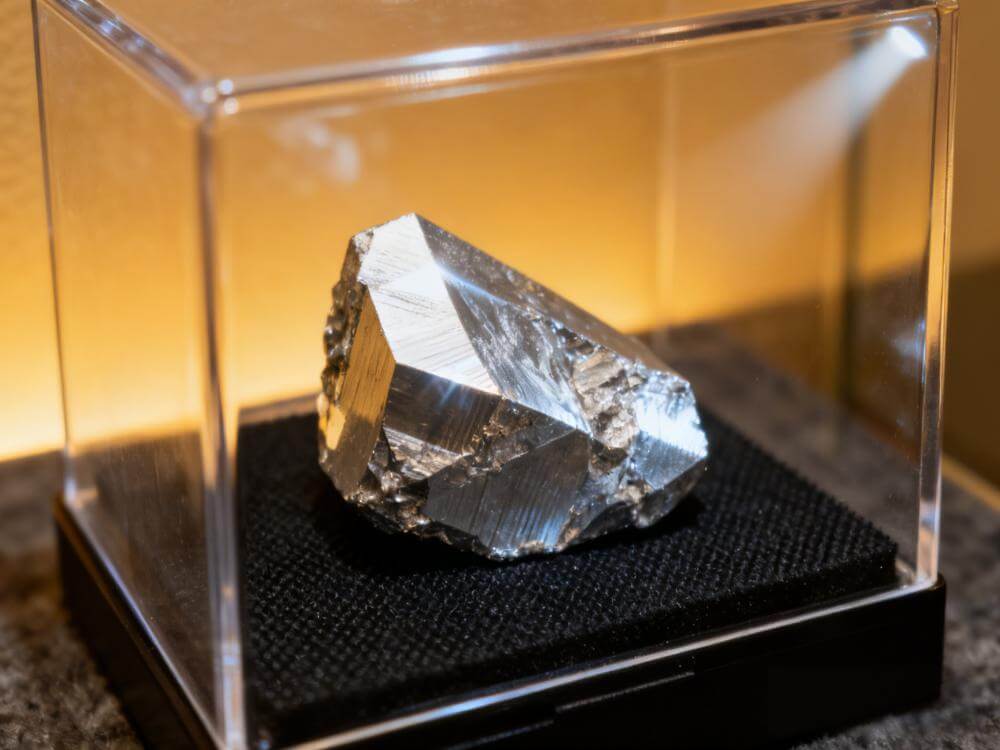
Will High-Carbon Ferrochrome Price End its Three-Month Long Downward Trend approaching the Peak Season?

Published: Aug 04, 2022 16:35 (GMT+8)
Source: SMM
However, the production cut wills weakened with the estimated restoring profits following the fall in the prices of chrome ore and coke. Ferrochrome plants, especially those in north China, maintained high operating rates with cost advantage.

SHANGHAI, Aug 4 (SMM) - The prices of high-carbon ferrochrome dropped sharply in July, and the average price in Inner Mongolia fell 900 yuan/mt (Cr 50%) throughout the month. As of August 1, the prices of high-carbon ferrochrome in Inner Mongolia stood at 7,800-8,100 yuan/mt (Cr 50%), and 8,100-8,400 yuan/mt (Cr 50%) in Sichuan. Last Friday night, Tsingshan disclosed its bid prices in August at 7,995 yuan/mt (Cr 50%), down 1,000 yuan/mt on a monthly basis.

Supply: At the beginning of July, ferrochrome plants reduced or suspended the production due to losses. However, the production cut wills weakened with the estimated restoring profits following the fall in the prices of chrome ore and coke. Ferrochrome plants, especially those in north China, maintained high operating rates with cost advantage. However, market transactions were poor amid bearish sentiment roaming the market, and finished products held by some ferrochrome plants accumulated.

Ferrochrome prices are highly likely to drop further in August amid sufficient supply, and the manufacturers will keep suffering losses. Ferrochrome plants in south China have mostly suspended or reduced the production for maintenance. But those in north China still have some high-priced orders on hand in addition to the long-term orders, and will maintain high operating rates without plants for production cuts. It is expected that domestic ferrochrome supply will drop slightly in August.

Demand: The consumption of stainless steel was sluggish, and the steel mills reduced the production amid losses. However, the stainless steel inventory has not yet declined significantly, and the downward trend is hard to change. Therefore, steel mills were less willing to purchase high-priced raw materials, and the demand for ferrochrome also dropped in July. Stainless steel production in August is expected to further decline. Some steel mills only maintain purchases with long-term orders, and some have even stopped ferrochrome procurement in August. Ferrochrome demand weakens further.

Cost: coke prices continued to fall in July, and secondary metallurgical coke prices fell below 2,000 yuan/mt. As of the beginning of August, the prices of secondary metallurgical coke in Inner Mongolia stood at 1,950 yuan/mt, and the prices of small-particle coke and coke nut fell to around 1,700 yuan/mt. Although the port inventory of chrome ore was still at a low level, the consumer market remained week, and ferrochrome plants suffered serious losses, who reduced the demand for raw materials, including chrome ore. Due to the great production reduction of ferrochrome plants in the south, the demand for ROM has declined significantly. In addition, the supply concentration of ROM is less than that of South Africa concentrate, ROM prices dropped more significantly. The prices of coke have remained stable since entering August, but chrome ore prices are likely to fall amid constant production cuts of steel and ferrochrome mills. 

On the whole, the ferrochrome market is still pessimistic in August as the stainless steel sector remains poor. The stainless steel inventory carried by steel mills is still accumulating, and the market is not confident in the traditional seasonal high in September and October, hence stainless steel production is expected to drop further. Furthermore, the reduction in ferrochrome production is unlikely to overturn the current situation of oversupply of ferrochrome, and there is possibility that ferrochrome prices will drop further in August.

Data Source Statement: Except for publicly available information, all other data are processed by SMM based on publicly available information, market communication, and relying on SMM's internal database model. They are for reference only and do not constitute decision-making recommendations.

For any inquiries or for more information, please contact: lemonzhao@smm.cn
For more information on how to access our research reports, please contact:service.en@smm.cn
Related News
[SMM Chromium Week Review] 'Port Stocks Draw Down as Departures Extend Gains, Zimbabwe Tightens Chrome Mining Rules'
Sep 25, 2026 20:43 (GMT+8)
[SMM Chromium Week Review] 'Port Stocks Draw Down as Departures Extend Gains, Zimbabwe Tightens Chrome Mining Rules'
Read More
[SMM Chromium Week Review] 'Port Stocks Draw Down as Departures Extend Gains, Zimbabwe Tightens Chrome Mining Rules'
[SMM Chromium Week Review] 'Port Stocks Draw Down as Departures Extend Gains, Zimbabwe Tightens Chrome Mining Rules'
Published: Sept 25, 2026
Sep 25, 2026 20:43 (GMT+8)
Empire produces rutile pigment from Pitfield titanium ore
Sep 25, 2026 16:04 (GMT+8)
Empire produces rutile pigment from Pitfield titanium ore
Read More
Empire produces rutile pigment from Pitfield titanium ore
[SMM Titanium Flash] Empire Metals has successfully produced an uncoated rutile titanium-dioxide pigment from concentrates generated from the in-situ weathered ore at its Pitfield Titanium Project in Western Australia. The company says X-ray diffraction confirmed the TiO₂ was present as rutile. Chemical analysis initially produced 97.6% TiO₂, with sulphur accounting for much of the impurity; correcting for that anomaly gives a calculated grade of about 99.2% TiO₂. The development moves Pitfield beyond simply demonstrating titanium mineralisation toward producing a higher-value titanium product. Empire is now working on optimisation and surface coating to produce a rutile pigment suitable for architectural coatings. The company says it is also assessing titanium-metal feedstock applications. These remain laboratory and product-development results, not commercial-scale production.
Sep 25, 2026 16:04 (GMT+8)
[SMM Chromium Flash] FS Mining Details $500m Zimbabwe Ferrochrome Smelter and Power Plant Plans
Sep 25, 2026 15:21 (GMT+8)
[SMM Chromium Flash] FS Mining Details $500m Zimbabwe Ferrochrome Smelter and Power Plant Plans
Read More
[SMM Chromium Flash] FS Mining Details $500m Zimbabwe Ferrochrome Smelter and Power Plant Plans
[SMM Chromium Flash] FS Mining Details $500m Zimbabwe Ferrochrome Smelter and Power Plant Plans
FS Mining, a South African-registered company developing a chrome mine in Zimbabwe, is advancing plans for a US$500 million investment split between a US$100 million ferrochrome smelter and a US$400 million thermal power project, director Dr. Precious Mabuza said in an interview published September 25. The company is currently building a US$15 million wash plant as its first phase of development, and is progressing through the technical, engineering and financing stages of the planned smelter and power plant, with construction timelines dependent on completing feasibility work and securing the necessary approvals. The smelter is planned to begin with 16.5 MVA of sintering plant capacity, paired with a 25MW thermal power station in the project's first phase. Mabuza said the longer-term vision is to expand the power-generation component to 320MW, with the company hoping to extend rural electrification to communities surrounding its operations once the plant is built out. Eventual chrome production volumes will be determined once the final furnace configuration, engineering design and operating parameters are concluded, she said. Mabuza framed the investment around Zimbabwe's push for greater domestic beneficiation, noting the government has banned the export of raw minerals, including chrome, to force local value addition. She said the mine currently employs 100 people, with the company targeting 1,500 jobs at the smelter and power station once operational, and roughly 5,000 jobs across the wider value chain including mining, logistics, services and construction. The reliable baseload electricity from the planned thermal power station is central to the project's strategy, intended to support both the smelting operation and, eventually, electrification for nearby communities.
Sep 25, 2026 15:21 (GMT+8)