SHANGHAI, Jun 17 (SMM) - Due to less attention and investment in recent years, as well as a different technical approach than NMC battery recycling, the recycling volume of scrap LFP batteries is not as high as that of NMC batteries. However, with the rapid increase in the proportion of lithium iron phosphate installed capacity in recent years, and the soaring price of lithium carbonate (the main product of LFP battery recycling), lithium iron phosphate battery recycling has gradually attracted market attention, and recycling companies have also begun to deploy LFP battery recycling lines. It has been nearly 7 years since China's new energy vehicles began to grow on a large scale in 2015. According to the estimation of the 5-8-year service life of the power battery, the first wave of large-scale retirement of the power battery is gradually coming. According to statistics, the total number of retired power batteries reached 200,000 mt in 2020, and it is expected to reach 780,000 mt by 2025, with a compound annual growth rate of over 31%. Previously, according to the production and sales of new energy vehicles, it was estimated that the cumulative number of retired power batteries from 2021 to 2026 will increase from 33GWh to over 230GWh, with a compound annual growth rate of over 45%. Lithium iron phosphate batteries in the field of public transportation are expected to become one of the important sources of retired batteries. When China’s new energy vehicle production and sales began to grow considerably around 2015, the public transportation was another major application in addition to passenger cars. The power batteries used in public transportation are mainly lithium iron phosphate batteries. When the first wave of battery retirements comes, the lithium iron phosphate batteries that were used in the early stages of public transportation, buses and other operating vehicles will first enter the retirement stage. In the early stage of the promotion of new energy vehicles, passenger transport is one of the key applications areas other than the passenger vehicle market, but its production ratio was relatively low. The production of buses only accounted for about 20% of the total production of new energy vehicles. In the field of new energy buses, especially in the field of pure electric buses, the installed capacity of lithium iron phosphate has held above above 95% for years. Considering that a certain number of new energy passenger vehicles also used lithium iron phosphate in the early stage, in the early stage of the tide of battery retirement, the retirement volume of lithium iron phosphate batteries may account for about 50% or more of the total number of retired batteries. The source of retired lithium iron phosphate batteries will be mainly buses at first, and gradually switch to passenger cars. Before 2020, lithium iron phosphate batteries accounted for about 60% of battery installed capacity in pure electric buses, and the proportion was less than 20% in passenger cars. Entering 2020, with the application of technologies such as blade batteries, the installed capacity and proportion of lithium iron phosphate batteries in passenger cars increased rapidly. As the battery retirement tide is about to come, the main source of scrap lithium iron phosphate batteries will gradually shift from buses to passenger cars. Since May 16, 2022, SMM has begun to provide quotations for waste square lithium iron phosphate batteries, pole pieces, black powder and their discount coefficients in order to help the domestic recycling market solve problems and provide a true reflection of the link between market price of valuable metals and recycling prices. As waste lithium iron phosphate recycling has drawn wide attention recently, the price of waste lithium iron phosphate has also risen along with the price of lithium carbonate. Recently, SMM has received growing feedback from customers regarding the pricing mechanism of waste lithium iron phosphate.
Question 1: What is the difference between the pricing mechanism of waste lithium iron phosphate battery and waste NMC battery?
The pricing of waste NMC battery is based on the SMM metal nickel and refined cobalt prices, which are multiplied by the nickel and cobalt content in waste NMC battery respectively, and then multiplied by the nickel-cobalt discount coefficient to finally obtain the recycling price of the waste NMC battery. There is no nickel and cobalt metal in scrap LFP battery, and the main recoverable valuable metal is lithium, which is based on the price of metal lithium.
Question 2: What price is the coefficient of SMM waste lithium iron phosphate linked to?
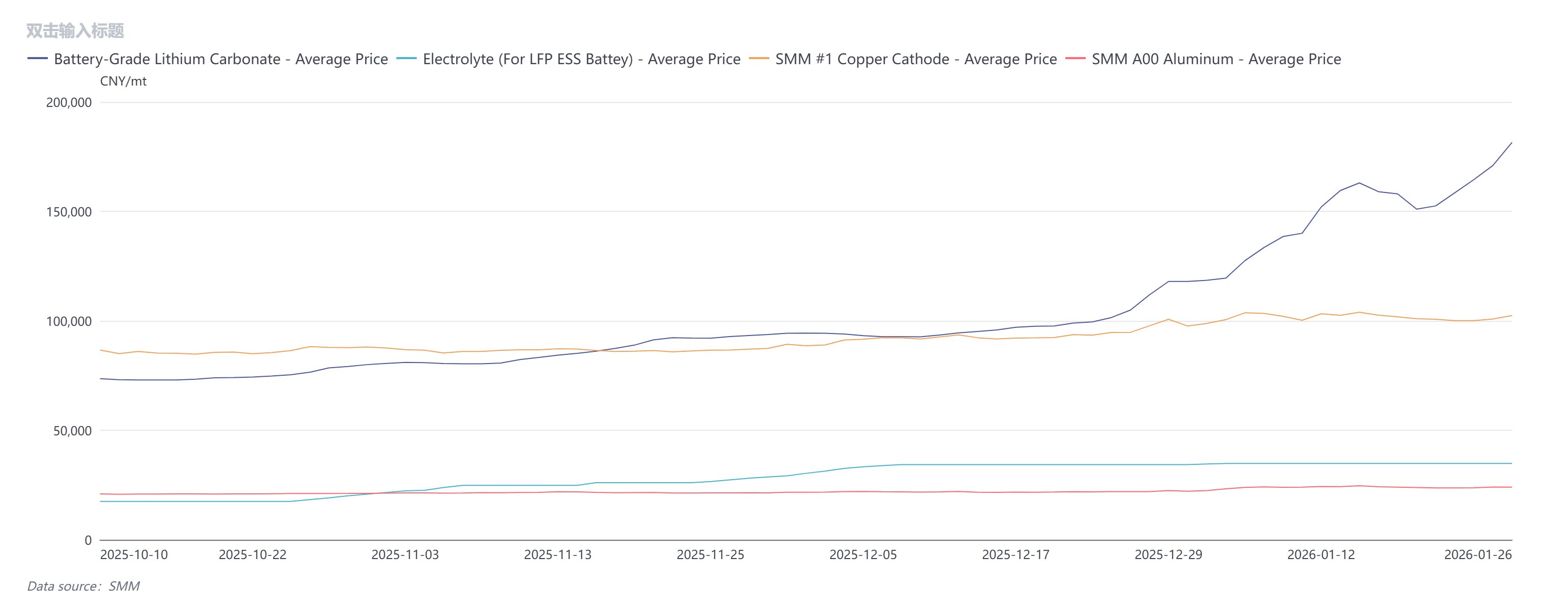
Waste lithium iron phosphate is priced based on the percentage of lithium that is contained. As of June 17, the price of SMM lithium metal was 2.91-3.03 million yuan/mt. For better understanding and calculation, SMM assumes that lithium metal is priced at 3 million yuan/mt, thus the price of 1% of lithium is calculated as 300 million yuan/100=30,000 yuan. After the price of 1% of lithium is multiplied by the SMM waste lithium iron phosphate discount coefficient, the price of 1% of lithium in the waste lithium iron phosphate can be obtained. The price of 1% of lithium is often affected by the fluctuation of lithium carbonate price, thus the two have a positive correlation.
Question 3: The relationship between the coefficient and price of SMM waste lithium iron phosphate?
The price of SMM waste lithium iron phosphate is calculated by multiplying the price of 1% of lithium by the lithium content of different types of wastes (such as batteries, pole pieces, black powder), and includes 13% value-added tax.