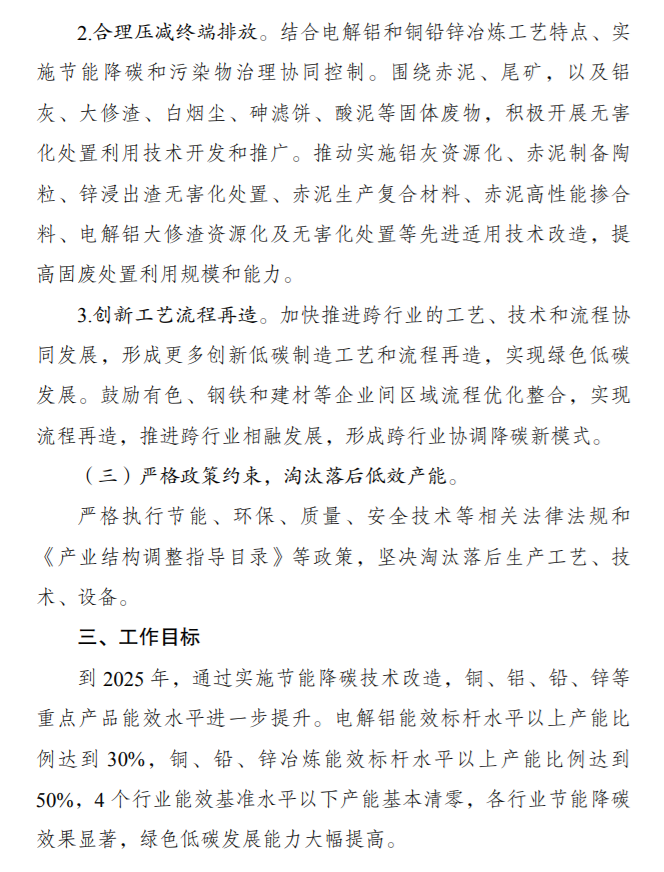
On February 11, the National Development and Reform Commission issued a circular on the "guidelines for the implementation of energy-saving and carbon reduction transformation and upgrading in key areas of high energy-consuming industries (2022 version)". Among them, the guidance and suggestions for energy saving and carbon reduction in iron and steel industry, ferroalloy and non-ferrous metal smelting industry have been made. It is mentioned in the upgrading guide of energy saving and carbon reduction transformation in the non-ferrous metal smelting industry that by 2025, through the implementation of energy saving and carbon reduction technology transformation, the energy efficiency level of key products such as copper, aluminum, lead and zinc will be further improved. The proportion of production capacity above the energy efficiency benchmark level of electrolytic aluminum has reached 30%, and that of copper, lead and zinc smelting above the energy efficiency benchmark level has reached 50%. The production capacity below the energy efficiency benchmark level of four industries is basically zero, and the energy saving and carbon reduction effects of various industries are remarkable. The ability of green and low-carbon development has been greatly improved.
The specific original text is as follows:
Notice on the release of the "guidelines for the implementation of Energy Saving and carbon reduction Transformation and upgrading in key areas of High Energy-consuming Industries (2022 Edition)"
Development and Reform Industry (2022) 200th
All provinces, autonomous regions, municipalities directly under the Central Government and cities separately listed on the State plan, the Development and Reform Commission of the Xinjiang production and Construction Corps, the competent departments of industry and information technology, the Department of Ecological Environment (Bureau) and the Bureau of Energy:
In accordance with the relevant arrangements in accordance with the "some opinions on strict Energy efficiency constraints to promote Energy Saving and carbon reduction in key areas" and the Circular on the release of Energy efficiency benchmarking and benchmark levels in key areas of High Energy consumption Industries (2021 Edition), in order to promote the transformation and upgrading of energy conservation and carbon reduction in key areas scientifically by all parties concerned, the guidelines for the implementation of Energy Saving and carbon reduction Transformation and upgrading in key areas of High Energy consumption Industries (2022 Edition) are hereby issued. And the relevant matters are notified as follows.
First, guide the transformation and upgrading
For enterprises whose energy efficiency is at the benchmarking level, especially below the benchmark level, actively popularize the advanced technology and equipment proposed in these implementation guidelines, green technology promotion catalogue, industrial energy conservation technology recommendation catalogue, "Energy efficiency Star" equipment product catalogue, strengthen energy system optimization, waste heat and pressure utilization, pollutant emission reduction, comprehensive utilization of solid waste and transformation of public auxiliary facilities, and improve the green level of production technology and technical equipment. We will improve the efficiency of the use of resources and energy and promote the formation of a strong domestic market.
Second, strengthen the tackling of key technical problems.
We will make full use of the innovative resources of institutions of higher learning, scientific research institutes, and industry associations to promote green common key technologies, cutting-edge leading technologies and related facilities and equipment for energy conservation, pollution reduction, carbon reduction and synergy. Promote backbone enterprises whose energy efficiency has reached or close to the benchmark level, use advanced cutting-edge technology and equipment to plan and build demonstration projects, and lead the high-quality development of the industry.
Third, promote the development of agglomeration
Guide backbone enterprises to give full play to their advantages in capital, talent, and technology, voluntarily carry out merger and reorganization in this field by means of superior and inferior, replacement of production capacity, etc., and concentrate on planning and building large-scale and integrated production bases, improve the level of technology and equipment and energy utilization efficiency, build a reasonable structure, effective competition, standardized and orderly development pattern, and must not blindly expand production capacity and repeat construction at a low level in the name of merger and reorganization.
Fourth, accelerate the elimination of backwardness
We will strictly implement relevant laws and regulations on energy conservation, environmental protection, quality and safety technology, and policies such as the guidance Catalog for Industrial structure Adjustment, and eliminate backward processes and production facilities that do not meet the requirements of green and low-carbon transformation and development in accordance with the law. For the production capacity whose energy efficiency is below the benchmark level and it is difficult to reach above the benchmark level through transformation and upgrading within the specified time limit, we will accelerate its withdrawal by means of marketization and the rule of law.
Attachment:
1. Implementation Guide for Energy Saving and carbon reduction Transformation and upgrading in Oil Refining Industry
two。 Implementation Guide for Energy Saving and carbon reduction Transformation and upgrading in Ethylene Industry
3.C guidelines for the implementation of energy saving and carbon reduction transformation and upgrading in the H10 industry
4. Guide for the implementation of energy saving and carbon reduction transformation and upgrading in modern coal chemical industry
5. Guide for the implementation of energy saving and carbon reduction transformation and upgrading in the synthetic ammonia industry
6. Guide for the implementation of energy saving and carbon reduction transformation and upgrading in calcium carbide industry
7. Guide for the implementation of energy saving and carbon reduction transformation and upgrading in caustic soda industry
8. Guide for the implementation of energy saving and carbon reduction transformation and upgrading in soda ash industry
9. Implementation Guide for Energy Saving and carbon reduction Transformation and upgrading in ammonium Phosphate Industry
10. Implementation Guide for Energy Saving and carbon reduction Transformation and upgrading in Yellow phosphorus Industry
11. Guide for the implementation of energy saving and carbon reduction transformation and upgrading in cement industry
twelve。 Implementation Guide for Energy Saving and carbon reduction Transformation and upgrading in flat Glass Industry
13. Implementation Guide for Energy Saving and carbon reduction Transformation and upgrading in Construction and Sanitary Ceramics Industry
14. Guide for the implementation of energy saving and carbon reduction transformation and upgrading in the iron and steel industry
15. Implementation Guide for Energy Saving and carbon reduction Transformation and upgrading in Coking Industry
16. Guide for the implementation of energy saving and carbon reduction transformation and upgrading in ferroalloy industry
17. Guide for the implementation of energy saving and carbon reduction transformation and upgrading in non-ferrous metal smelting industry
National Development and Reform Commission
Ministry of Industry and Information Technology
Health environment department
Guojia Energy Source Bureau
February 3, 2022
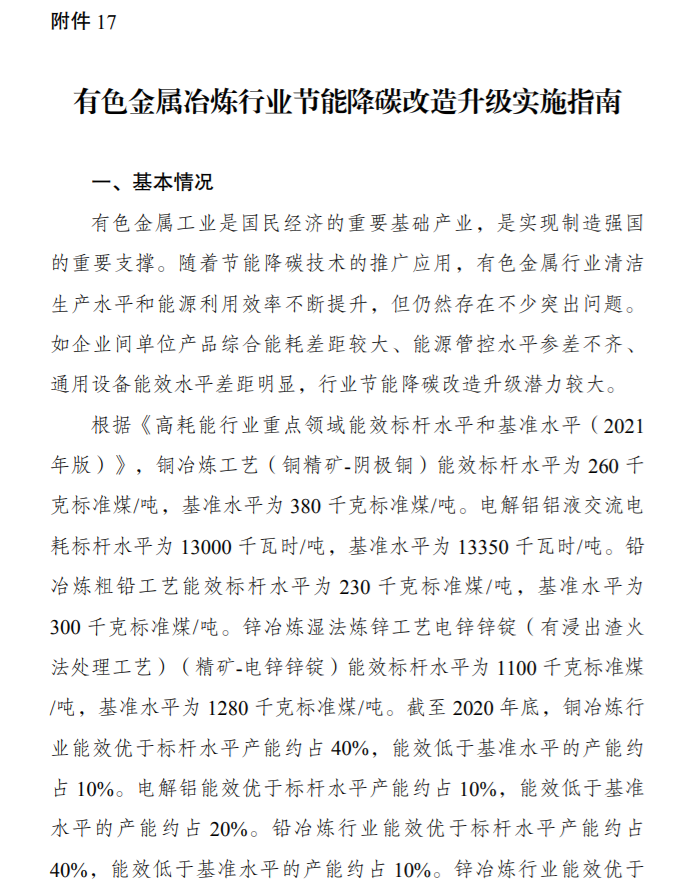
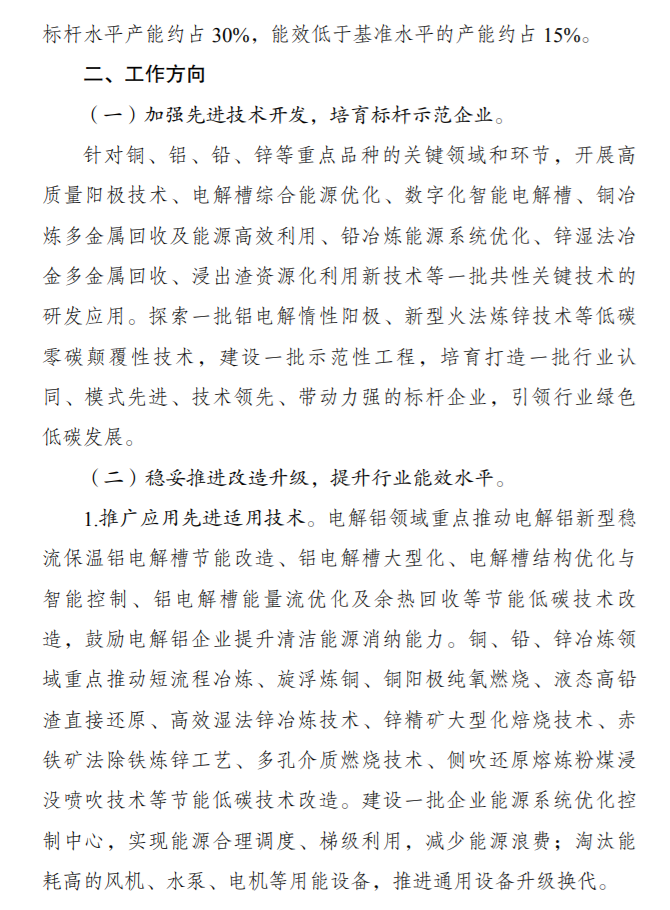
Guide for the implementation of energy saving and carbon reduction transformation and upgrading in non-ferrous metal smelting industry
Click to jump to the original link: notice on the release of the "guidelines for the implementation of Energy Saving and carbon reduction Transformation and upgrading in key areas of High Energy-consuming Industries (2022 Edition)"