

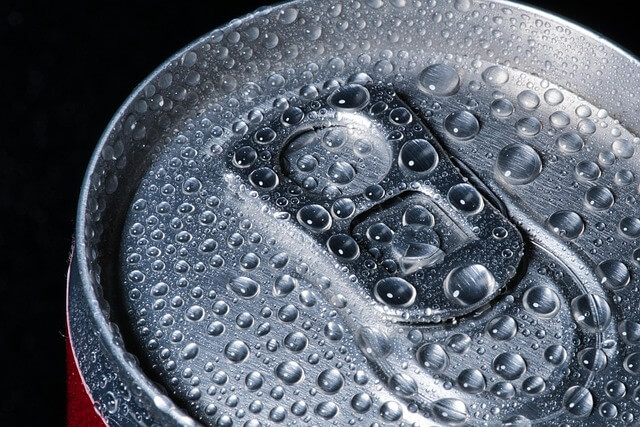
After the outbreak of COVID-19, countries around the world represented by the United States are facing various shortages. There has been a local shortage of many foods, including canned food, in the United States. One of the main reasons for the shortage of canned food is the lack of aluminum cans. What is the reason for the shortage of aluminum? Will it get better soon? It is reported that supply chain problems have plagued the world for months. As a result of this chaos, the cost of transporting commodities such as aluminium and copper has risen. Currently, the cost of transporting aluminium accounts for 20% of the total price of aluminum. * unmet aluminum demand aggravates the plight of aluminum shortage * The demand for aluminum cans has been growing at a very rapid rate. In order to reduce costs and simplify the packaging process, many breweries have begun to distribute products with aluminum cans instead of glass bottles. Because of its light weight, aluminum cans are easy to stack. Novel coronavirus epidemic further boost aluminum demand. People begin to enjoy beer and other cold drinks at home instead of in bars and restaurants. For many companies, it makes sense to switch from glass bottles to aluminum cans. Demand for aluminum has increased significantly in recent months and has been on the rise for many years. The growing popularity of canned hard sodas has also exacerbated the tension in aluminum supplies in recent years. This shortage has a particularly serious impact on small businesses. Big companies such as Coca-Cola, (Pepsi) and (Molson Coors) have signed long-term contracts with distributors to ensure a steady supply of aluminum cans. * Aluminum supply is still tight * For various reasons, demand remains strong and supply remains tight. London aluminum futures have recently hit more than 13-year highs, and concerns about supply shortages are the main reason for the surge in aluminium prices. In an environment of high energy prices, the cost of raw materials for aluminum is rising. Alumina prices rose sharply in the second half of 2021 due to rising production costs and reduced production in some parts of China. Prices are expected to rise further in 2022 due to limited supply and high production costs. China's decarbonization policy has also hit supply hard. As the world's largest producer and consumer of aluminium, China has become an importer of aluminium. This shift is affecting supply and inventory in other parts of the world. * Aluminum prices are currently at their highest level since 2008 * Although aluminium prices are high, they may not fall sharply in the short term. Goldman Sachs (Goldman Sachs) raised its aluminium price forecast, setting a 12-month target price of $4000 a tonne and an average price of $3450 in 2022. Most other analysts also predict that aluminum prices will rise by an average of 5% and 10% in 2022. As supply chain problems and high demand are not expected to be resolved soon, aluminum shortages are expected to continue.
Aluminum shortage "has no end"
[aluminum shortage has no end in sight] there has been a local shortage of many foods in the United States, including canned food. One of the main reasons for the shortage of canned food is the lack of aluminum cans. It is reported that supply chain problems have plagued the world for months. As a result of this chaos, the cost of transporting commodities such as aluminium and copper has risen. Currently, the cost of transporting aluminium accounts for 20% of the total price of aluminum. The demand for aluminum cans has been growing at a very rapid rate. For various reasons, demand remains strong and supply remains tight. As supply chain problems and high demand are not expected to be resolved soon, aluminum shortages are expected to continue.
Data Source Statement: Except for publicly available information, all other data are processed by SMM based on publicly available information, market communication, and relying on SMM's internal database model. They are for reference only and do not constitute decision-making recommendations.
For any inquiries or for more information, please contact: lemonzhao@smm.cn
For more information on how to access our research reports, please contact:service.en@smm.cn
Related News
1 hour ago
【SMM Aluminum Flash News】Lizhong Group Reports 30.32% Revenue Growth in 2026 Semi-Annual Performance
Read More
【SMM Aluminum Flash News】Lizhong Group Reports 30.32% Revenue Growth in 2026 Semi-Annual Performance
On August 26, Lizhong Group released its 2026 semi-annual performance report. The report shows that the company achieved operating revenue of RMB 18.822 billion, a year-on-year increase of 30.32%; net profit attributable to shareholders of the listed company was RMB 577 million, a year-on-year increase of 43.81%. During the reporting period, the company's three main businesses developed synergistically, with each segment achieving growth in production, sales, and revenue. Specifically, the recycled aluminum alloy casting segment achieved operating revenue of RMB 11.093 billion, a year-on-year increase of 35.16%; the aluminum alloy wheel segment achieved operating revenue of RMB 6.236 billion, a year-on-year increase of 25.49%; and the aluminum-based functional intermediate alloy segment achieved operating revenue of RMB 1.492 billion, a year-on-year increase of 17.87%.
1 hour ago
1 hour ago
【SMM Aluminum Flash News】Yinbang Co. Reports 49.10% Revenue Growth and 95.08% Profit Increase in H1 2026
Read More
【SMM Aluminum Flash News】Yinbang Co. Reports 49.10% Revenue Growth and 95.08% Profit Increase in H1 2026
Yinbang Co., Ltd. disclosed its semi-annual report on August 27. In the first half of 2026, the company achieved total operating revenue of 4.27 billion yuan, a year-on-year increase of 49.10%; and net profit attributable to shareholders of the listed company was 88.538 million yuan, a year-on-year increase of 95.08%. During the reporting period, the company's main product output increased, and its market share continued to consolidate and expand.
1 hour ago
1 hour ago
【SMM Aluminum Flash News】Yongjie New Materials Reports 18.05% Revenue Growth in 2026 Semi-Annual Report
Read More
【SMM Aluminum Flash News】Yongjie New Materials Reports 18.05% Revenue Growth in 2026 Semi-Annual Report
On August 26, Yongjie New Materials released its 2026 semi-annual report. During the reporting period, the company achieved operating revenue of 5.225 billion yuan, a year-on-year increase of 18.05%, and net profit attributable to the parent company of 514 million yuan, a year-on-year increase of 176.65%; net profit excluding non-recurring items was 247 million yuan, a year-on-year increase of 31.12%. The steady growth in net profit excluding non-recurring items stemmed from the company's focus on its main business, continuous optimization of its product structure, and promotion of internal operational efficiency improvement, which strengthened its core profitability. The significant surge in net profit and total profit was compounded by the positive factor of the completion and consolidation of the major asset restructuring in this period.
1 hour ago
Related News
【SMM Aluminum Flash News】Lizhong Group Reports 30.32% Revenue Growth in 2026 Semi-Annual Performance
Aug 28, 2026 09:46
【SMM Aluminum Flash News】Yinbang Co. Reports 49.10% Revenue Growth and 95.08% Profit Increase in H1 2026
Aug 28, 2026 09:45
【SMM Aluminum Flash News】Yongjie New Materials Reports 18.05% Revenue Growth in 2026 Semi-Annual Report
Aug 28, 2026 09:43
【SMM Aluminum Flash News】Kirin looks to recycled aluminium and renewable energy for lower-carbon packaging
Aug 28, 2026 09:26