Following the failure of the "Golden Nine" and "Silver Ten" one after another, the global car market was still running at a low level in November, but showed some signs of recovery from the previous month. Specific to the new energy vehicle market segment, the global sales of electric vehicles is still a bright spot, and the market share of electric vehicles in most countries continues to expand.
Car markets in 14 countries: only the UK and Norway grew year-on-year, while India and Russia declined month-on-month.
In November, the overall pressure on global car production and sales remained high, with car sales continuing to decline in 12 of the 14 countries counted by GCC, while only the UK and Norway achieved growth. On the positive side, however, as the global chip shortage eased slightly in November, the global car market showed some signs of recovery compared with October, with 12 countries showing month-on-month increase in car sales, with only India and Russia falling month-on-month.
Compared with other countries, although Norway's car market is small, total new car sales surged 21.9% in November from a year earlier, a remarkable performance, mainly due to the continued growth of electric vehicle sales in the country. According to the data, the country sold 13927 electric vehicles in November, up 39 per cent from a year earlier, and its market share reached a record high of 91.2 per cent. Apart from electric cars, traditional cars have very little market share, with hybrid cars, diesel vehicles and gasoline vehicles having only 3.8%, 2.7% and 2.3% of the market share, respectively.
Car sales in Britain unexpectedly rose 1.7% in November, mainly because the blockade measures of the epidemic hit the British auto industry hard in the same period last year. Secondly, at that time, the transition period for Brexit was coming to an end, and the industry was worried about tariffs and trade problems with the European Union. As a result, the base of British car sales in the same period last year was low. New car sales in Britain in November were still nearly 1/3 lower than the average in the five years before the 2019 pandemic. Mike Hawes, CEO of (SMMT), the British Association of Automobile Manufacturers and traders, pointed out that "the seemingly positive appearance masks the potential problems in the market." With the launch of a series of brand-new models that are becoming more and more electric, the market demand does exist, but the global semiconductor supply shortage continues to haunt production. " In the same month, British car production fell 28.7 per cent from a year earlier, the fifth consecutive month of decline and the lowest since 1984.
Generally speaking, new car sales in India are good in November, thanks to a festive wave of car purchases, with Diwali, the equivalent of the Chinese New year, in November. However, the Indian car market fell rarely during Diwali this year, making it the worst holiday season in the past decade. This is mainly because the shortage of semiconductors has seriously affected India's entire car supply chain, and the decline in production has hit automakers and dealers. "the shortage of electronic components mainly affects the production of cars sold in the domestic market," said Maruti Suzuki, India's largest carmaker. The company has taken all possible measures, but with little success. "
At the same time, the decline of the Russian auto market has also intensified. In November, Russian car sales fell 20.4 per cent from a year earlier, down 0.6 per cent from a month earlier. Due to the shortage of semiconductors, there is also a shortage of inventory in cars. In addition, the huge economic uncertainty caused by the coronavirus pandemic must be taken into account. However, despite these disadvantages, cumulative Russian car sales in the first 11 months of this year were still positive, up 6.9 per cent from the same period last year.
The sales performance of electric vehicles is still excellent, and the growth rate has rebounded.
In November, the production and sales trend of the global electric vehicle market is still opposite to that of the overall car market. The sales volume of electric vehicles in all countries increased compared with the previous month, and the growth rate rebounded from the previous month.
Among them, as the world's largest single market for electric vehicles, the production and sales of electric vehicles in China reached an all-time high of 457000 and 450000 respectively, an increase of 1.3 times and 1.2 times respectively compared with the same period last year. In terms of penetration, in November, the penetration rate of China's new energy vehicle market continued to be higher than that of the previous month, reaching 17.8%, indicating that consumers are becoming more and more receptive to new energy vehicles, and the market has gradually shifted from policy-driven to market-driven.
Germany remains Europe's largest market for electric cars, with a record market share of 34.4 per cent for the fourth month in a row and more than 30 per cent for the second time. Among them, the registration of pure electric vehicles increased by 39% to 40270, with a market share of 20.4%, while the registration of plug-in hybrid vehicles fell by 8.9%, with a market share of 14.1%. Tesla's registration in Germany surged 234 per cent year-on-year to 5633 vehicles that month, accounting for 2.8 per cent of the overall new car market in Germany and even surpassing Toyota's 2.6 per cent.
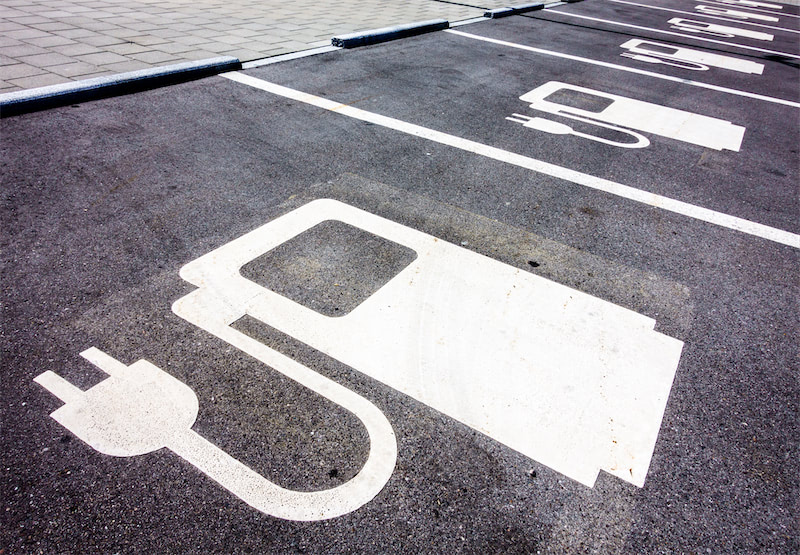
Production of electric vehicles in the UK rose 53 per cent in November from a year earlier, with sales rising 80 per cent year-on-year. Among them, pure electric vehicles accounted for 19% of total registrations, twice as much as in the same period last year, and plug-in hybrid vehicles accounted for 9% of total registrations. But while the UK electric car market continues to expand, charging infrastructure remains a problem. SMMT, which had previously called on the British government to speed up the promotion of charging infrastructure, revealed that there is only one charging pile for every 52 electric vehicles in the UK, a proportion that is difficult to meet the needs of electric vehicle owners, thus hindering the popularity of electric vehicles.
The problem of the British electric vehicle market is also the epitome of the global electric vehicle market. The continuous growth of global electric vehicle sales shows that the product has been gradually recognized and accepted by consumers. This has something to do with the promotion and subsidies of electric vehicles and the active participation of enterprises. But in addition, car companies and even the government need to further improve the charging infrastructure in order to ensure the long-term and stable development of the electric vehicle market.