


SMM survey: what kind of metal do you like most in 2022?
Chip is the "new star" in the automobile industry chain. The importance is self-evident. Due to the shortage of chips, global automakers have reduced production and stopped production; the value has also been rising, and new technologies such as car electrification, car networking, self-driving and other new technologies continue to fall to the ground and infiltrate. Automotive electronics is expected to account for 45% of vehicle costs in 2030, which means a surge in demand for chips.
While promoting the innovation of automotive electronics, the chip is also accompanied by inevitable risks. When more and more complex electronic systems are used in cars, when any function fails due to defects, it may cause unpredictable threats, which will not only bring crisis to personal safety, but also make enterprises bear expensive compensation. Recently, GM Bolt EV models caught fire and recalled due to rare manufacturing defects in the LG chemical batteries used, resulting in huge losses on both sides. At the same time, "fake chips" entered the automobile market and became more and more serious. All these have pointed out that it will become more and more important to reduce and prevent defects in automotive electronic components and achieve zero-defect (zero defect).

The yield management system Exensio, launched by Pudifei can manage the data of the entire supply chain, diagnose and analyze data, carry out quality control, and predict analysis to prevent problems and help achieve zero defects throughout the life cycle of the chip. Pudi Fei has been ploughing vertically in the semiconductor industry chain for 30 years. It is a semiconductor big data analysis company that has opened up the entire semiconductor industry chain and achieved full end-to-end coverage of the semiconductor industry chain.
So, can Pudi's experience and advantages in the semiconductor industry chain be inherited and transplanted to the field of automotive electronics? What kind of help and support can Exensio software provide for the automobile industry? For the recall due to automotive electronics, does Pudi have any corresponding solutions to achieve comprehensive traceability to the supply chain and devices? How does Pudifei's own software platform iteratively upgrade to meet the ever-changing needs of technology? For these questions, set WeChat recently conducted an exclusive interview with Yu Guanyuan, vice president of Pudifei Semiconductor.
The advantages extend to automotive electronics, how to help achieve zero defects in automotive chips?
Reliability and quality are the basic and eternal pursuit of the automobile industry.
For consumer-grade chips, consumers still have a certain tolerance for defects. However, the car chip is related to driving safety and requires zero failure rate. Especially in the era of intelligent electric vehicles, battery systems, ADAS and autopilot have more stringent requirements on reliability and safety. Therefore, the enterprises in the automotive chip supply chain must first pass a variety of quality certification, such as AEC-Q100,ISO 26262 and so on.
Before a chip enters the automobile supply chain, it needs to go through a series of processes such as IC design, wafer fabrication, packaging and testing. The Exensio platform condenses 30 years of experience and accumulation of Pudifei in the semiconductor industry, and there are product modules for each link to choose from, including defect detection and classification module for semiconductor production ((Fault Detection and Classification,Exensio-Process Control), product test optimization module (Exensio-Test Operations), semiconductor yield management system module (Exensio-Manufacturing Analytics) and package optimization module (Exensio-Assembly Operations), etc. These modules can collect the data of various states and processes of the corresponding machine equipment in each link, and carry on the management and control.
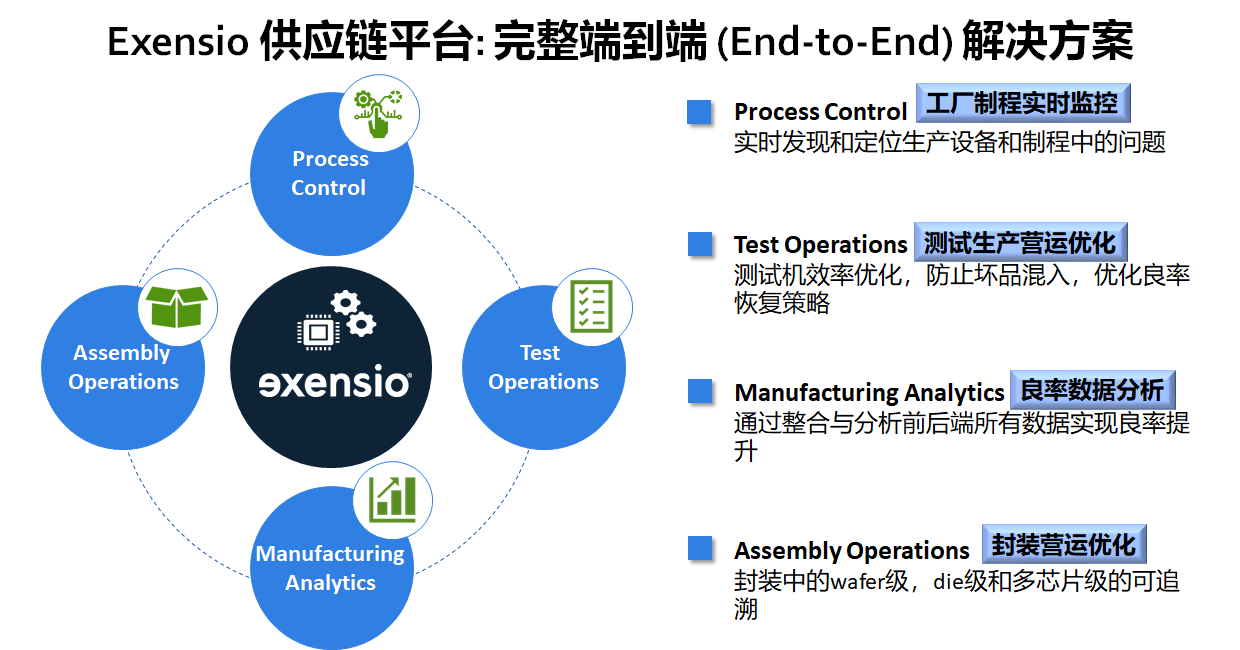
On the basis of management and control, the Exensio platform also has data analysis functions, including yield analysis, as well as modeling analysis life and so on. Semiconductor yield management system module can provide a variety of customized analysis, for automotive electronics, Pudi professional customized a variety of data screening templates, such as parts average test (Part Average Testing, PAT), statistical yield analysis (Statistical Bin Yield Analysis), regional analysis (By zone analysis) and so on.
Yu Guanyuan said: "take PAT as an example, when testing consumer-grade chips, if one die on a wafer fails the test and the other die tests pass, these qualified die can still be used." But automotive chips are very different. If a die fails the test, the surrounding die will become a waste chip, because although these die have passed the test, it is inevitable that there may be safety and reliability problems in the future. "
In the field of automotive chips, most automotive system suppliers have added more stringent requirements in addition to vehicle regulations. Pudifei has in-depth cooperation with these companies and accumulated a lot of experience. Start-up automotive chip companies are often limited in size and strength, and the acceptance criteria for automotive chips will not be lowered, but because of the market threshold is often more stringent. Pudi's new Exensio Test Analytics Lite is a product designed to meet such requirements, which not only meets the necessary data analysis capabilities, but also provides near-real-time fully automated defect screening, opening up the whole process from testing to packaging. This is of great benefit to start-up automotive chip companies. Through Pudi's 30 years of experience in the semiconductor industry, we can stand on the shoulders of our predecessors and quickly improve the yield, stability, reliability and consistency of automotive chip delivery.
Beyond data traceability, is it possible to monitor the operation of automotive chips on site?
After the automotive chip entered the market, Pudifei Exensio platform is still playing an important role. Yu Guanyuan pointed out: "Pudi Fei not only cooperates with the semiconductor industry chain, but also has deep cooperation with users of the semiconductor industry, including automotive system suppliers and vehicle companies." At present, Pudifei's Exensio big data platform has a layout throughout the supply chain. "
Similar to the recall of GM due to battery risk mentioned above, the automobile industry has occurred from time to time over the years. Today, automakers have stricter controls on safety and anti-counterfeiting, and have higher requirements for comprehensive traceability across multiple supply chains and manufacturers. Only with more accurate and rapid traceability and quality control, can we quickly locate the root cause of the problem, solve the problem and reduce losses.
Yu Guanyuan cited the example of Tesla, where Tesla required that every chip provided by his chip supplier be traceable-from the back end of the application to the front end, including system modules, packaging, testing, where production is done, as well as responsible employees, materials used, and so on.
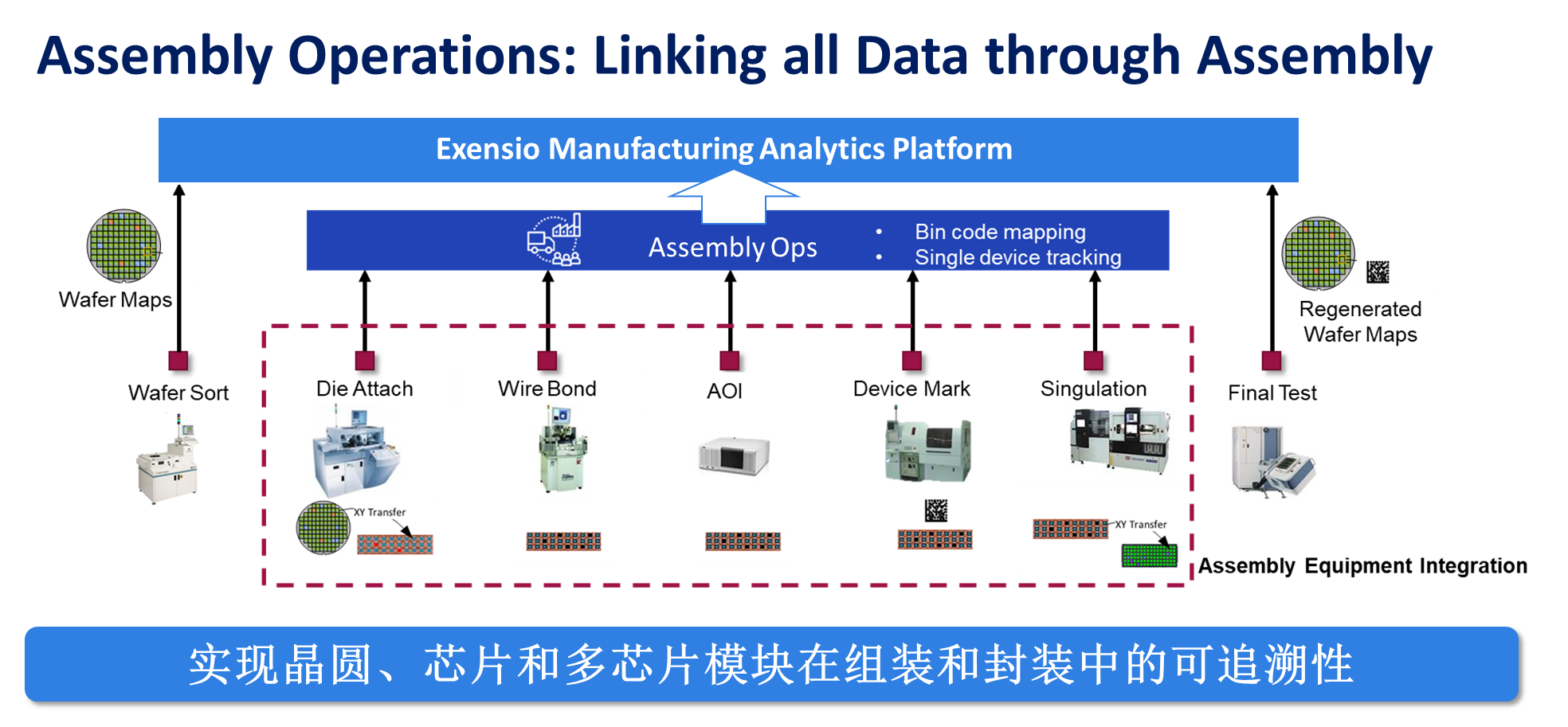
Data traceability ensures that every step must be traceable. Yu Guanyuan said that from the perspective of the entire supply chain of semiconductors, some of the encapsulated machines are less advanced than fab machines and do not have full traceability, which will affect the entire traceability process. The Assembly Operations of Pudifei can realize five functions: defect classification and distribution, unit traceability, process data collection, equipment performance tracking and program management control by exchanging data with on-line equipment. At the same time, the latter three functions can also ensure the comprehensiveness and real-time of information. Combined with other test results in Exensio, engineers can conduct comprehensive traceability and FDC analysis through device ID at all levels, and use the analysis results to control or improve the process and procedures.
In addition to achieving comprehensive data traceability, how to obtain on-site data and monitor the whole life cycle of automotive chip use has also become the focus and demand of more industry leaders.
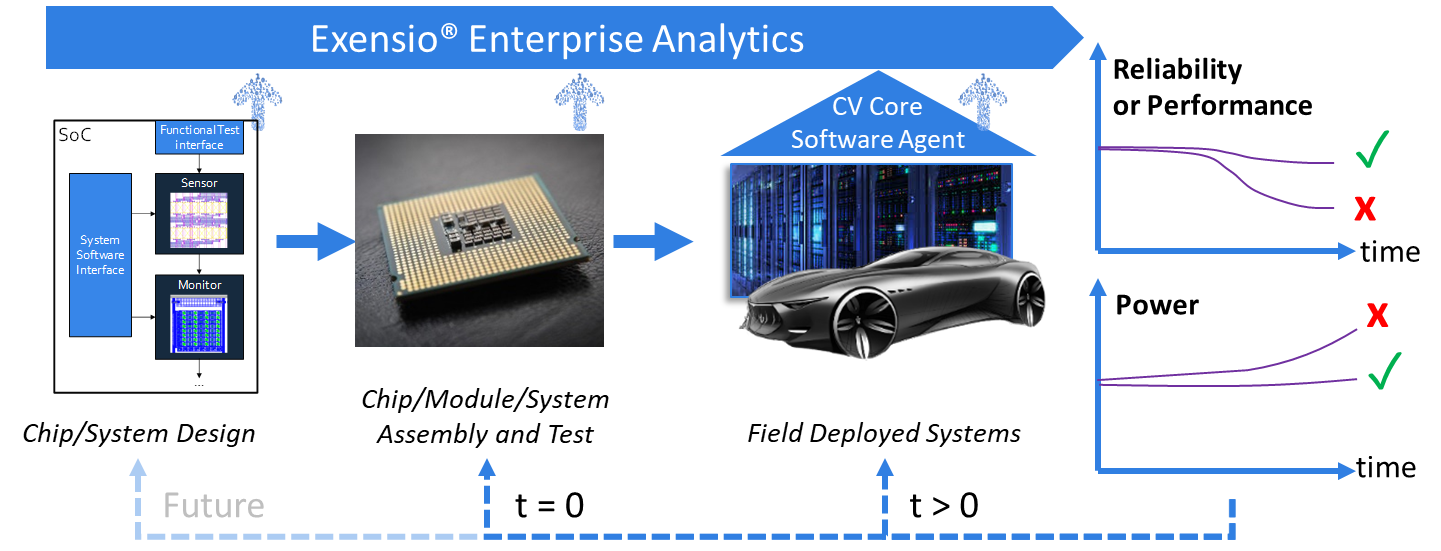
Based on the existing advantages, for the automotive industry chain, Pudifei can not only provide real-time control and analysis data before the chip enters the automotive supply chain, but also provide unique data for automotive chip users. Yu Guanyuan said that Pudifei has worked more closely with users of automotive chips, such as system suppliers and automobile manufacturers, to design some IP or modules specifically for these customers according to their actual needs, so as to better achieve zero defects and reduce failures caused by chip problems.
For example, there are many key chips in self-driving sensors and other modules, not only to ensure zero defects in the design, manufacture and closed testing, but also to ensure that they are still in zero defects in the operation of the car. In the life cycle of an intelligent electric vehicle, if the chip on the car is equipped with Pudifei's IP module, you can find the problem in the self-test and report the problem to the car's software in time, and eventually this information may be displayed on the car's central control screen, and the car owner can drive the car to the original factory to change the module in time to avoid accidents. This application has now landed in an autopilot system module, and if it is used on a large scale in autopilot and battery systems in the future, it will take a big step towards the car's "zero accident" vision.
Write at the end
For automotive electronics, the requirement of zero defect is like a shadow, and the data that needs to be analyzed and verified is getting larger and larger, so the software also needs to be innovated constantly. Yu Guanyuan said that Pudifei will introduce the concept of block chain (blockchain) into the entire supply chain to maximize the security and transparency of the supply chain, so that every step of the information can be spread to the world, the established facts of the entire supply chain can not be changed, and can effectively eliminate the risk of fake chips flowing into the automotive industry. At the same time, the intelligent electric vehicle itself is changing with each passing day, and the demand for software is constantly innovating. Pudifei will consolidate its existing advantages, invest more resources in the future, and seek to work closely with more industrial customers to develop and innovate in a targeted way. to meet these needs.
![Tight Supply and Recovering Demand Drove Magnesium Prices to Rise Steadily This Week, Breaking Above 17,500 [SMM Magnesium Weekly Review]](https://imgqn.smm.cn/usercenter/xLlnY20251217171724.jpeg)