[please check] SMM South China Nonferrous Metals Industry Annual meeting change notice
Vale has produced about 250000 tons of sustainable sand products that are certified to replace sand that is often exploited illegally.
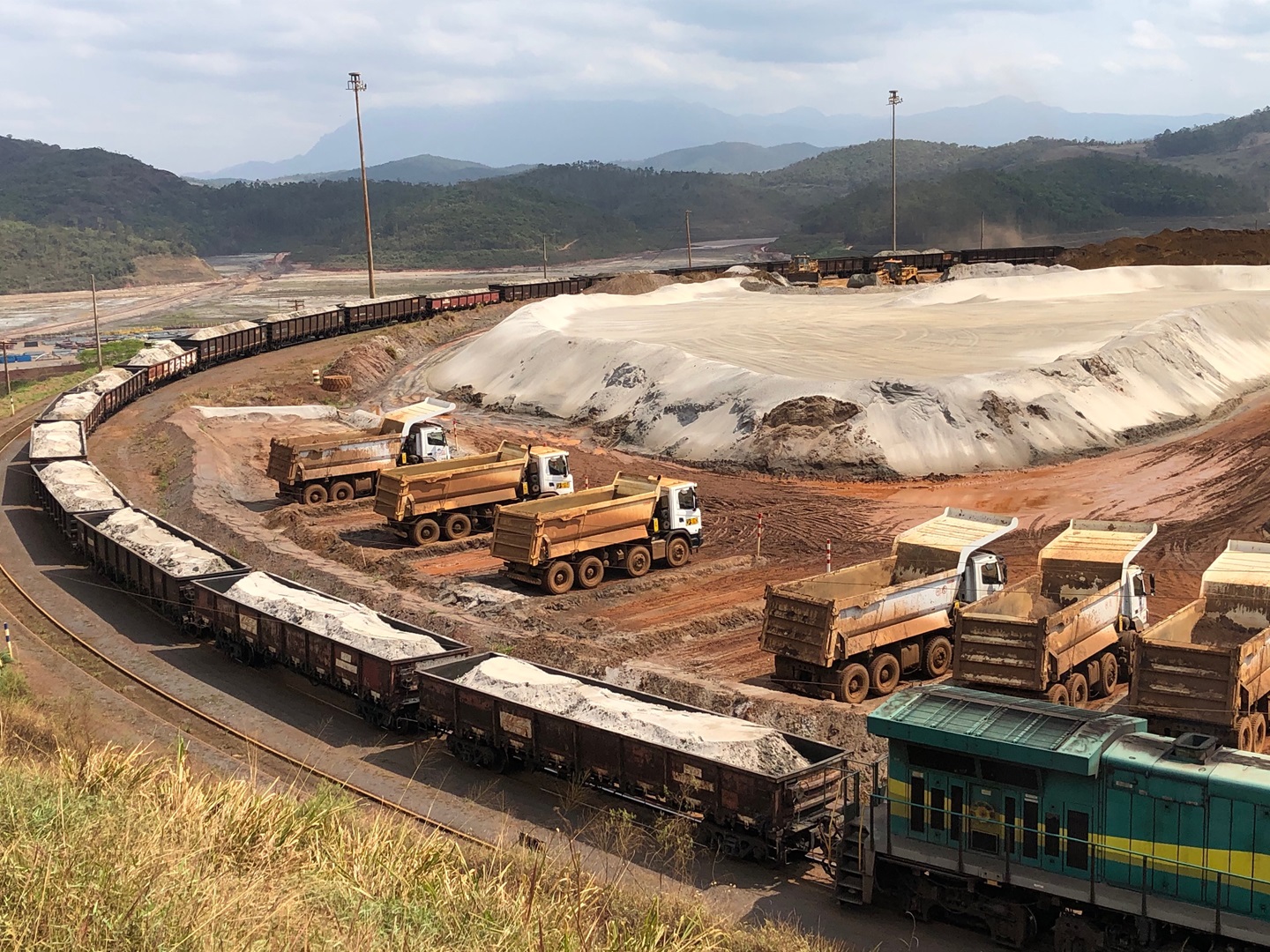
After seven years of research and investment of about 50 million reais, Vale has developed the production process of high-quality sand products, which can be used in the construction industry. The company has applied this sand production process to the iron ore operation area in Minas Gerais, converting sandy materials that previously needed to be disposed of by dams or stacking into products, the production process is subject to the same quality control as iron ore production. This year, the company has processed and produced about 250000 tons of sustainable sand products, which the company plans to sell or donate for the production of concrete, mortar and cement or for road laying.
Mr. Simasheng (Marcello Spinelli), executive vice president of Vale's iron ore business, said that sand products are the result of more sustainable operational practices. "this project has prompted us to form a circular economy internally," he said. There is a huge demand for sand in the construction industry, and our sand products provide a reliable alternative to the construction industry while reducing the environmental and social impact of tailings disposal. "
According to the estimation of the United Nations, the global demand for sand is about 40 billion to 50 billion tons per year. Sand has become the most exploited natural resource after water, and this resource is being exploited illegally and predatory globally.
Vale's sustainable sand products are considered to be by-products of iron ore. The raw ore in the form of rock mined from nature becomes iron ore after several physical processing procedures such as crushing, screening, grinding and mineral processing in the factory. Vale's innovation is to reprocess the by-products of iron ore during the mineral processing stage until they meet the necessary quality requirements and become commercial products. In the traditional mineral processing process, these materials become tailings, which are disposed of by the use of ore dams or by stacking. Now, every ton of sand produced means a ton less tailings.
Sand products from the iron ore processing process are 100% certified, they have high silicon content and very low iron content, and have high chemical uniformity and particle size uniformity. Mr. Jefferson Clade (Jefferson Corraide), executive manager of the Brucutu and Agualinpa integrated operations area, said the sand product was not dangerous. "our sand products are basically processed in a physical way, and the chemical composition of the material is not changed during the processing process, so the product is non-toxic and harmless."
The application of Vale's sand products in concrete and mortar has been certified by three professional laboratories, (IPT), Falc ã o Bauer and ConsultareLabCon, of the Brazilian Institute of Scientific Research.
Researchers from the Institute for Sustainable Minerals at the University of Queensland, Australia and the University of Geneva in Switzerland are conducting an independent study to analyze the characteristics of Vale sand products to see whether this alternative building material derived from ore can become a sustainable source of sand and significantly reduce the amount of waste from mining activities. The researchers used the term "ore (ore sand)" to refer to sand products derived from ore by-products and produced by processing.

Production scale
Vale is committed to selling or donating more than 1 million tons of sand products by 2022, with buyers from four regions, namely, Minas Gerais, Esp í rito Santo, Sao Paulo and Brasilia. The company predicts that the output of sand products will reach 2 million tons by 2023.
"We intend to further expand the application market of sand products from 2023, and we have set up a special team to invest in this new business, who will meet the market demand by applying the sand production process to the existing production process." Mr. Roger é rio Nogueira, Vale's iron ore marketing director, said.
Vale is currently producing sand products in the Brukutu mine in San Gonzalo-upon-Abeiso, Minas Gerais, which will be used for sale or donation.
Other mining areas in Minas Gerais are also making environmental and mining adjustments to incorporate sand production processes. "these mining areas produce sandy materials with high silicon content, which can be used in different industries. We are working with a number of institutions, including universities, research centers and domestic and foreign enterprises, to develop new solutions to provide a new way out for iron ore tailings. " Mr. Andr é Vilhena, manager of Vale's new business, stressed.
In addition to using the existing infrastructure in the iron ore mines, Vale has developed a transport network of railways and roads to transport sand products to several Brazilian states. "our focus is on ensuring the sustainability of the iron ore business, and through this new business we hope to minimize environmental impact while seeking opportunities to promote employment and increase income." Mr. Vilena added.
Ecological products
Vale has been conducting research on the application of tailings since 2014. Last year, the company opened the Picku brick factory, the first pilot plant to produce construction products using tailings from mining activities as the main raw material. The plant, located in the Picku (Pico) mining area in ITapitu, Minas Gerais, aims to promote a circular economy in the iron ore processing process.
The Federal Technical Education Center of Minas Gerais has carried out technical cooperation with the Picu Brick Factory, sending 10 researchers to the factory, including professors, laboratory technicians, as well as graduate students, undergraduates and technical course students. they will work at the factory site during the cooperation period, and the products will not be sold to the outside world during the research and development period.
Vale is also working with the Itabilla campus of the Federal University of Itajuba to study ways to use sand products for road laying. The company plans to donate sand products locally for road laying.
More sustainable mining
In addition to developing ecological products, Vale has taken other measures to reduce tailings and make mining activities more sustainable. The company has been committed to the development of dry processing technology that does not need water. At present, about 70 per cent of Vale's iron ore products are produced through dry processing, which will remain the same even after annual production capacity increases to 400m tonnes and new projects are put into operation. In 2015, dry processing accounted for only 40% of total iron ore production.
Whether dry processing can be used or not is related to the quality of the iron ore mined. The iron content of iron ore in Caracas mining area is high (more than 65%), and the processing process can be completed only by crushing and sieving according to particle size.
The average iron content in some mining areas in Minas Gerais is 40%. The traditional treatment method is to increase the iron content in the ore by adding water, and most of the resulting tailings are stacked in tailings dams or pits. Vale has applied another technology to the processing of low-grade iron ores, namely (FDMS) technology for dry magnetic separation of powdered ore, which does not require the use of water, so tailings dams are not required.
Powder dry magnetic separation technology was developed in Brazil by New Steel, acquired by Vale in 2018, and has been applied in a pilot plant in Minas Gerais state. The first commercial plant, which will be put into operation in the Dawal (Vargem Grande) operating area in 2023, will have an annual capacity of 1.5 million tons and a total investment of US $150 million.
Another technology that can reduce the demand for tailings dams is to Filter the tailings and store them in dry stacking. After the annual production capacity of iron ore reaches 400m tonnes, 60 million tonnes, or 15 per cent of the total capacity, will use this technology to Filter and store tailings. Vale has opened a tailings Filter plant in the Grand Varren block and plans to open three more tailings Filter plants in the first quarter of 2022, one in Bucutu and two in Itabila. After that, the iron ore produced by the traditional wet beneficiation process will account for only 15% of the total production capacity, and the resulting tailings will be stored in tailings dams or decommissioned pits.
![[SMM Hot-Rolled Coil Daily Transactions] Spot Transactions Weakened Somewhat](https://imgqn.smm.cn/usercenter/LVqfJ20251217171736.jpg)