MIIT Issued a Lithium Battery Specification Document to Further Strengthen the Management of the Lithium-ion Battery Industry

Published: Nov 23, 2021 10:20
Electronic Information Division of MIIT (Ministry of Industry and Information Technology) issued the Lithium-ion Battery Industry Standard Conditions (2021) (draft) and Administrative Measures for the Announcement of Lithium-ion Battery Specification (2021) (draft) for public opinions on November 18 in order to further strengthen the lithium-ion battery industry management, and to promote the industry transformation and upgrading as well as technological progress. The Standard Conditions provides standardised guidance on the operation of lithium-ion battery companies and projects from many aspects. At the same time, the document also stipulates the performance of almost every type of lithium-ion batteries and battery packs, including consumer batteries and motive power batteries.

SHANGHAI, Nov 23 (SMM) – Electronic Information Division of MIIT (Ministry of Industry and Information Technology) issued the Lithium-ion Battery Industry Standard Conditions (2021) (draft) and Administrative Measures for the Announcement of Lithium-ion Battery Specification (2021) (draft) for public opinions on November 18 in order to further strengthen the lithium-ion battery industry management, and to promote the industry transformation and upgrading as well as technological progress. The Standard Conditions provides standardised guidance on the operation of lithium-ion battery companies and projects from many aspects. At the same time, the document also stipulates the performance of almost every type of lithium-ion batteries and battery packs, including consumer batteries and motive power batteries.

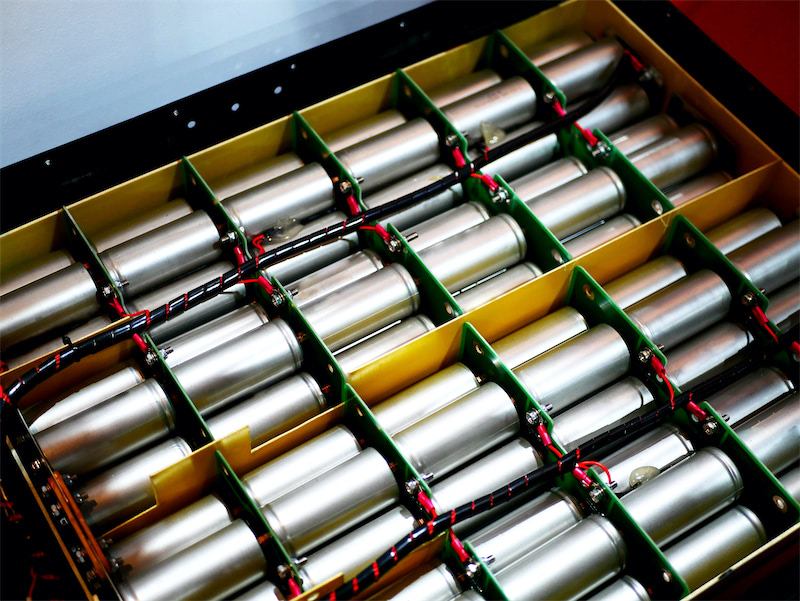
Consumer, motive power and energy storage batteries: the energy density of consumer batteries must be greater than 260Wh/kg, and the energy density of battery packs shall be no less than 200 Wh/kg; that of high-energy motive power battery will be no less than 180 Wh/kg, and the energy density of battery packs will be no less than 120Wh/kg; that of energy storage battery will be no less than 145 Wh/kg, while that of battery pack shall be no less than 110 Wh/kg, and the cycle life will be greater than 5000 times and the capacity retention rate will be greater than 80%.

Cathode materials: The specific capacity of LFP shall be more than 150Ah/Kg; the specific capacity of ternary cathode materials shall be more than 175Ah/kg; and that of LCO will be more than 170Ah/kg; that of LMO will be more than 115Ah/kg.

Anode materials: The specific capacity of carbon (graphite) is no less than 335Ah/kg; that of amorphous carbon is no less than 250Ah/kg; that of silicon-carbon is no less than 420Ah/kg. For other anode material performance indicators, please refer to the above requirements.

Battery separator: Dry-process uniaxial stretching separator achieves longitudinal stretching strength of no more than 110MPa, transverse stretching strength no more than 10MPa, puncture strength more than 0.133N/μm; dry-process biaxial stretching requires longitudinal tensile strength of more than 100MPa, transverse tensile strength of no less than 25MPa, puncture strength of more than 0.133N/μm; for wet-process biaxially stretching separator, longitudinal tensile strength is more than 100MPa, transverse tensile strength more than 60MPa, and puncture strength more than 0.204N/μm.

Electrolyte: Water content ≤20ppm, hydrogen fluoride content ≤50ppm, single content of metal impurity≤1ppm.

The general energy density of LFP battery pack monomer is only 160-180Wh/kg, hence it is still an insurmountable gap for some companies.  As the performance of LFP battery is mostly affected by its cathode material, that is, LFP materials. If the "Industry Standard Conditions" is formally implemented, downstream battery plants will ramp up their demand for upstream high performance materials to meet technical standards. The advantages of companies with excellent technology, scale, and strong funds will be further enhanced, and the market concentration will also increase. This standard may bring certain obstacles to some cross-industry companies, and the pace of LFP production expansion may be slowed down to a certain extent. The current energy density of the sodium-ion battery industry stands at only about 130wh/kg, which is far behind the Industry Standard Conditions and may have a certain impact on the subsequent expansion of the industry. On the other hand, this regulation is a guiding document to encourage technological progress and standard development of the industry, which does not equal to the compulsory administrative approval. Therefore, whether this regulation will have a real impact on the lithium battery industry remains uncertain.
Data Source Statement: Except for publicly available information, all other data are processed by SMM based on publicly available information, market communication, and relying on SMM‘s internal database model. They are for reference only and do not constitute decision-making recommendations.

For any inquiries or to learn more information, please contact: lemonzhao@smm.cn
For more information on how to access our research reports, please contact:service.en@smm.cn
Related News
Beijing Launches 500-kV Power Project in Fengtai, Boosting Grid Resilience and Industrial Growth
18 hours ago
Beijing Launches 500-kV Power Project in Fengtai, Boosting Grid Resilience and Industrial Growth
Read More
Beijing Launches 500-kV Power Project in Fengtai, Boosting Grid Resilience and Industrial Growth
On January 28th, the construction of the 500-kilovolt power transmission and transformation project in Fengtai, Beijing officially started. This project is the first newly-built 500-kilovolt power grid project in Beijing during the 15th Five-Year Plan period. It will significantly enhance the resilience and power receiving capacity of the southern Beijing power grid and provide reliable power support for Beijing to continuously optimize the investment structure and vigorously develop high-end, precise, and cutting-edge industries. The 500-kilovolt power transmission and transformation project in Fengtai, Beijing is a key project of Beijing's power grid during the 15th Five-Year Plan period and one of the "3 100" key projects in Beijing this year. It is constructed and managed by the State
18 hours ago
Shaanxi-Anhui UHV DC Project's 500-kV AC System at Hezhou Station Begins Operation After Trial Run
18 hours ago
Shaanxi-Anhui UHV DC Project's 500-kV AC System at Hezhou Station Begins Operation After Trial Run
Read More
Shaanxi-Anhui UHV DC Project's 500-kV AC System at Hezhou Station Begins Operation After Trial Run
On February 1st, the 500-kilovolt AC system of the Hezhou Converter Station, the receiving-end station of the ±800-kilovolt UHV DC power transmission project from northern Shaanxi to Anhui, was officially put into operation after a 24-hour trial run.
18 hours ago
750-kV Power Line Connecting Northern to Central Shaanxi Fully Operational
18 hours ago
750-kV Power Line Connecting Northern to Central Shaanxi Fully Operational
Read More
750-kV Power Line Connecting Northern to Central Shaanxi Fully Operational
On February 2nd, the 750-kilovolt power transmission and transformation project of the third passageway from northern Shaanxi to central Shaanxi was fully connected. The project starts from the 750-kilovolt Shuofang Substation in Shenmu City in the north and ends at the 750-kilovolt Bailuyuan Substation in Lantian County in the south. It has newly built a 1,271-kilometer line, passing through 18 counties (districts) in 4 cities including Yulin, Yan'an, Weinan and Xi'an.
18 hours ago
MIIT Issued a Lithium Battery Specification Document to Further Strengthen the Management of the Lithium-ion Battery Industry - Shanghai Metals Market (SMM)