MIIT Issued a Lithium Battery Specification Document to Further Strengthen the Management of the Lithium-ion Battery Industry

Published: Nov 23, 2021 10:20
Electronic Information Division of MIIT (Ministry of Industry and Information Technology) issued the Lithium-ion Battery Industry Standard Conditions (2021) (draft) and Administrative Measures for the Announcement of Lithium-ion Battery Specification (2021) (draft) for public opinions on November 18 in order to further strengthen the lithium-ion battery industry management, and to promote the industry transformation and upgrading as well as technological progress. The Standard Conditions provides standardised guidance on the operation of lithium-ion battery companies and projects from many aspects. At the same time, the document also stipulates the performance of almost every type of lithium-ion batteries and battery packs, including consumer batteries and motive power batteries.

SHANGHAI, Nov 23 (SMM) – Electronic Information Division of MIIT (Ministry of Industry and Information Technology) issued the Lithium-ion Battery Industry Standard Conditions (2021) (draft) and Administrative Measures for the Announcement of Lithium-ion Battery Specification (2021) (draft) for public opinions on November 18 in order to further strengthen the lithium-ion battery industry management, and to promote the industry transformation and upgrading as well as technological progress. The Standard Conditions provides standardised guidance on the operation of lithium-ion battery companies and projects from many aspects. At the same time, the document also stipulates the performance of almost every type of lithium-ion batteries and battery packs, including consumer batteries and motive power batteries.

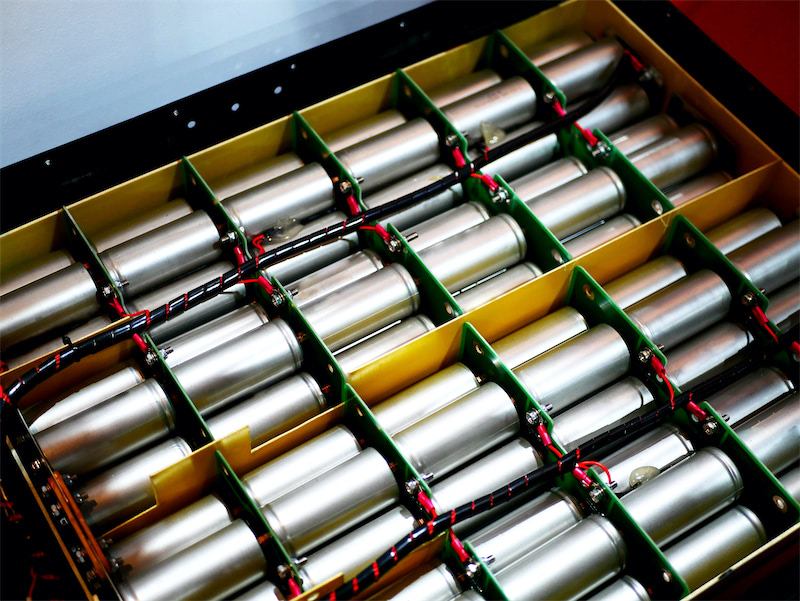
Consumer, motive power and energy storage batteries: the energy density of consumer batteries must be greater than 260Wh/kg, and the energy density of battery packs shall be no less than 200 Wh/kg; that of high-energy motive power battery will be no less than 180 Wh/kg, and the energy density of battery packs will be no less than 120Wh/kg; that of energy storage battery will be no less than 145 Wh/kg, while that of battery pack shall be no less than 110 Wh/kg, and the cycle life will be greater than 5000 times and the capacity retention rate will be greater than 80%.

Cathode materials: The specific capacity of LFP shall be more than 150Ah/Kg; the specific capacity of ternary cathode materials shall be more than 175Ah/kg; and that of LCO will be more than 170Ah/kg; that of LMO will be more than 115Ah/kg.

Anode materials: The specific capacity of carbon (graphite) is no less than 335Ah/kg; that of amorphous carbon is no less than 250Ah/kg; that of silicon-carbon is no less than 420Ah/kg. For other anode material performance indicators, please refer to the above requirements.

Battery separator: Dry-process uniaxial stretching separator achieves longitudinal stretching strength of no more than 110MPa, transverse stretching strength no more than 10MPa, puncture strength more than 0.133N/μm; dry-process biaxial stretching requires longitudinal tensile strength of more than 100MPa, transverse tensile strength of no less than 25MPa, puncture strength of more than 0.133N/μm; for wet-process biaxially stretching separator, longitudinal tensile strength is more than 100MPa, transverse tensile strength more than 60MPa, and puncture strength more than 0.204N/μm.

Electrolyte: Water content ≤20ppm, hydrogen fluoride content ≤50ppm, single content of metal impurity≤1ppm.

The general energy density of LFP battery pack monomer is only 160-180Wh/kg, hence it is still an insurmountable gap for some companies.  As the performance of LFP battery is mostly affected by its cathode material, that is, LFP materials. If the "Industry Standard Conditions" is formally implemented, downstream battery plants will ramp up their demand for upstream high performance materials to meet technical standards. The advantages of companies with excellent technology, scale, and strong funds will be further enhanced, and the market concentration will also increase. This standard may bring certain obstacles to some cross-industry companies, and the pace of LFP production expansion may be slowed down to a certain extent. The current energy density of the sodium-ion battery industry stands at only about 130wh/kg, which is far behind the Industry Standard Conditions and may have a certain impact on the subsequent expansion of the industry. On the other hand, this regulation is a guiding document to encourage technological progress and standard development of the industry, which does not equal to the compulsory administrative approval. Therefore, whether this regulation will have a real impact on the lithium battery industry remains uncertain.
Data Source Statement: Except for publicly available information, all other data are processed by SMM based on publicly available information, market communication, and relying on SMM's internal database model. They are for reference only and do not constitute decision-making recommendations.

For any inquiries or for more information, please contact: lemonzhao@smm.cn
For more information on how to access our research reports, please contact:service.en@smm.cn
Related News
South Korea to Ease Regulations to Foster Urban Mining
7 hours ago
South Korea to Ease Regulations to Foster Urban Mining
Read More
South Korea to Ease Regulations to Foster Urban Mining
South Korea’s Ministry of Climate, Energy and Environment will launch regulatory exemption projects to recover critical minerals from semiconductor process waste, used batteries and end-of-life solar panels. The government plans to test technologies that recover silicon, copper, titanium and tungsten from semiconductor waste such as used silicon and targets, while reviewing regulatory changes to use such byproducts as circular resources rather than waste. Critical mineral recovery from used batteries and end-of-life solar panels will also be included in the demonstrations.
7 hours ago
Kia Unveils Large Electrified PBV PV7 for First Time
7 hours ago
Kia Unveils Large Electrified PBV PV7 for First Time
Read More
Kia Unveils Large Electrified PBV PV7 for First Time
Kia unveiled the PV7 for the first time at IAA Transportation 2026, the world’s largest commercial vehicle exhibition, held in Hanover, Germany, on September 14. The PV7 is Kia’s second dedicated electrified PBV following the PV5 launched last year. It is a large model that combines a flexible body structure that can be adapted for different use cases with electrified performance, in-vehicle software and fleet operation solutions. The PV7 is based on Kia’s dedicated PBV electric platform, E-GMP.S. Based on the platform, Kia secured a wide, flat interior and cargo space while applying 71.5 kWh and 96.2 kWh NCM high-voltage batteries, a high-efficiency electric drive system and an 800 V charging system. The model will be offered in Standard and Long Range versions. The Long Range Cargo Long variant can travel more than 460 km under Europe’s WLTP standard, based on Kia’s own measurements.
7 hours ago
SK Innovation Says It Has No Plans for SK On IPO
7 hours ago
SK Innovation Says It Has No Plans for SK On IPO
Read More
SK Innovation Says It Has No Plans for SK On IPO
SK Innovation said on September 14 that it currently has no additional business restructuring plans following its absorption merger of SK IE Technology (SKIET). The company has been carrying out large-scale business portfolio restructuring, or rebalancing, to improve its financial structure, but said no decisions have been made beyond the SKIET merger. SK Innovation also said it is not considering an initial public offering (IPO) for SK On.
7 hours ago