Greenland bans uranium mining to stop large rare earth projects

Published: Nov 11, 2021 10:41 (GMT+8)
[Greenland bans uranium mining to stop large rare earth projects] the Greenland Parliament passed a bill banning uranium mining and exploration in Denmark, effectively stopping the development of the Kwanade rare earth project, one of the largest rare earth projects in the world. The law, passed by parliament on Tuesday night, is in line with the strategy of the new coalition government to focus on promoting environmental protection in Greenland.

The Greenland Parliament has passed a bill banning uranium mining and exploration in Denmark, effectively halting the development of the Kwanade rare earth project, one of the world's largest rare earth projects.

The project was developed by (ASX: GGG), an Australian Greenland mining company. It received preliminary approval in 2020 and is expected to receive final approval from the previous government.

Although the miner has not made a statement on the matter, its shares were suspended on Wednesday pending an "announcement". In a notice to the Australian Stock Exchange, it said trading would be suspended until Friday morning or the company's announcement.

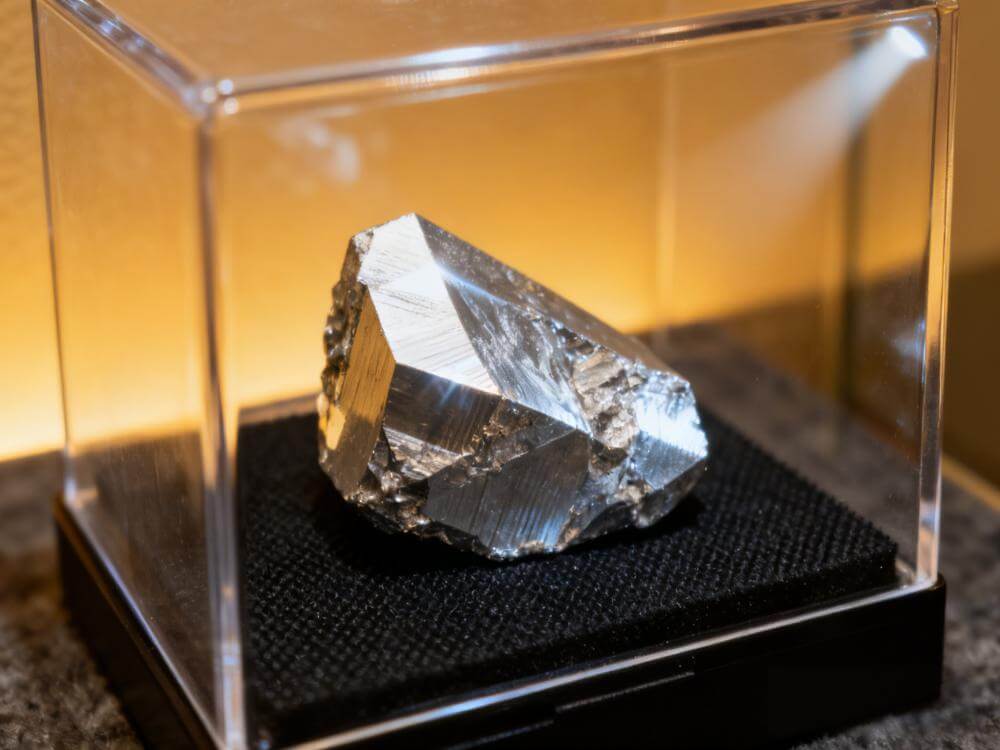
The decision to ban uranium mining and exploration follows the campaign pledge of the ruling left-wing party in April, which publicly expressed its intention to block the development of the Kvanefjeld project because of the presence of silver-gray radioactive metals as a by-product.

The law, passed by parliament on Tuesday night, is in line with the strategy of the new coalition government to focus on promoting environmental protection in Greenland.

It forbids the exploration of deposits with uranium concentrations higher than 100 (ppm) per million, which the World Nuclear Association considers to be very low.

The new rules also include the option of banning the exploration of other radioactive minerals, such as thorium.

Greenland is a vast Arctic self-governing territory belonging to Denmark and its economy is based on fisheries and subsidies from the Danish Government.

As the polar ice melts, miners are increasingly interested in the mineral-rich island. They are looking for any mineral, from copper and titanium to platinum and rare earths, which are needed for electric car engines and the so-called green revolution.

Greenland currently has two mines: one for plagioclase, whose deposit contains titanium, and the other for rubies and pink gems.

Prior to the general election in April, the island had issued a number of exploration and mining licences with a view to diversifying its economy and eventually achieving its long-term goal of independence from Denmark.

The US government recently provided Greenland with an economic aid package as part of the Joe Biden administration's efforts to ensure the supply of key minerals, especially rare earths, from outside China.

Former President Donald Trump has offered to buy the Arctic Island to help address China's dominance of the rare earth market.

China accounts for nearly 80 per cent of the world's mining of rare earth elements, from high-tech electronics to military equipment.

Data Source Statement: Except for publicly available information, all other data are processed by SMM based on publicly available information, market communication, and relying on SMM's internal database model. They are for reference only and do not constitute decision-making recommendations.

For any inquiries or for more information, please contact: lemonzhao@smm.cn
For more information on how to access our research reports, please contact:service.en@smm.cn
Related News
[SMM Chromium Week Review] 'Port Stocks Draw Down as Departures Extend Gains, Zimbabwe Tightens Chrome Mining Rules'
19 hours ago
[SMM Chromium Week Review] 'Port Stocks Draw Down as Departures Extend Gains, Zimbabwe Tightens Chrome Mining Rules'
Read More
[SMM Chromium Week Review] 'Port Stocks Draw Down as Departures Extend Gains, Zimbabwe Tightens Chrome Mining Rules'
[SMM Chromium Week Review] 'Port Stocks Draw Down as Departures Extend Gains, Zimbabwe Tightens Chrome Mining Rules'
Published: Sept 25, 2026
19 hours ago
Empire produces rutile pigment from Pitfield titanium ore
Sep 25, 2026 16:04 (GMT+8)
Empire produces rutile pigment from Pitfield titanium ore
Read More
Empire produces rutile pigment from Pitfield titanium ore
[SMM Titanium Flash] Empire Metals has successfully produced an uncoated rutile titanium-dioxide pigment from concentrates generated from the in-situ weathered ore at its Pitfield Titanium Project in Western Australia. The company says X-ray diffraction confirmed the TiO₂ was present as rutile. Chemical analysis initially produced 97.6% TiO₂, with sulphur accounting for much of the impurity; correcting for that anomaly gives a calculated grade of about 99.2% TiO₂. The development moves Pitfield beyond simply demonstrating titanium mineralisation toward producing a higher-value titanium product. Empire is now working on optimisation and surface coating to produce a rutile pigment suitable for architectural coatings. The company says it is also assessing titanium-metal feedstock applications. These remain laboratory and product-development results, not commercial-scale production.
Sep 25, 2026 16:04 (GMT+8)
[SMM Chromium Flash] FS Mining Details $500m Zimbabwe Ferrochrome Smelter and Power Plant Plans
Sep 25, 2026 15:21 (GMT+8)
[SMM Chromium Flash] FS Mining Details $500m Zimbabwe Ferrochrome Smelter and Power Plant Plans
Read More
[SMM Chromium Flash] FS Mining Details $500m Zimbabwe Ferrochrome Smelter and Power Plant Plans
[SMM Chromium Flash] FS Mining Details $500m Zimbabwe Ferrochrome Smelter and Power Plant Plans
FS Mining, a South African-registered company developing a chrome mine in Zimbabwe, is advancing plans for a US$500 million investment split between a US$100 million ferrochrome smelter and a US$400 million thermal power project, director Dr. Precious Mabuza said in an interview published September 25. The company is currently building a US$15 million wash plant as its first phase of development, and is progressing through the technical, engineering and financing stages of the planned smelter and power plant, with construction timelines dependent on completing feasibility work and securing the necessary approvals. The smelter is planned to begin with 16.5 MVA of sintering plant capacity, paired with a 25MW thermal power station in the project's first phase. Mabuza said the longer-term vision is to expand the power-generation component to 320MW, with the company hoping to extend rural electrification to communities surrounding its operations once the plant is built out. Eventual chrome production volumes will be determined once the final furnace configuration, engineering design and operating parameters are concluded, she said. Mabuza framed the investment around Zimbabwe's push for greater domestic beneficiation, noting the government has banned the export of raw minerals, including chrome, to force local value addition. She said the mine currently employs 100 people, with the company targeting 1,500 jobs at the smelter and power station once operational, and roughly 5,000 jobs across the wider value chain including mining, logistics, services and construction. The reliable baseload electricity from the planned thermal power station is central to the project's strategy, intended to support both the smelting operation and, eventually, electrification for nearby communities.
Sep 25, 2026 15:21 (GMT+8)