New progress has been made in the graceful Science and Technology Patent infringement case against Rong Bai. On October 8, 2021, Rongbai Technology announced that it won the first instance of the patent infringement case of "lithium nickel cobalt manganate S6503" filed by Umeko. However, just over a month ago, in another lawsuit issued by Rongbai Technology on Sept. 16, Umeko sued Rongbai Technology for patent infringement of its NCM811 series products and demanded a claim of 252 million yuan.
Graceful department is the leading company in the field of cathode materials for lithium-ion batteries in the world, which was involved in the development of cathode materials as early as 1995. Rongbai Technology, formerly known as Gold and Lithium, is the largest ternary lithium battery cathode material enterprise in China, and it is also one of the first enterprises to carry out the research and mass production of 811 high nickel cathode materials. It was listed in Science and Technology Innovation Board in June 2019.
Both lawsuits have received wide attention in the industry. Especially in the second lawsuit, the NCM811 series products involved in the lawsuit are the main products of Rongbai Technology (according to Rongbai's prospectus, NCM811 products accounted for more than 40% of revenue in 2018). According to Rongbai Technology's annual report for the first half of 2021, the company's operating income from January to June was 3.592 billion yuan, and the net profit attributed to the owner of the parent company was 321 million yuan. The amount of compensation claimed by Meimei has been close to Rongbai's net profit in the first half of the year.
At present, the second lawsuit has not yet entered the trial stage. This article has no intention to judge whether Rongbai science and technology infringement or not, in fact, there is no way to judge if the specific information of the sued product is not available. This paper only makes a brief analysis through the public data, and focuses on the lithium battery of new energy vehicles, and makes some judgments on the future of this field through the correlation between patent applications and patent disputes.
A total of 18 claims are involved in the Umicor patent, of which claims 1-17 protect the cathode material products and claim 18 protects the method of preparing the cathode material. In particular, claim 1 protects a powdered positive electrode material for lithium secondary batteries having a specific general structure consisting of Li, Ni and metal M, metal M 'and dopant M ", which defines that metal M is selected from any one or more elements of Mn, Zr and Ti, metal M' is selected from any one or more elements of Al, B and Co, and parameters such as-0.02 ≤ x < 0 are also defined. In addition to the general formula, claim 1 further defines that the BET value is less than 0.37m 2 shock g, the maximum particle size Dmax is less than 50 μ m, and has a specific hardness and strength index.
Generally speaking, when judging patent infringement, we only need to analyze the claims in the authorized text. However, this lawsuit has its particularity, and Umico's claim specifically claims that the patent temporary protection term royalty is 145.8577 million yuan. Interpretation of the Supreme people's Court on several issues concerning the Application of Law in cases of Patent infringement (2) (2020 Amendment) Article 18 stipulates that "the scope of protection requested by the applicant when the application for a patent for invention is published is inconsistent with the scope of protection of the patent right authorized by the announcement of the patent for invention, and if the technical scheme under complaint falls into the above two categories, the people's court shall determine that the defendant implemented the invention within the period mentioned in the preceding paragraph;" If the accused technical plan falls within only one of the scope, the people's court shall determine that the defendant failed to implement the invention within the period mentioned in the preceding paragraph. " Thus it can be seen that in the case of this lawsuit involving the royalty of the temporary protection period, we need to pay attention to the scope of protection of both the authorized text and the public text.
From the claims of different stages of the patent involved in litigation, the authorized text further limits the numerical range of x and afigb relative to the public text (only taking claim 1 as an example, see figure 1). If Rongbai Technology's NCM811 product falls into the scope of authorized text protection, it must fall into the scope of public text protection. At this time, you can claim a temporary protection period royalty, while if it only falls into the scope of public text protection, The royalty for the temporary protection period cannot be claimed, so as far as the patent involved is concerned, it is only necessary to focus on the analysis of the authorized text.

Fig. 1 claims at different stages of patent litigation
So does the NCM811 product of Rongbai Technology have the specific general structure, BET value, maximum particle size Dmax and hardness strength index in the patent of Umicor, and then fall into the scope of claim protection? As mentioned earlier, we have no way to judge when we are unable to know the specific information of the complained product. But only calm hundred science and technology official website open NCM811 product parameters, Rongbai technology seems to be expected to escape Umico patent again.
According to the official website of Rongbai Science and Technology, there are four series of NCM811 products, namely S85E, S800, S800C and S8303. The specific surface area, particle size distribution and metal weight content (taking S800 as an example, see figure 2) are disclosed in the main physical and chemical indexes of each subdivided product, but the hardness and strength index is not disclosed. From the main physical and chemical indexes, the general structure, BET value and particle size of each subdivided product are not exactly the same.
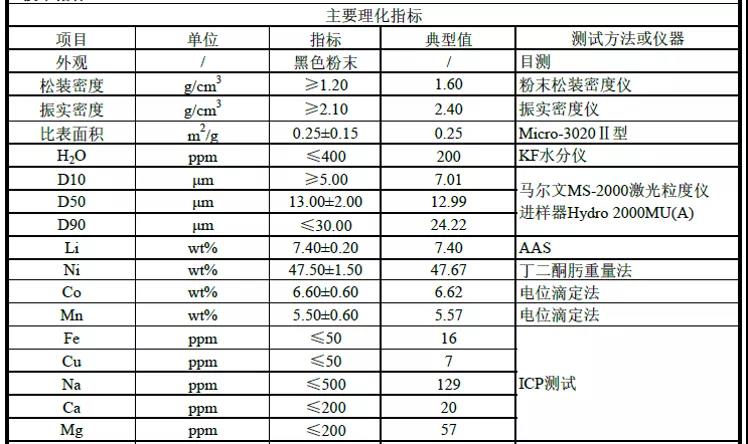
Fig. 2 S800 product specification
After calculation, we find that the x of Rongbai NCM811 series products corresponding to the general structure is greater than 0, and in the process of patent examination, Umicor explicitly abandoned the numerical range of 0 ≤ x ≤ 0.02 advocated by its application. In other words, no matter whether the BET value, the maximum particle size Dmax value and the hardness and strength index fall into the relevant range or not, only in terms of the general structure, Rongbai Technology NCM811 products do not fall into the scope of Umicor patent protection.
It should be noted that the aforementioned Umico patents have been authorized in the United States, Europe, Japan, South Korea and other countries, but the scope of patent protection is different. The fact that patents are regional and do not infringe upon Chinese patents does not mean that products will not infringe upon patents of other countries after export. Take the European patent of the same family as an example, its claim is limited to-0.02 ≤ x ≤ 0.02, at this time, some products of Rongbai Technology NCM811 series may fall within the numerical range of x. Of course, whether it constitutes infringement needs to be further compared with the BET value, the maximum particle size Dmax value, the hardness strength index and so on, especially the hardness strength index, which needs to be tested in accordance with the conditions recorded in the Umico patent to determine whether it falls into the scope of relevant protection.
Is it an isolated case that Rong Bai Technology was sued? Or is it that the lithium industry has been surging, and more companies are facing the risk of litigation? Next, let's focus on lithium batteries for new energy vehicles and make a brief analysis.
In the past 20 years, the global and Chinese applications for lithium battery patents for new energy vehicles have shown a continuous growth trend (figure 3). As of September 27, 2021, the number of patent applications for lithium batteries for new energy vehicles and subclassified NCM batteries, NCA batteries and lithium iron phosphate batteries are 196091, 29894, 11500 and 39964 respectively. The number of patent applications for lithium batteries, NCM batteries, NCA batteries and lithium iron phosphate batteries for new energy vehicles in China are 69797, 7123, 2778 and 14065 respectively (figure 4).
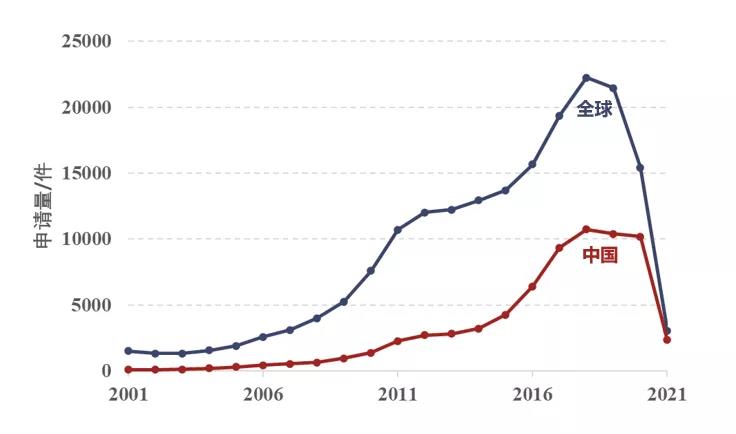
Fig. 3 trend of patent applications for lithium batteries for new energy vehicles in the world and China
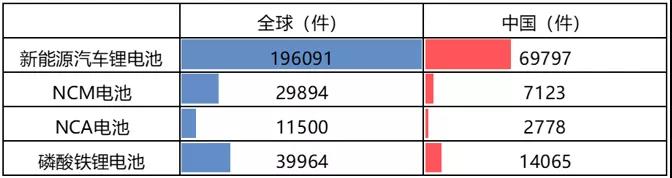
Figure 4 Lithium battery applications for global and Chinese new energy vehicles and their subcategories
According to the ranking of applicants, the top 10 lithium batteries for new energy vehicles in the world are: LG Chemical, Toyota, Samsung, Bosch, Panasonic, Nissan, Hitachi, Sanyo Motor, Ningde New Energy, Jeshi Tang shallow International (figure 5). The top ten lithium batteries for new energy vehicles in China are: LG Chemistry, Toyota, Guoxuan Tech, Ningde era New Energy, BYD, Samsung, Bosch, Central South University, Honeycomb Energy, Panasonic (figure 6), it can be seen that LG chemistry ranks first in all rankings except NCA battery.
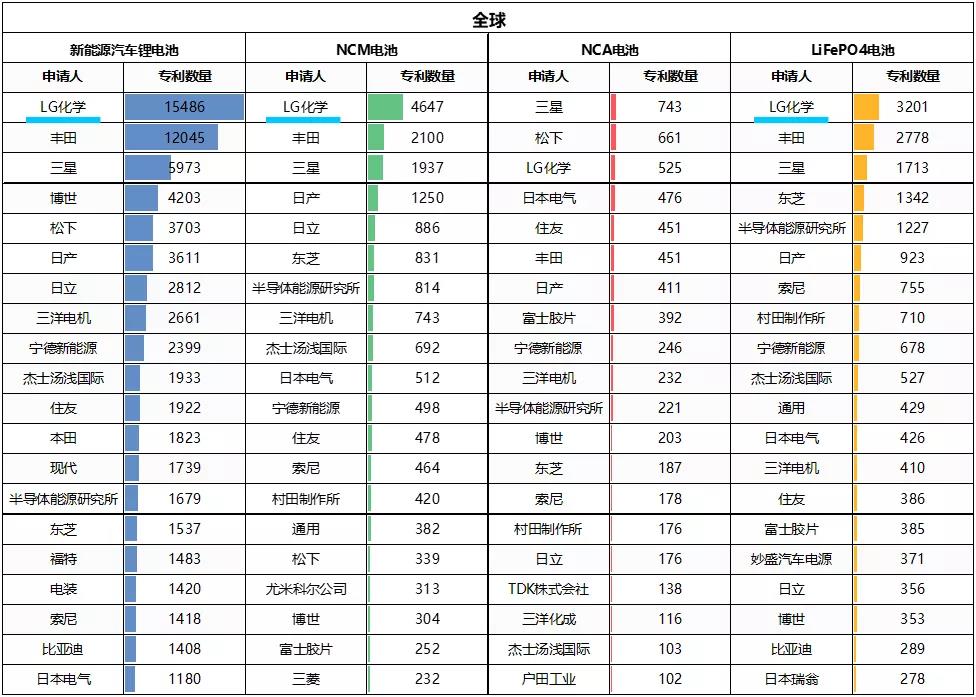
Figure 5 ranking of global lithium battery applicants for new energy vehicles
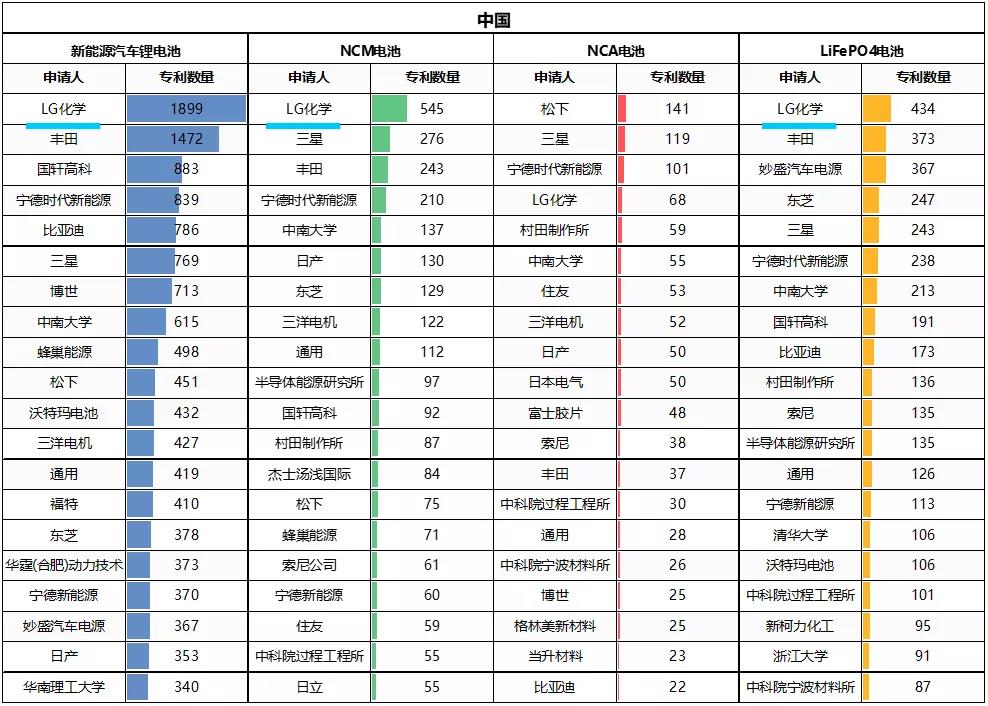
Fig. 6 ranking of applicants for lithium batteries for new energy vehicles in China
According to preliminary statistics, at present, there are 2326 new energy vehicle lithium battery patent disputes worldwide, including infringement, ownership, invalidity, etc., involving oxides / hydroxides containing manganese / iron / cobalt / nickel, non-oxide active materials containing sulfides / phosphates, as well as inactive materials and electrode manufacturing methods (figure 7).
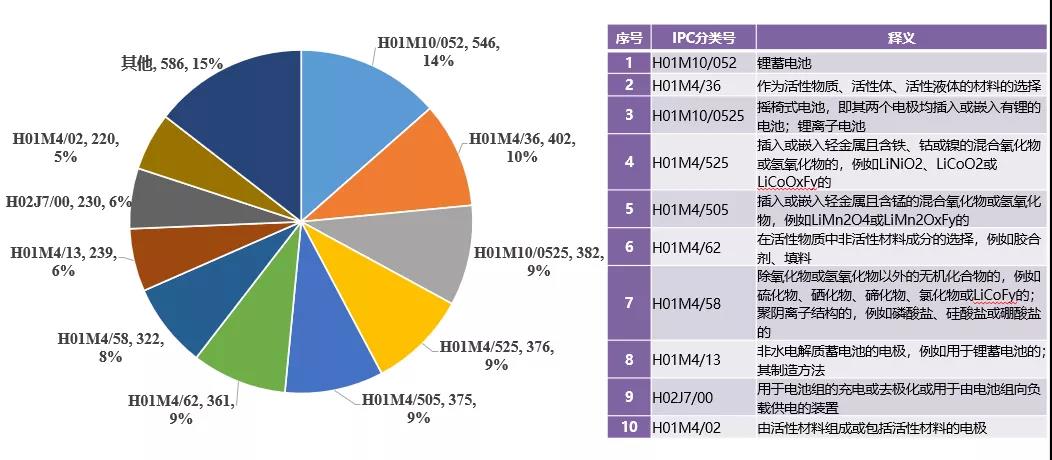
Figure 7 IPC Distribution of Global Lithium Battery Patent disputes for New Energy vehicles
We find that the patent reserve of new energy vehicle lithium battery enterprises is positively related to patent disputes. Among the top 10 companies in patent reserves of lithium batteries for new energy vehicles in the world, LG Chemical, Toyota, Nissan, Hitachi, Samsung, Panasonic and Jieshi shallow International are also among the top 10 in the number of patent disputes (figure 8).
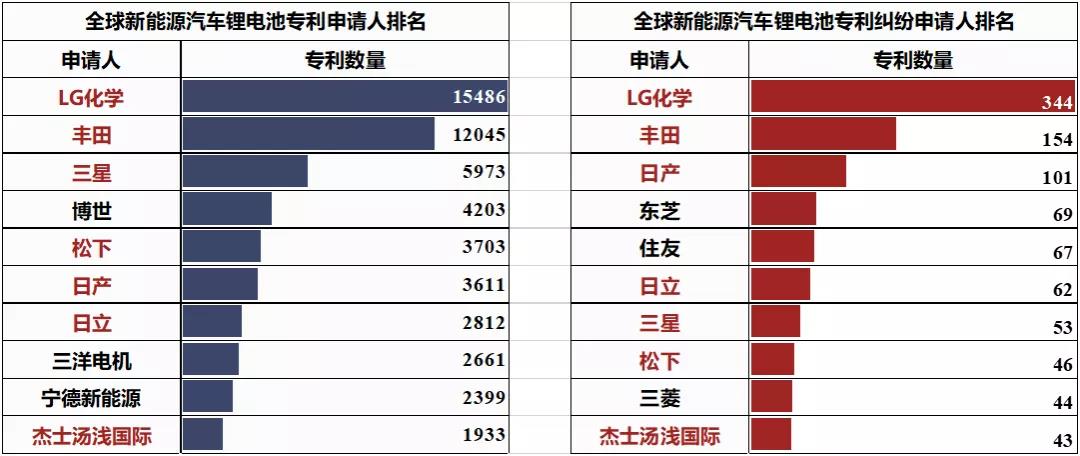
Fig. 8 comparison of global applications and patent disputes of lithium battery applicants for new energy vehicles
For LG Chemistry, which has the largest patent reserve, there are also the largest number of patent disputes, with a total of 344. at present, LG Chemical has not been sued in China, but 227of these 344 patents have entered China, which implies that Chinese new energy vehicle lithium battery companies will be at risk of being sued (figure 9).
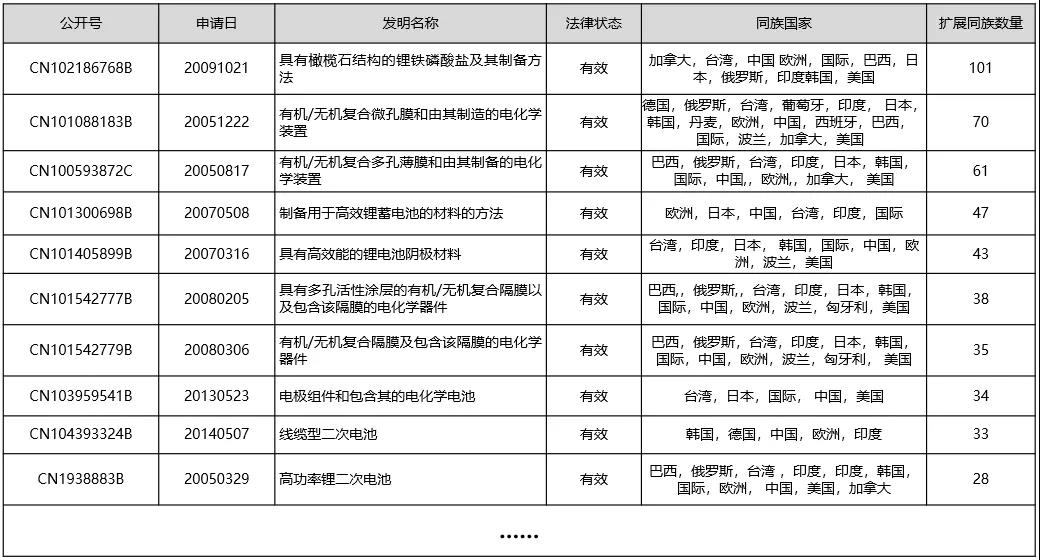
Fig. 9 entry of LG chemical dispute patents into China
In China, there are precedents for patent disputes over lithium batteries for new energy vehicles. For example, Ningde era has successively sued Tafel and AVIC lithium battery patent infringement; Ningde New Energy has sued Datel robot patent ownership; as well as patent disputes between Geely, Weimar, Leitian Winston and other well-known enterprises.
Back to the case of Youmeko v. Rongbai Technology, although Rongbai Technology has just won a game, its patent reserve is different from that of Umeko, and the situation is still not optimistic. In terms of quantity, there is little difference in the patents of lithium batteries for new energy vehicles in China. However, in terms of quality, Umico is mostly a compound patent of product + method, and it is often described with abstract parameters and formulas, which has a wide range of protection and great litigation power. On the other hand, Rongbai Technology is mostly process patents, with many limited steps, detailed process description, narrow scope of protection, and difficulty in providing proof, so it is difficult to form a strong counterclaim. As a direct competitor of lithium cathode materials, Rongbai Technology is still at risk of being sued.
Intellectual property rights have ushered in the best era in China so far. When strong protection is irreversible, intellectual property rights will not only bring huge opportunities to enterprises, but also mean great risks. We do not know whether there will be more lithium enterprises with strong patent reserves to initiate lawsuits in the future, but what is certain is that once it happens, for enterprises with weak patent reserves, weak patent layout and weak counterclaim ability, the impact will be huge.
![Análise da produção de sulfeto de lítio grau bateria em agosto: haverá um aumento no quarto trimestre? [Análise SMM]](https://imgqn.smm.cn/usercenter/mpqgn20251217171727.jpg)