"Click to view details
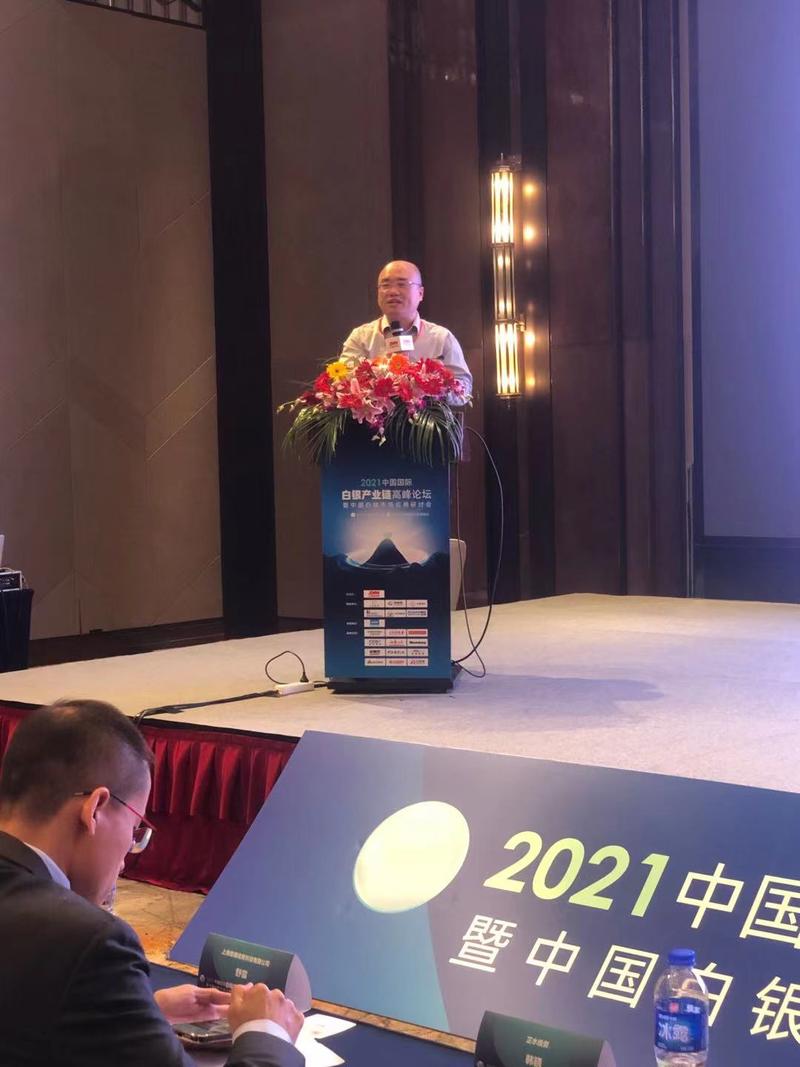
At the 2021 China International Silver Industry chain Summit Forum and China Silver Market Application Symposium sponsored by (SMM) of SMM Information & Technology Co., Ltd., Han Jun, general manager of Zhishui Investment and senior trader of precious metals, reviewed the gold and silver market in 2021 and looked forward to the future investment direction. He pointed out that the factors affecting precious metal prices in 2022 will revolve around the Fed's monetary policy, euro zone monetary policy and the epidemic. Combined with a combination of fundamentals and technical factors, 2022 is expected to be a volatile downward trend.
Macro monetary environment in 2021
America
The GDP growth rate of the United States in 2020 is-3.5%, which is negative, but better than the market forecast. The US economy returned to positive growth in the first half of the year and continued to improve in the second half of the year.
Influencing factors in 2021: epidemic situation, degree of economic recovery, reduction of QE. IMF expects US GDP growth of 6.5 per cent in 2021 and 3.5 per cent GDP growth for the whole of 2022.
Euro zone
Euro zone GDP growth rate in 2020-6.6%, euro zone second quarter GDP growth of 14.3% year-on-year, is expected to be 13.6%, the previous value of 13.6%. It was also the highest level of quarterly GDP in the euro zone since records began.
European Central Bank President Christine Lagarde said that the economic situation of the euro zone is better than expected, but the euro zone economy is not out of trouble, the European Central Bank will provide the necessary support.
The European economy is likely to recover better than expected in 2021. IMF expects euro zone GDP growth of 4.4 per cent in 2021 and 3.8 per cent GDP growth for the whole of 2022.
China
China's GDP growth rate in 2020 is 2.3%, the only economy with positive economic growth in 2020.
The epidemic situation is well controlled, and the most important thing is to maintain a sound economic recovery. IMF expects China's GDP to grow by 8.4 per cent in 2021 and GDP by 5.6 per cent in 2022.
Emerging economies
China, Russia, India, Brazil and South Africa as BRICS countries, in the latest statistics, India's GDP grew faster than the same period last year, followed by Brazil, China and South Africa, while the screw only recorded negative growth.
Price influencing factors in 2022
The trend of the two traditional precious metals, gold and silver, is consistent in most cases. According to the statistics of nearly a decade, the correlation coefficient between them can reach 0.939.
The Fed's economic policy remains the main line of price influence. Generally speaking, when the Fed tightens monetary policy, the dollar index goes higher, and vice versa. The dollar index fell. On the other hand, the dollar index tends to be negatively correlated with gold. When the dollar index rises, gold goes down, while when the dollar index goes down, gold rises.
Second, geopolitics is also a factor affecting the price of precious metals.
The monetary policy of the ECB is also a key factor. The most special thing about the ECB's bond purchases compared with other central banks is that before the outbreak of novel coronavirus, the ECB and the central banks of eurozone member states had already implemented a regular asset purchase programme of about 20 billion euros per month, (APP). After the outbreak of the novel coronavirus epidemic, the European Central Bank launched the emergency anti-epidemic bond purchase program (PEPP), in March last year and kept PEPP and APP running side by side. According to the current plan, PEPP will run until March next year, while APP does not have an exact end date. PEPP is likely to shrink, but it does not mean that the ECB tightens monetary policy. There is still a need to beware of black swans in the euro zone.
Price analysis
The factors affecting precious metal prices in 2022 will focus on three major aspects: the Fed's monetary policy, the euro zone's monetary policy and the epidemic.
Combined with a combination of fundamentals and technical factors, 2022 is expected to be a volatile downward trend.
Precious metals may wobble downwards next year.
The upper pressure level of gold price in the first half of 2022 is around $1850 / oz and the lower low is around $1450 / oz.
In 2022, the upper pressure level of silver price is around 25.0 USD / oz, and the lower low is between 15.0 USD / oz.
Silver TD price range is 5400 yuan / kg-3200 yuan / kg.
Investment strategy
Precious metal prices are expected to be a wide volatility downward process in 2022.
For precious metals and enterprises in the upper reaches of the lead and zinc industry chain. Enterprises with mines can not guarantee the price or sell a small amount of insurance, and enterprises that need to purchase raw materials for smelting and processing can lock in the order price by selling value.
For precious metals and the middle reaches of the lead and zinc industry chain as well as trading enterprises. You can avoid the risk of price fluctuations in the precious metal market by buying high and selling low to lock in buying and selling price profits.
For precious metals and downstream enterprises of lead and zinc industry chain. When the enterprise has excess raw material inventory, we can avoid the loss caused by the price drop by selling the value at an appropriate price.
If medium-and long-term speculative traders can continue to hold short orders near US $2000 / oz, those without positions can consider inverted pyramid short-term orders with reference to the gold price of US $1850 / oz. Medium-and short-term investors can trade mainly by short positions as far as possible.