
This evening, the central bank announced that it would reduce the required reserve ratio by 0.5 percentage points from July 15, releasing about 1 trillion yuan in long-term funds. After this reduction, the weighted average deposit reserve ratio of financial institutions is 8.9%.
FTSE China A50 index futures rose in a straight line, boosted by the news of the across-the-board reserve rate cut. Market analysis believes that the RRR reduction has a certain positive effect on the stock market, especially banks, real estate and other capital-sensitive varieties as well as commodity-related varieties.
How A-shares will perform next week has attracted the attention of investors. A quick look at the performance of the stock market after previous reserve rate cuts:
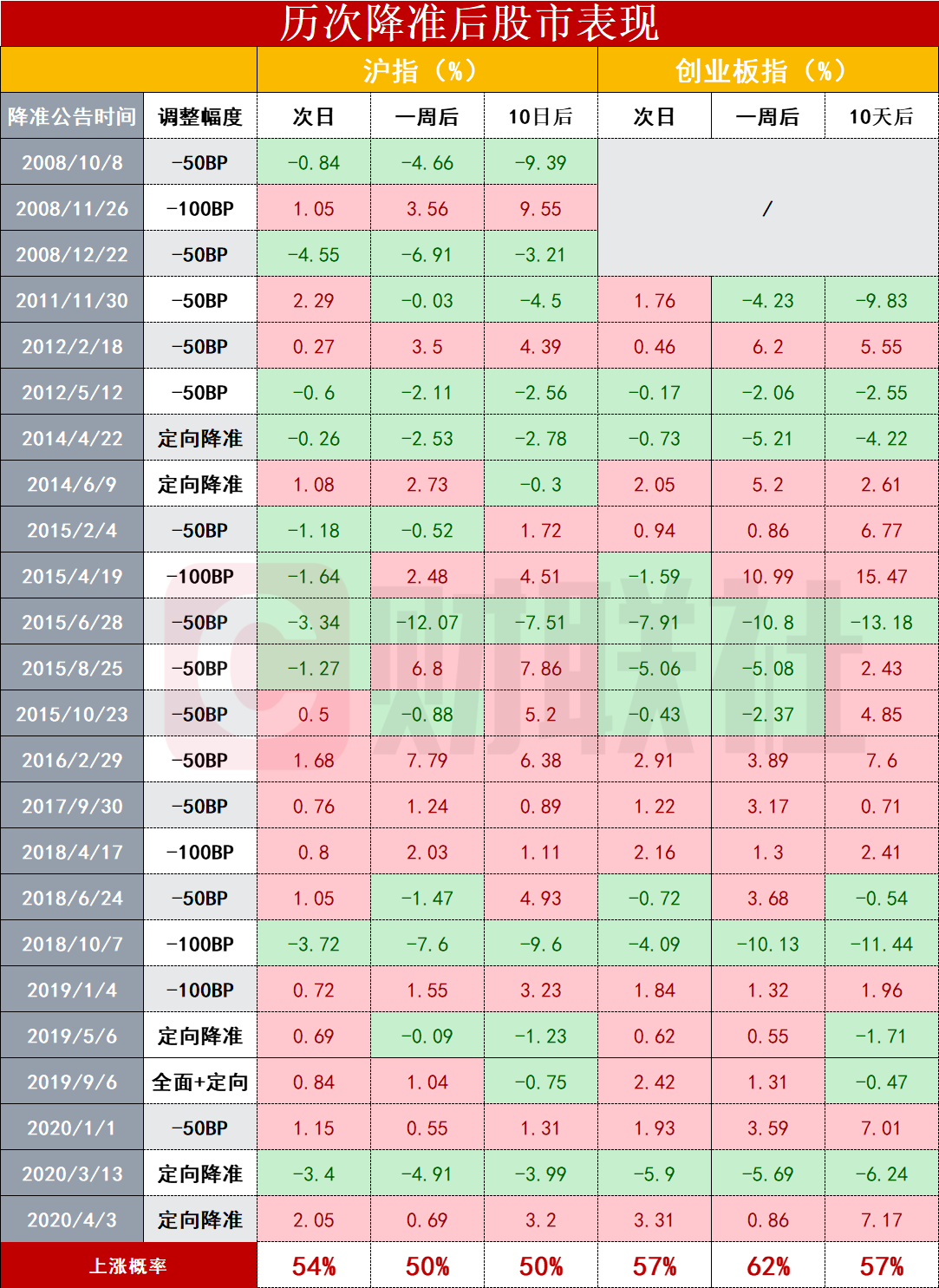
A relevant responsible person of the people's Bank of China answered a reporter's question on the reduction of the required reserve ratio for financial institutions:
Does this cut mean a change in the orientation of prudent monetary policy?
A: the orientation of prudent monetary policy has not changed. When dealing with the epidemic in 2020, the people's Bank of China adhered to the normal monetary policy, and its efforts gradually returned to normal after May, and basically returned to the normal before the epidemic in the first half of this year. This cut is a routine operation after the return of monetary policy to normal. Some of the funds released will be used by financial institutions to repay the medium-term loans due. (MLF), and some funds will be used by financial institutions to make up for the liquidity gap caused by the peak of the tax period in mid-late July, increase the proportion of long-term funds of financial institutions, and the total liquidity of the banking system will remain basically stable. At present, China's economy is improving steadily, and the people's Bank of China adheres to the stability and effectiveness of monetary policy, adheres to normal monetary policy, and does not engage in flooding.
What are the considerations for this cut?
A: the purpose of this cut is to optimize the capital structure of financial institutions, enhance the capacity of financial services, and better support the real economy. First, while maintaining reasonable and abundant liquidity, we should enhance the capital allocation capacity of financial institutions and create a suitable monetary and financial environment for high-quality development and supply-side structural reform. The second is to adjust the financing structure of the central bank, effectively increase the long-term and stable sources of funds for financial institutions to support the real economy, and guide financial institutions to actively use reserve reduction funds to increase support for small and micro enterprises. Third, this cut will reduce the capital cost of financial institutions by about 13 billion yuan per year, which can help reduce the comprehensive financing cost of the society through the transmission of financial institutions.
How much money will be released by this cut?
A: this reduction is an across-the-board reduction. Except for some county corporate financial institutions that have implemented the deposit reserve ratio of 5%, the deposit reserve ratio for other financial institutions has generally been reduced by 0.5 percentage point, and the reserve requirement has been lowered to release long-term funds of about 1 trillion yuan. The main reason for not lowering the deposit reserve ratio of some financial institutions is that the deposit reserve ratio of 5% is currently the lowest among financial institutions, and maintaining this low level will help financial institutions to support both the real economy and their own sound operations.
For the central bank to cut the reserve requirement, Huaxi Securities believes that it is basically in line with market expectations. The market will pay more attention to whether the central bank will continue to cut the reserve requirement in the future. Huaxi Securities believes that the possibility of further reduction is almost zero, so it does not think that the domestic monetary policy has turned. The impact of this cut on the A-share market tends to be neutral, and the expected landing of the "reserve cut" does not need to exaggerate the boost effect of this "reserve cut" on market risk appetite.
Li Qilin of Hongta Securities believes that in addition to targeted support for small and micro enterprises, there is also the consideration of hedging exports and stabilizing aggregate demand, and reducing the debt cost of banks is a very clear policy direction, according to Li Qilin of Hongta Securities.
In addition, due to the need for long-term economic transformation, the governance of hidden debt and the regulation and control of real estate will remain high for quite a long time. Li Qilin predicts that the future will be a combination of "structural tight credit + broad currency", which is very beneficial to the bond market.

![Platinum and Palladium in the Doldrums During the Week, Multiple Bearish Factors Weigh on Precious Metals [SMM Platinum and Palladium Weekly Review]](https://imgqn.smm.cn/usercenter/tSwaX20251217171735.jpg)
![Platinum Prices Hold Up Well, Spot Market Discount Maintained as Consumption Remains Subdued [SMM Daily Review]](https://imgqn.smm.cn/usercenter/YKilH20251217171735.jpg)