SHANGHAI, May 17 (SMM)—Operating rates at major aluminium processors rose 1.7 percentage points from before the Labour Day last week. The aluminium extrusion segment reported the biggest increase, driven by demand recovery in the construction sector. Operating rates in the aluminium wire and cable industry rebounded slightly due to the concentrated delivery of orders. Operating rates in the primary aluminium alloy sector continued to decline as more car makers have cut output due to chip shortages. Aluminium sheet, strip and foil sector saw stable operating rates, and their profits shrank due to soaring aluminium prices. Inventory of finished products at aluminium sheet, strip and foil producers is relatively high, but may ease with the downward corrections of aluminium prices. High aluminium prices had limited impact on operating rates of major enterprises, cash flow pressure increased. Monetary policy is likely to be tightened and relevant government departments have warned of the risks of rising commodity prices. As such, aluminium prices may fall back in the short term, which will ease downstream cost pressure. Operating rates at aluminium processors are expected to rise slightly, based on orders on hand.
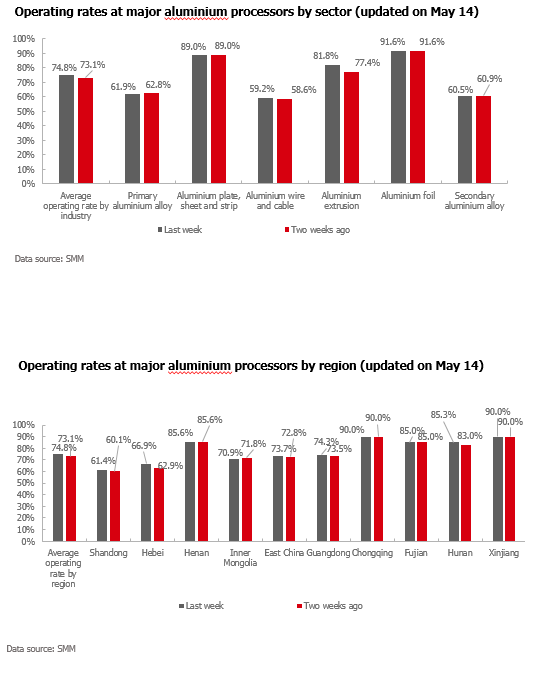
Primary aluminium alloy: Operating rates at major primary aluminium alloy enterprises fell 0.9 percentage point from the previous week to 61.9%. Output and sales fell MoM in April due to high aluminium prices and car chip shortages. Widening aluminium-silicon price gap improved profit of primary aluminium alloy companies, but processing fees were slightly reduced and may continue to fall. Operating rates of are expected to continue to decline slightly this week due to sluggish car sector.
Aluminium plate and strip: Major aluminium plate and strip enterprises maintained high operating rates last week. More than one month of backlog orders will allow major aluminium sheet and strip companies to maintain full production in May. New orders from the automobile and 3C sectors fell due to chip shortage. Orders for can stock rose in the peak season for packaging. The overall new orders declined slightly due to growing risks from high aluminium prices. Small and medium-sized enterprises reported fewer orders than large enterprises, and operating rates at some of them fell slightly. The aluminium plate and strip sector is still in the peak season. Operating rates at major aluminium plate and strip enterprises will remain stable this week due to saturated orders.
Aluminium wire and cable: Operating rates of aluminium wire and cable companies rebounded slightly as some producers rushed to deliver orders. Some companies reported a slight decline in operating rates. State Grid delayed tender invitations as aluminium price once hit a high of 20,000 yuan/mt. Increasing replacement of copper with aluminium will boost aluminium demand in the wire and cable sector. Aluminium rod plants reported stable operating rates amid high processing fees. Operating rates of major aluminium wire and cable companies will remain stable in the short term.
Aluminium extrusion: Operating rates at major aluminium extrusion enterprises continued to rise. Orders were full at many major aluminium extrusion enterprises. Positive real estate industry boosted demand for construction aluminium extrusion, especially aluminium formwork, which is in short supply. Industrial aluminium extrusion producers have reported strong orders since they resumed production after the Chinese New Year, largely driven by car, rail transport, and electronic sectors. Most producers reported half a month of orders. Downstream purchase improved after aluminium prices fell back. Operating rates are expected to be little changed in the short term.
Aluminium foil: Operating rates at major aluminium foil enterprises remained flat last week. Orders at leading aluminium foil companies have generally been scheduled until July. Many major aluminium foil companies have raised processing fees amid soaring aluminium prices. Processing fees of light gauge foil were raised by more than 1,000 yuan/mt, while the increase in processing fees of medium gauge and heavy gauge foil was relatively small. Small and medium-sized enterprises have weak bargaining power, and were cautious in raising processing fees. Large producers will maintain high operating rates this week, while some small and medium-sized producers may suspend production.
Secondary aluminium alloy: Operating rate of secondary aluminium alloy enterprises dropped 0.4 percentage point from a week ago to 60.5%. Aluminium prices moved at highs, and prices of secondary aluminium also fluctuated at a high of 19,500 yuan/mt. Many die-casting enterprises suffered losses due to high raw material costs and were forced to reduce or suspend production, affecting orders and operating rates at secondary aluminium producers. Aluminium scrap prices followed aluminium prices up and its supply was tight, forcing some secondary aluminium plants to reduce production slightly. Operating rate is expected to continue to fall slightly this week.
![Aluminum prices edged down today, spot market weakened [SMM South China aluminum spot daily review]](https://imgqn.smm.cn/usercenter/YPMhF20251217171654.jpg)
![Pre-holiday destocking trend of aluminum ingots continues, providing strong support for aluminum prices fluctuating at highs [SMM Aluminum Morning Meeting Minutes]](https://imgqn.smm.cn/usercenter/HVmVi20251217171654.jpg)