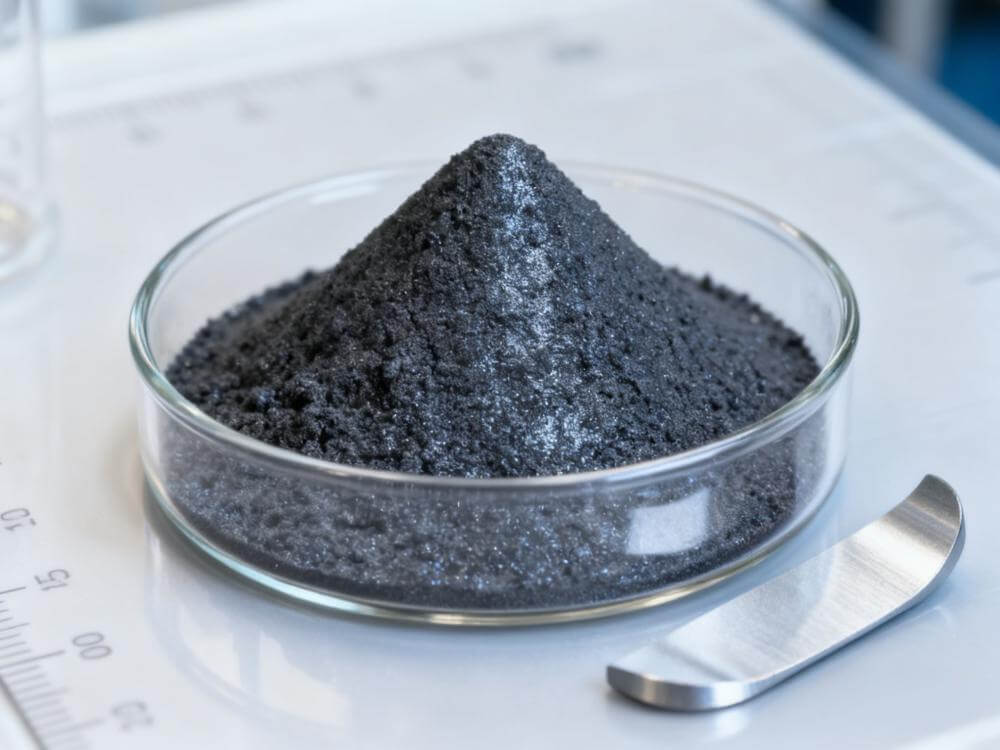
On March 11th, at the eighth China Silicon Industry chain Summit Forum held by SMM, Yang Xiaoting, senior analyst of (SMM) of SMM Information & Technology Co., Ltd., counted the supply and demand of domestic industrial silicon market in 2020 and prospected the market in 2021. She said: "Metal silicon is not what it used to be, and the development potential of new silicon-based materials is huge!" In 2020, DMC prices skyrocketed to more than 30000 yuan / ton and then fell back rapidly. The high level operation may be continued in 2021. With the rapid expansion of downstream silicon wafers, the supply of polysilicon is in short supply, and the price of polysilicon supply shortage will maintain a strong rise in 2021. The consumption of organosilicon monomer, polysilicon and aluminum alloy has increased, but the supply increment has only Xinjiang reproduction capacity but no new production capacity. Factors such as the increase in the cost of electricity consumption of metal silicon and the rise in the price of raw materials will jointly push the price of metal silicon to operate at a high level. "
Analysis of Metal Silicon supply in China
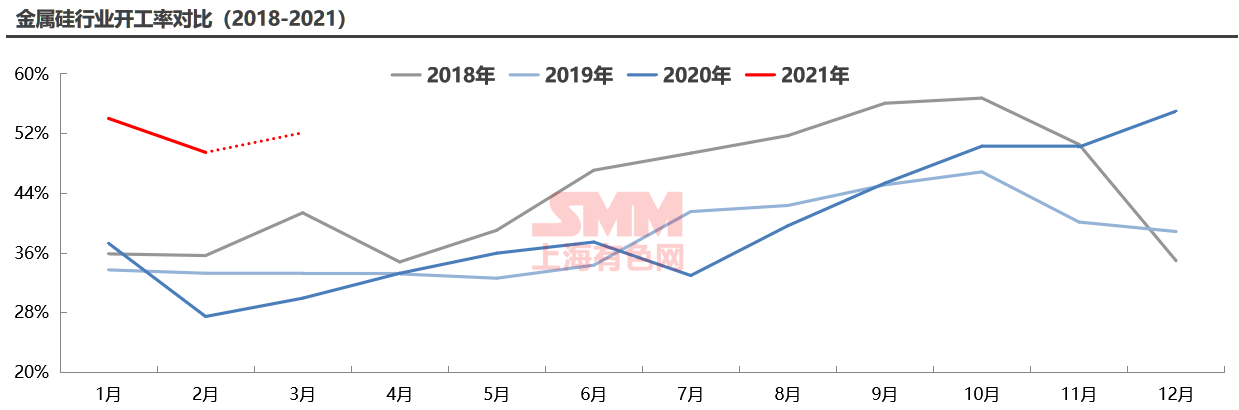
The release of production capacity in Xinjiang is limited in 2020, and the high silicon price attracts start-up: during the flood season, the national start-up does not increase but decreases: in July 2020, large factories in Xinjiang accidentally shut down production due to accidents and production cuts caused by losses across the country led to an abnormal decline in the start-up rate in the flood season. Silica supply restricts the start of construction in Xinjiang: limited mining in Xinjiang leads to tight supply of silica, which has a particularly serious impact on low-cost production capacity in Xinjiang, affecting the release of Q1-Q3 capacity in 2020. During the dry season, the start-up accident reached the highest for the whole year: under the stimulation of profits, the shutdown time of the silicon plant in Yunnan and Sichuan was postponed, the production capacity in Xinjiang and other regions increased, and the start-up rate reached the peak at the end of the year.
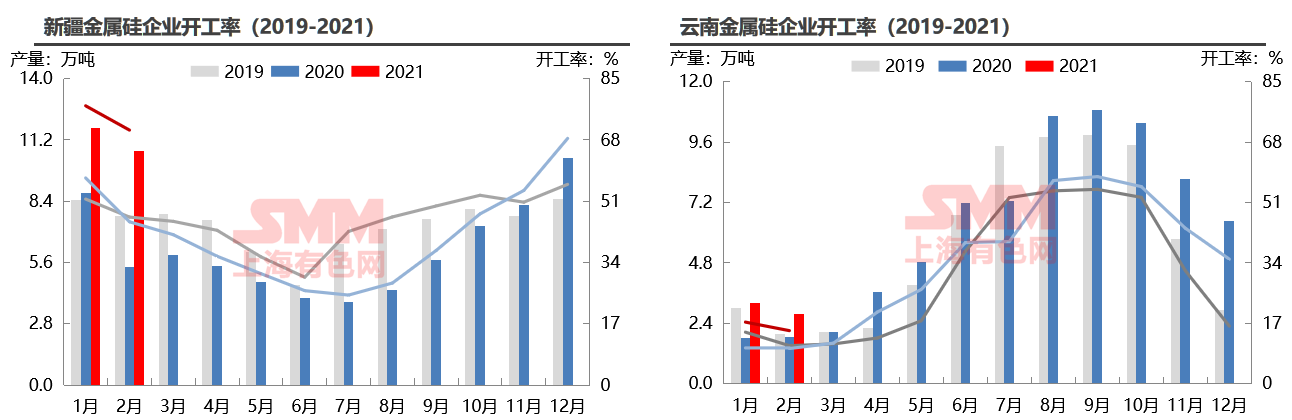
In 2020, the supply of metal silicon in Xinjiang is on the low side compared with the same period last year, and the frequent start-up of power restrictions in Yunnan is unstable: Xinjiang: the shortage of ore, low-cost production capacity is difficult to make bricks without rice, accidental shutdown and low silicon prices and other reasons also limit the release of production capacity in Xinjiang. Yunnan: due to the power reduction of Nujiang Silicon Plant, the operating rate in Yunnan during the high water season did not rise but decreased in July. Since then, the operating rate in Yunnan has remained high compared with the same period last year. After entering the dry season in November, most silicon factories cut production and did not stop production.
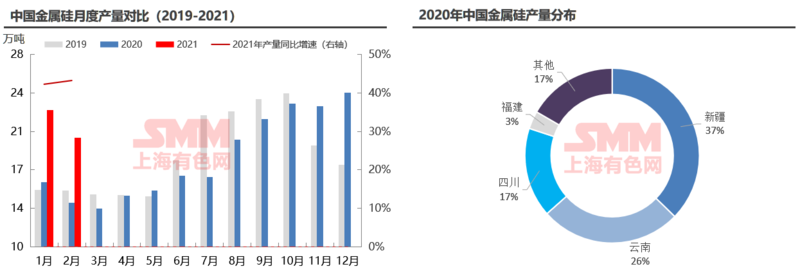
Competition for new capacity less metal silicon supply: according to SMM statistics, China's metal silicon production in 2020 was 2.199 million tons, down 36000 tons from the same period last year, or 1.6 per cent. Industry concentration needs to be improved: there are only five enterprises with an annual output of more than 50,000 tons, and many small enterprises in high electricity price areas go on and off with the rise and fall of silicon prices.
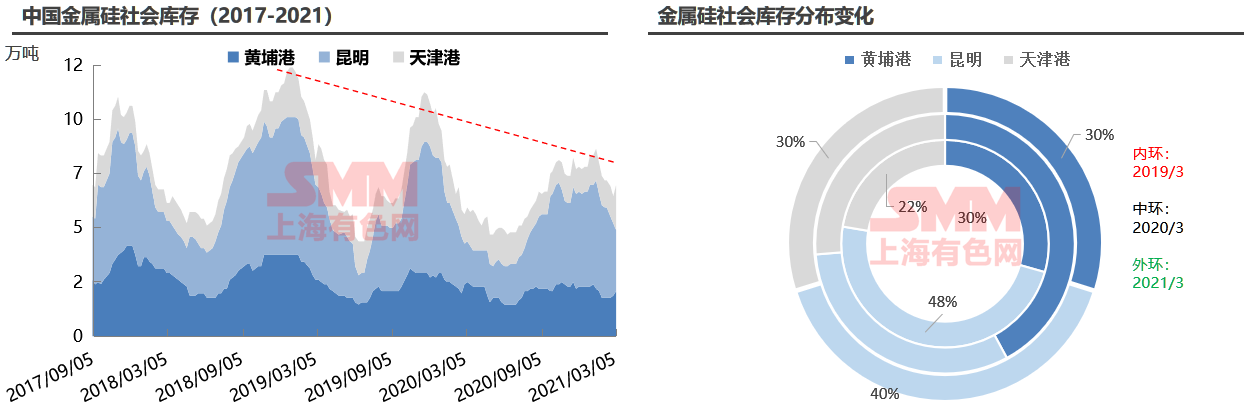
Metal silicon social inventory shows a decentralized trend:
Huangpu Port: traders reduce port inventory in order to reduce costs and transaction risks, and some export goods are pulled directly into the wharf without transshipment through the warehouse. Kunming: the proportion of factory-to-factory and factory-to-terminal shipments in Yunnan market has increased significantly, and the increase in transport capacity in western Yunnan, the main producing area, weakens the transit attribute of Kunming warehouse.
Tianjin Port: inventories shrank year-on-year in 2020 due to supply cuts in Xinjiang and US sanctions on goods in Xinjiang.
II. Demand at home and abroad
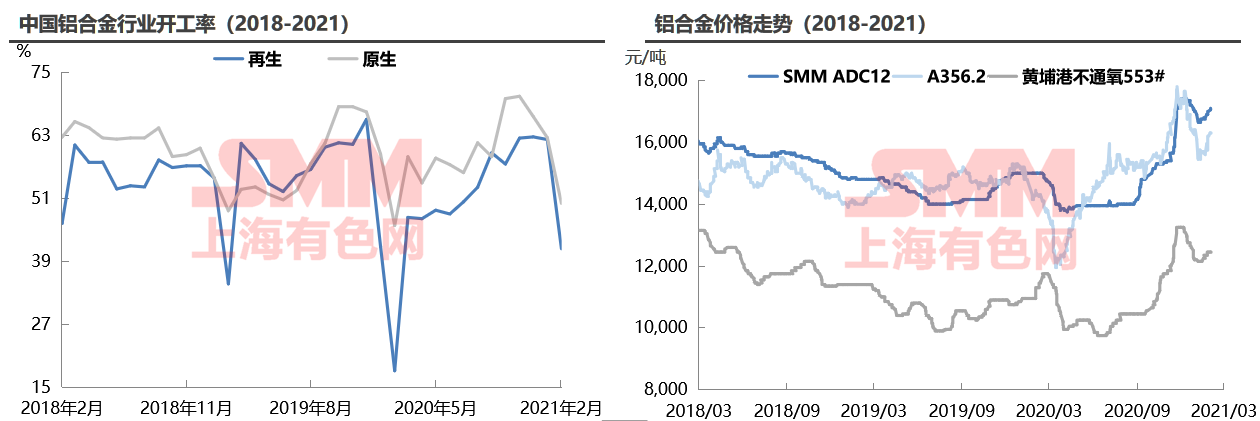
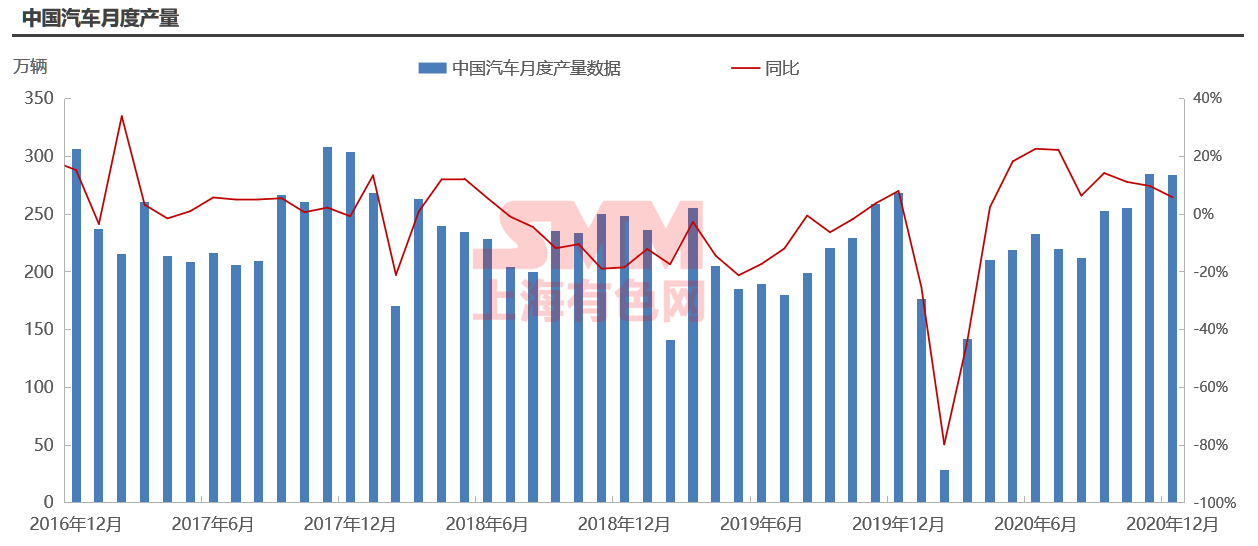
Automobile consumption resumes aluminum alloy start-up promotion: recycled aluminum alloy: domestic waste aluminum supply is tight, original aluminum price strongly supports recycled aluminum alloy price, the upward trend is expected to be maintained in the first quarter, and the import window may open again in 2021. Primary aluminum alloy: the increase of domestic new production capacity, the recovery of export demand of aluminum wheels and the positive growth of terminal automobile production and sales jointly support the demand of primary aluminum alloy.
The bottom of domestic terminal automobile consumption is now:
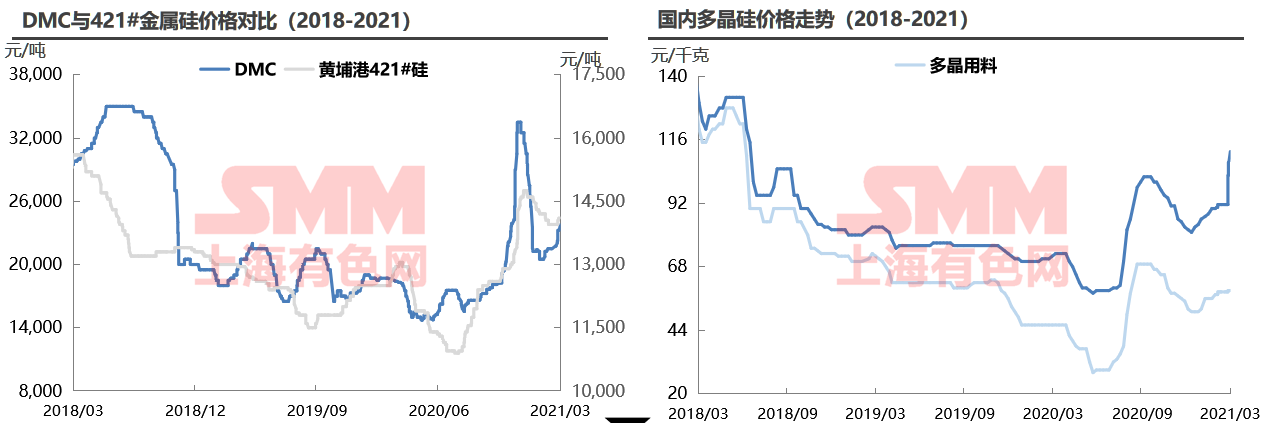
With the advent of the peak consumption season, DMC prices can expect a strong rise in the shortage of polysilicon supply as the main theme:
DMC: benefited from the new domestic consumption areas and the substantial growth of foreign demand during the epidemic. In 2020, DMC prices skyrocketed to more than 30000 yuan / ton and then fell back rapidly. The high level operation may be continued in 2021.
Polysilicon: the rapid expansion of downstream wafers polysilicon is in short supply, and the price of polysilicon will remain strong in 2021.
The downward trend of overseas consumption continues the sharp rise in sea freight, the appreciation of RMB and the weakening of the export advantage of metal silicon: downstream production capacity such as domestic organosilicon monomer, polysilicon and other downstream capacity expansion to replace overseas production capacity: South Korea, Malaysia, Germany, the United Kingdom and other countries gradually withdraw from the market due to losses and equipment aging and other reasons, metal silicon overseas consumption decreased accordingly. Southwest is still the main source of China's metal silicon exports: comprehensive production costs, transportation distance, export requirements, trade barriers and other factors, southwest, especially Yunnan is still an irreplaceable source of export supply.
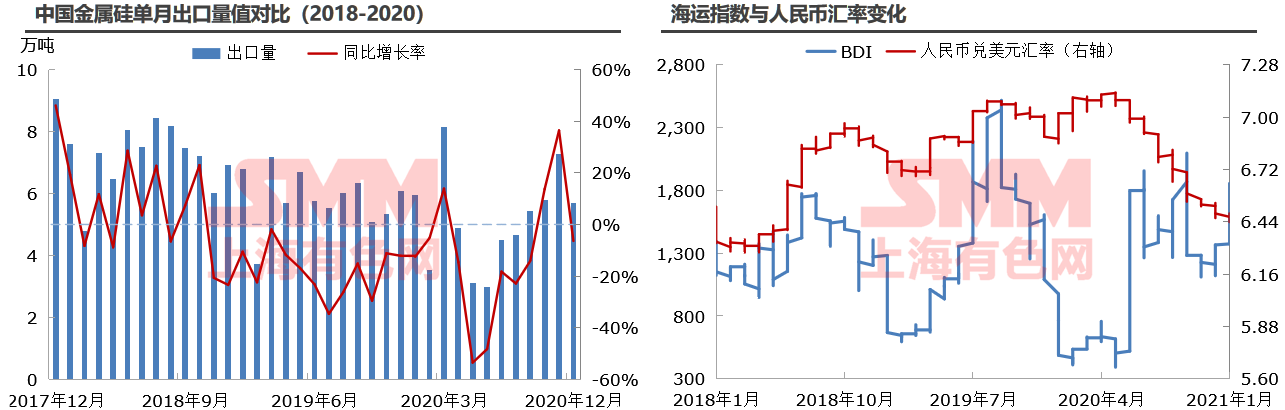
The consumption of organosilicon and polysilicon is growing rapidly and the proportion of export consumption is decreasing:
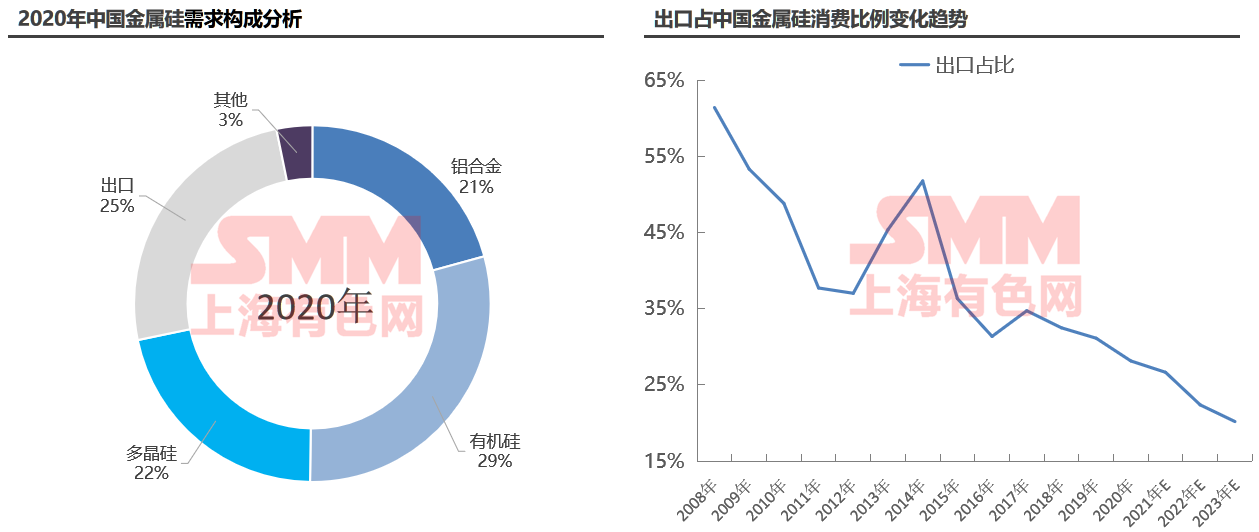
Market Prospect and Price Forecast
The influence of seasonal supply difference on price is weakened. pay attention to local electricity price and industrial policy: there are variables in supply structure: the storage variable of ore supply in Xinjiang affects the release of low-cost production capacity. Yunnan electrolytic aluminum, polysilicon, metal silicon and other high energy-consuming production capacity centralized power supply problems need to be paid attention to. The formation of regional independent market: Xinjiang, Yunnan, Sichuan and other regions gradually form relatively independent markets due to downstream capacity expansion, and some brands will not be sold outside the province until they meet local needs.
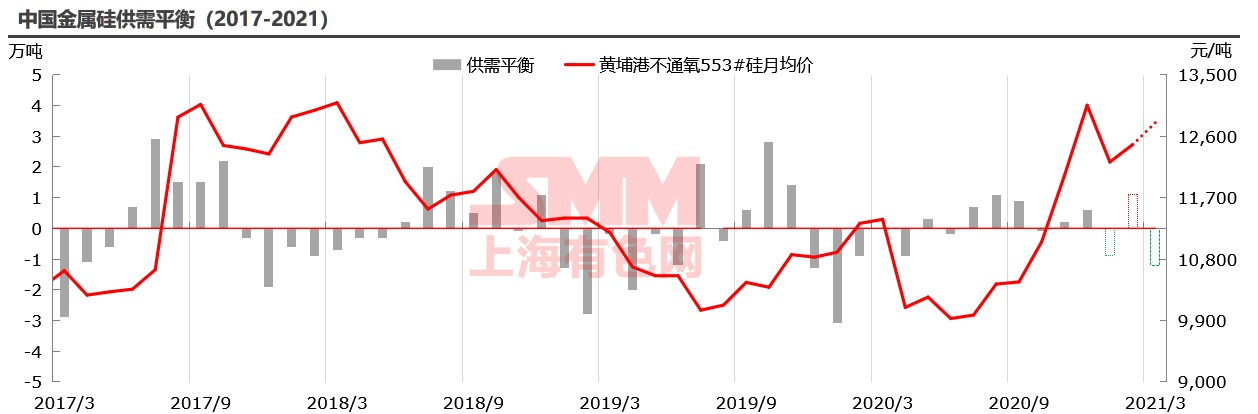
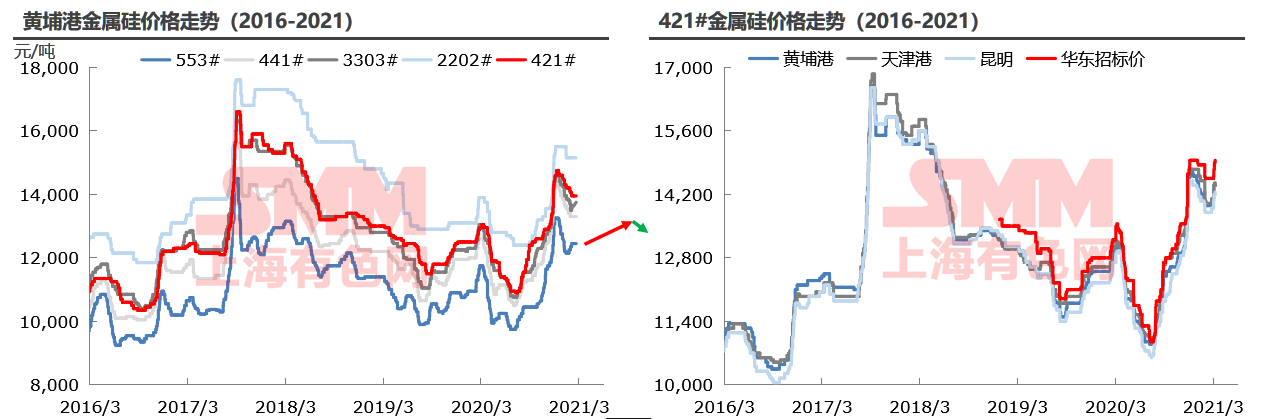
Falling prices in the high water period and rising prices in the dry period have become old news: in the "post-epidemic" period, loose capital supply and demand to restore silicon prices bottomed out and rebounded: metallic silicon was shrouded in the adverse effects of novel coronavirus's epidemic in the first half of 2020, and prices fell in early July to increase new low loss and production capacity in the past four years. As domestic and foreign downstream gradually resume work and traders copy the bottom to enter the market, silicon prices have entered the upward channel. The price of metal silicon continues to run at a high level in 2021: the consumption of organosilicon monomer, polysilicon and aluminum alloy increases, but the supply increment only has the production capacity of Xinjiang, but there is no new capacity put in. factors such as the increase in the cost of electricity consumption of metal silicon and the rise in the price of raw materials will jointly push the price of metal silicon to operate at a high level. It is estimated that the operating range of oxygen-free 55K silicon in Huangpu Port in 2021 is 10500-13500 yuan / ton, and the annual average price is about 11500 yuan / ton.
Metal silicon is different from the past, the development potential of new silicon-based materials is huge: carbon neutralization goal guidance, great changes in demand structure; different regional industrial policies, focusing on Yunnan, Inner Mongolia, Sichuan and other silicon-based industrial bases; downstream technology promotion + cost control, aluminum alloy materials and polysilicon materials coincidence degree becomes higher, the traditional "metallurgical grade, chemical grade" boundaries become blurred.
![[Tin nhanh | Chỉ số sản xuất khai khoáng của Chile giảm 7,2% so cùng kỳ năm trước trong tháng 7; khai khoáng kim loại giảm 10,7%]](https://imgqn.smm.cn/usercenter/bFzkj20251217171724.jpg)
![[SMM Tin nhanh Crom] Zimbabwe cấm vận 1.500 tấn quặng crom cô đặc tồn kho trong chiến dịch trấn áp buôn lậu khoáng sản](https://imgqn.smm.cn/usercenter/pAOxy20251217171725.jpg)
![[SMM Tin nhanh Crom] Thuế Lao động Cưỡng bức của Mỹ ảnh hưởng đến Ferrochrome Nam Phi mà không có miễn trừ Mục 232](https://imgqn.smm.cn/usercenter/cgspx20251217171725.jpg)