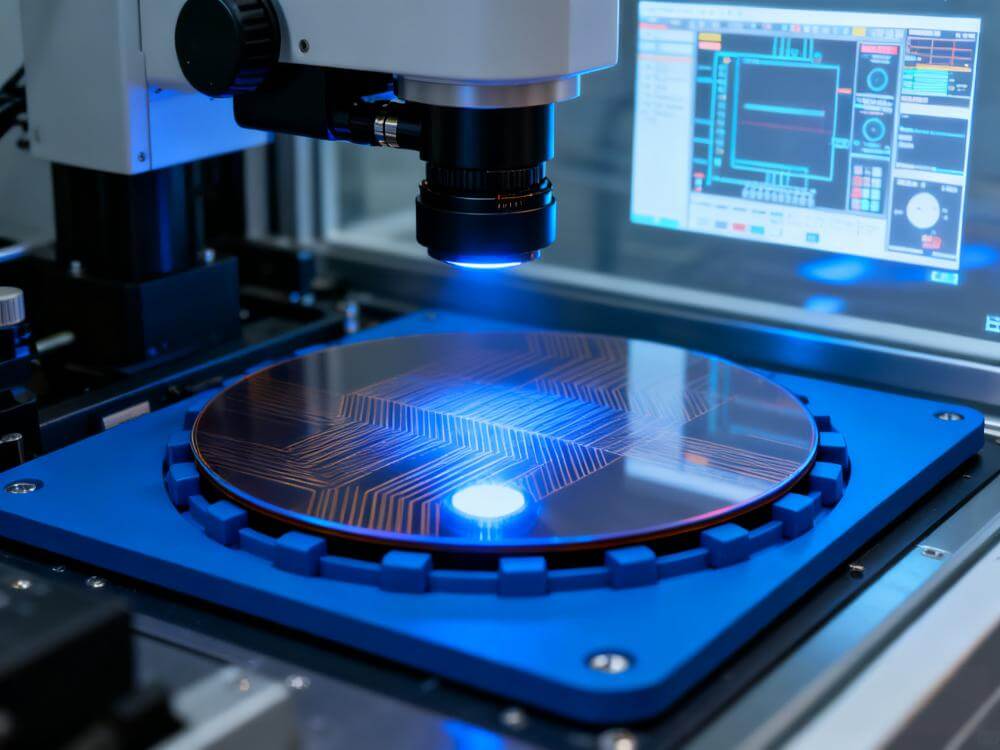
According to a report by Taiwan's "Economic Day bao", the 213 strong earthquake in northeastern Japan led to an urgent supply of photoresist, a key semiconductor consumable dominated by Japanese businessmen in about 80% of the market, including disruptions in production and overseas supply by major suppliers such as Xinyue. Shinyue even announced the closure of the plant. Large wafer companies such as TSMC and UMC are urging Japanese manufacturers to accelerate production and supply directly in Taiwan, China, thus spreading the risk.
It is understood that photoresist, as the core consumables of semiconductors, directly affects the wafer yield and quality. In January 2019, TSMC used substandard photoresist, resulting in nearly 100, 000 wafers scrapped, affecting nearly 15 billion yuan in revenue, highlighting the importance of photoresist in wafer production. After the incident, TSMC greatly increased the requirements for the quality control and supply of key materials.
At present, the global photoresist market is dominated by Japanese manufacturers, accounting for 80% of the market, with few price fluctuations. Among them, more than 20% are arranged by Shinyue, and more than 50% of the advanced and new processes of semiconductor factories in Taiwan use Xinyue's photoresist products. Other well-known Japanese suppliers include JSR, Dongying, etc., Sumitomo Chemical and Fuji Film are also actively involved.
The industry pointed out that the production line after photoresist certification is usually not changed for a whole year to avoid re-cleaning and affecting production, so it is not easy to change after deciding on the material, and it is usually negotiated according to demand in the previous year, because once the change occurs, the production quality will be affected. Recently, the supply of semiconductors falls short of demand, and as the supply of photoresist is in short supply, the shortage of semiconductors may become more serious.
A similar plot is repeated. Japan's Earthquake Butterfly effect may have a far-reaching impact.
As the current major place of global semiconductor manufacturing, under the premise that the industry is facing the biggest shortage crisis in history, the butterfly effect caused by Japan's Earthquake may be more far-reaching than expected.
According to SEMI, Japanese companies account for about 52 per cent of the global semiconductor materials market and about 30 per cent in equipment manufacturing. From the perspective of the distribution of Japan's domestic semiconductor industry, Japan's semiconductor industry is mainly concentrated in Kanto, Tohoku and Kyushu, while Shinyue Chemical, SUMCO, Renesa Electronics, Shexia, Sony and other domestic production bases in Japan are mainly located in the above-mentioned areas.
On March 11, 2011, a strong Earthquake occurred in the Pacific Ocean of northeastern Japan, triggering a huge tsunami that caused devastating damage to Iwate, Miyagi and Fukushima prefectures in northeastern Japan and triggered a nuclear leak at the Fukushima Daiichi nuclear power plant. The resulting large-scale power outages and traffic disruptions have had a great impact on semiconductor production in Japan.
At that time, Shinyue Chemical stopped production at two plants in Fukushima, accounting for about 25 per cent of global wafer capacity at that time; seven Renesas plants temporarily closed production and about 40 per cent of capacity was damaged. Toshiba, Fujitsu, TI, on Senmei and others were also affected. The supply chain disruption caused by the Earthquake tsunami triggered chaos in industries such as material grabbing and pushed up the prices of a variety of components, including DRAM, NAND, MCU and so on.
Under the influence of Earthquake, some Xinyue chemical plants have been suspended. SUMCO, another wafer maker, is mainly based in Kyushu, but has a miser plant in the northeast. Renesa Electronics said that the operation of the Mizawa plant and the Takazaki plant was not affected, and the Ibaraki Naka plant stopped work for a short time and began to gradually resume front-end manufacturing process production on the 16th, which is expected to reach pre-earthquake capacity within a week.
Zhao Qi team of Bank of China Securities reported on the 18th that at present, the impact of Earthquake is much smaller than that of Earthquake on March 11, 2011, but in the context of global semiconductor capacity shortage, the disturbance brought by Japan's Earthquake to the industrial chain may further aggravate the capacity tension, especially automotive chips.
A-share companies related to the layout of photoresist
Subject to the development level of domestic photoresist technology, at present, the self-sufficient rate of domestic g-line and I-line photoresist is 20%, that of KRF photoresist is less than 5%, while ARF photoresist suitable for 12-inch silicon wafers basically depends on imports, and the localization of photoresist has a long way to go, so it is of great significance to break through the backward state of "sticking neck" as soon as possible.
Jingrui (300655) announced on the evening of January 19th that it has successfully purchased an ASMLXT1900G lithography machine through an import agent, which has been shipped to Suzhou and successfully moved into the company's high-end photoresist research and development laboratory.
Nanda Optoelectronics (300346) announced in December last year, subsidiary Ningbo Nanda Optoelectronics independently developed ArF photoresist products recently successfully passed customer certification, becoming the first domestic ArF photoresist through product verification.
Tongcheng New Materials (603650) announced in December last year that its subsidiary Tongcheng Electronics plans to invest 569.88 million yuan (construction investment) to build an annual production project of 11000 tons of semiconductors, photoresist for flat panel display and 20, 000 tons of related reagents in Shanghai Chemical Industrial Zone, which is expected to be completed and put into production by the end of 2021.
![Titanium Dioxide Prices Rose, Titanium Slag Prices Fell, and Titanium Ore Prices Held Steady [SMM Titanium Spot Market Brief]](https://imgqn.smm.cn/usercenter/pAOxy20251217171725.jpg)
![[SMM Analysis] Tight Balance & High Overseas Premiums: Tungsten Market Expected to Stabilize in April](https://imgqn.smm.cn/production/admin/news/cn/thumb/gsyYF20180628085444.jpeg?imageView2/1/w/176/h/110/q/100)