What is electrolytic aluminum?
When it comes to "electrolytic aluminum", many people may know about it today, but what is electrolytic aluminum? I'm afraid the average consumer doesn't know much, and there are even fewer people who can speak clearly.
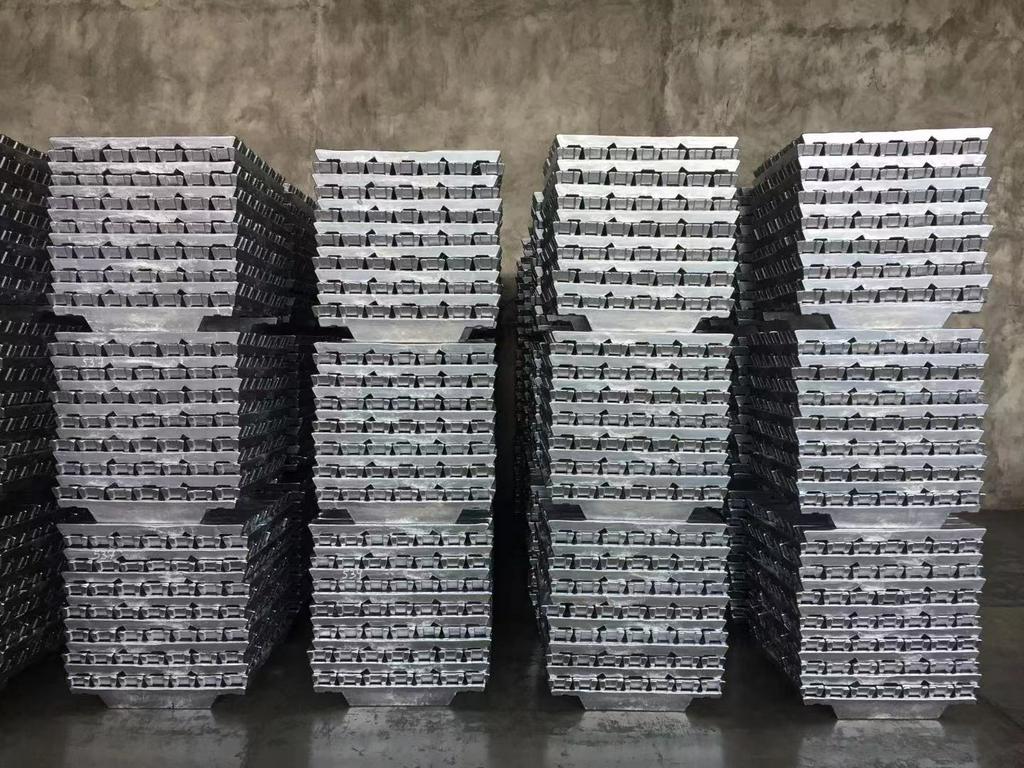
Aluminum is a metal. Because of its light weight, good electrical conductivity, excellent processing performance and special oxidation resistance, aluminum is widely used in various fields such as electric power, transportation, construction, packaging, national defense, aerospace and people's life. from construction home to high-speed rail, aircraft, from food, automobiles to consumer electronics, it has been estimated that the application of aluminum involves about 112 industries. The aluminum we are talking about here is also called primary aluminum, that is, pure aluminum. As the original production of aluminum has always been based on molten salt electrolysis, it is usually called "electrolytic aluminum".
Electrolytic aluminum-a young metal. The process of smelting copper was first discovered and mastered by human beings about 3000 ~ 4000 years ago, and the history of human ironmaking has been more than 3000 years. China's ironmaking technology has been greatly developed as early as the Han Dynasty. However, the birth of human aluminum smelting technology is only 130 years old. Academician Yin Ruiyu, a famous metallurgical scientist and expert in iron and steel, said: "because the melting point of copper is lower than that of iron, people first learn to make copper and then learn to make iron. Ironmaking needs to open the molecular bond, while the temperature of reducing aluminum is higher. It is necessary to use electrolysis to open the ion bond, so human beings did not master aluminum smelting technology until direct current."
In 1886, a young man named Charles M.Hall in the United States invented a process for smelting aluminum, called "electrolysis of alumina in molten fluoride salts." But when he went to the United States Patent Office to file a patent application, he learned that a Frenchman named Paul L.T. H é roult had applied to the United States Patent Office for aluminum to combine roughly the same elements, almost exactly like Hall's invention. Meanwhile, Elut applied for a patent in Europe a few months ago. Since then, the two men have entered a long-running patent dispute, which is said to have lasted for 15 years.
Hall and Elut patent application dispute after a long negotiation, the United States Patent Office finally ruled in favor of Hall, because Elut did not submit the required "original report." As a result of this ruling, Hall and Elut became inventors who owned the same patent in the Americas and Europe at the same time, and later called it the "Hall-Elut aluminum electrolysis process". However, the fate between Hall and Elut is much more than that. with the technical support of Hall and Elut, they founded two aluminum metallurgical companies, namely, Alcoa (Alcoa, formerly Pittsburgh Metallurgy) and French Aluminium (Pechiney, formerly French Electric Metallurgical Company (SEMF), which are the two world-famous aluminum companies in the world today, with the technical support of Hall and Elut, they respectively founded two aluminum metallurgical companies, Alcoa (formerly Pittsburgh Metallurgical Company) and French Aluminium (formerly French Electric Metallurgical Company). Hall and Elut were destined to be born for aluminum. They were born in the same year (1863), died in the same year (1914), and filed the same patent in the same year (1886). Even in an era marked by surging wealth and massive accumulation, Hall's story became an American legend, winning the greatest wealth in the history of American patents. Hall's stake in Alcoa when he died in 1914 was worth nearly $30 million.
The proud son of New China. The development of electrolytic aluminum in China is relatively late, and the first electrolytic aluminum plant (Fushun Aluminum Plant) was completed and put into operation in 1954. Until the 1980s, electrolytic aluminum as an industrial industry or a product, its production process and industrial characteristics are rarely understood by the public. With the development of electrolytic aluminum technology and the expansion of electrolytic aluminum production scale, coupled with the reputation of electrolytic aluminum "electric tiger", especially since 2005, whether it is the five major industries issued by the state, such as "iron and steel, cement, electrolytic aluminum, automobile, and real estate", or the macro-control policies of the three major industries of "iron and steel, cement, electrolytic aluminum", as well as the restricted industries of "two high and one capital", electrolytic aluminum is on the list. From then on, the public gradually became familiar with and understood electrolytic aluminum. It should be said that the formulation of "three major industries" or "five major industries" is a real "lift" to the electrolytic aluminum industry, because only based on the national production capacity of several million tons of electrolytic aluminum at that time, the total output value is less than 100 billion yuan, and the total assets of tens of billions of yuan are not close to the big industries. Compared with other industries: in 2005, the national output of crude steel is 350 million tons, cement output is 1.07 billion tons, while electrolytic aluminum is only 7.79 million tons, which is not an order of magnitude compared with automobile real estate. In any case, although electrolytic aluminum is small, it is very famous. But at the same time, "high energy consumption, high pollution" has also become a lingering label of electrolytic aluminum.
After the founding of the people's Republic of China and even in the early days of reform and opening up, electrolytic aluminum in China has been a shortage of products, but also listed as strategic materials, long-term dependence on imports. The early electrolytic aluminum plants and alumina plants matched with electrolytic aluminum in China have their own names, such as Fushun Aluminum Plant 301 and Guizhou Aluminum Plant 302. From this kind of secrecy nature similar to that of military industrial enterprises, we can see its strategic position at that time. At the beginning of the establishment of China Nonferrous Metals Industry Corporation in April 1983, it first put forward and determined the policy of "giving priority to the development of aluminum" to the country, from which we can also see the urgent demand for "aluminum" and the importance attached to the aluminum industry.
Thrive-unexpected. Over the past 40 years of reform and opening up, especially since the end of the last century, China's electrolytic aluminum industry has developed rapidly. After 2003, with the introduction of the national macro-control policy, the electrolytic aluminum industry not only has not been contained, but also shows an explosive growth. In 1998, the production capacity of electrolytic aluminum in China was only 2.56 million tons / year, and the output was 2.43 million tons / year. A little-known "big" industry has been setting a new historical record ever since: power generation enterprises and coal enterprises began to invest in electrolytic aluminum, and the textile industry and aquaculture industry also came to invest in the feast of electrolytic aluminum, including private enterprises, state-owned enterprises and large central enterprises. Some of the private enterprises involved in aluminum have been among the richest people in China, many of them have become the richest people in a certain province, and there are many people on the rich list. People do not understand, electrolytic aluminum has what kind of magic, can continue to attract a large number of enterprises cross-bank investment, set off round after round of investment boom? In the 20 years from 1998 to 2018, China's electrolytic aluminum production capacity and output have exceeded 43.97 million tons and 36.48 million tons respectively, and aluminum output has increased by nearly 20 times, accounting for 56.7% of the world's total output, ranking first in the world for 17 consecutive years.
Among the families of non-ferrous metals in China, the rapid growth of aluminum makes "copper, aluminum, lead and zinc." The ranking was rewritten as "Aluminium, Copper, lead and Zinc." Electrolytic aluminum successfully "counterattacked" to become the leader of the non-ferrous industry and the second largest metal material. Today, no one questions the title of "big industry" of electrolytic aluminum.
With the continuous development of the electrolytic aluminum industry, coupled with the mining, alumina, aluminum processing, carbon, power generation and other related industries in the upstream and downstream, its scale and volume have reached a considerable extent. Electrolytic aluminum has actually become an important basic raw material industry in China, and its impact on our national economic construction can not be ignored. Its healthy, stable and sustainable development also needs our great attention.
So, since the new century, under the strict restrictions of the state and various government decrees, what is the truth that has led to the crazy development of electrolytic aluminum?
Electrolytic aluminum is a high energy-consuming industry? There is no doubt about this. At present, every ton of electrolytic aluminum consumes about 13000kWhWhWhit14000kWhh, plus the main raw materials and production process consume 60.8 tons of standard coal for every ton of electrolytic aluminum. However, up to now, electrolysis is still the only way to produce primary aluminum in the world. Alcoa and other international giants began to explore the alternative technology of electrolytic aluminum smelting in the 1960s, but it has not been successful so far.
There are several reasons for the rapid development of electrolytic aluminum: first, electrolytic aluminum is an energy-consuming link in the entire aluminum industry chain, and in the follow-up application and processing of aluminum products, it more reflects the industrial characteristics of high-tech and fine processing, which not only has the irreplaceable role of other materials, And it shows its remarkable energy-saving effect in many fields (such as electric power, aerospace, transportation, etc.). Second, aluminum is easy to oxidize to form a strong protective film so that it will no longer be eroded in the process of use, so that the oxidation loss of aluminum products in the application process is very small, and it is very easy to recover. The recovery rate can reach more than 95%, so aluminum can be recycled and used repeatedly, so it has the reputation of "energy storage product" and "energy bank". The regeneration and recovery of aluminum greatly reduce its energy consumption in the future recycling. Third, the technical and equipment level of aluminum production in China is first-class in the world, and its energy consumption has reached or has been lower than that consumed by most developed countries, that is to say, the energy consumption of aluminum production in domestic aluminum enterprises is even lower than that of aluminum plants in the United States.
Although the energy consumption of electrolytic aluminum accounts for more than 7.9% of the total electricity consumption in the country, compared with the energy consumption of hundreds of millions of household cars in China, the energy consumption of the whole electrolytic aluminum industry is even less than a tenth of it.
Is electrolytic aluminum a highly polluting industry? To be exact, this statement is not accurate and unfair. Fluoride, the main pollutant emitted in the process of electrolytic aluminum production, is also the raw material needed for electrolytic aluminum production, and the fluoride emitted in the form of flue gas has a natural affinity with alumina, another main raw material for electrolytic aluminum production. they can adsorb immediately after they meet in the reactor, and the reaction efficiency is more than 99%. The "dry purification" system developed based on this principle is widely used in aluminum plants all over the world. Excluding management factors, the problem of electrolytic aluminum pollution was no longer a technical problem as early as the early 1980s. More importantly, the production system design of modern electrolytic aluminum plant has already integrated the flue gas treatment system and raw material supply system into a whole, 365 days of the year continuous operation, uninterruptible for a moment.
For a small amount of solid pollutants produced by the overhaul of the electrolytic cell, there have always been strict environmental protection measures. In recent years, the state has put forward more stringent standards and requirements for the environmental protection of electrolytic aluminum. On the one hand, it increases the restrictions on the emission of SO2 in the flue gas of electrolytic aluminum; on the other hand, the new Environmental Protection Law of 2016 classifies most of the solid wastes discharged from the electrolysis process as hazardous pollutants. After long-term technology accumulation and research and application in recent years, the corresponding treatment technology has begun to industrialization, especially the electrolytic aluminum flue gas desulfurization technology and electrolytic aluminum overhaul waste residue treatment and comprehensive utilization technology has gradually matured, and applied to industrial production. At present, the research and development of electrolytic aluminum solid waste recycling technology has also made positive progress.
As a scientific and technological worker in the industry engaged in the design, research and management of electrolytic aluminum for more than 30 years, the author has personally experienced the whole process of technological innovation and industrial development of electrolytic aluminum. We know very well that it affects the vigorous development of electrolytic aluminum industry and even "overheated investment" or "overcapacity", not only because electrolytic aluminum belongs to "two high and one capital", labor-intensive or "high input, high output" industries. Although many people think that electrolytic aluminum has some problems of one kind or another, in-depth analysis found that there are extremely far-reaching industrial background and deep-seated economic and technological reasons behind it, which led to the vigorous development of electrolytic aluminum industry today.
Explore the truth-how awesome is electrolytic aluminum? Since the reform and opening up, China's economy has been in a period of rare development in a thousand years, which provides a broad development space for the production of primary aluminum. However, what many people do not understand is that the fruitful achievements and amazing scientific and technological achievements resulting from the hard work and unremitting exploration of several generations of scientists and technicians in China's electrolytic aluminum industry are the real internal reasons behind the leading position of China's electrolytic aluminum industry in the world. Especially in the field of large-scale technology of aluminum electrolysis, from scratch, from digestion and absorption to independent innovation, from theoretical field to experimental development, and then to large-scale application and promotion, the design and production technology of aluminum electrolysis is becoming more and more perfect. formed its own design and technical system. Nowadays, in the world, where there is the growth of electrolytic aluminum, there is the figure of China. The electrolytic aluminum industry has become one of the rare advantageous industries in the manufacturing industry and even the industrial field in the world. Under the guidance of the "Belt and Road Initiative" initiative, hold your head high and go to the world.
Forty years of scientific and technological innovation of aluminum electrolysis in China has been 40 years in which several generations of scientific and technological workers have jointly created miracles. Looking back on the course of the past 40 years, we can see vividly the magnificent pictures of scientific and technological innovation, and the inspiring orders of our predecessors to tackle key problems and the earnest teachings of solving difficult problems still reverberate in my mind. The introduction of "Sun Light" Technology
Speaking of the electrolytic aluminum factory, the veteran comrades in the industry described it as this: if you walk into the electrolytic workshop less than 10 meters away, you can't see anyone; when the electrolytic worker comes out of the electrolytic workshop, just like a coal miner, you can see a pair of eyes on his whole face, and the working environment is bad. Unimaginable, this is also the earliest impression left to people at the scene of electrolytic aluminum production. Before the 1970s, the technology of self-baking anode electrolytic cell introduced by the former Soviet Union was basically the main technology of electrolytic aluminum plant in China, and the scale of single series was generally no more than 10,000 tons / year. Aluminum plants with an annual output of more than 30,000 tons are all national backbone enterprises.
In the early 1980s, with the spring breeze of reform and opening up, all fronts of the national economy ushered in an epoch-making change. Proceeding from the strategy of promoting the development of the national economy, the state has decided to introduce technology to build a number of major construction projects from developed countries. The most typical is the construction of the first phase of the Shanghai Baosteel project, which was conceived in 1977 and held on the first day after the end of the third Plenary session of the Eleventh Central Committee in December 1978. The CPC Central Committee and the State Council decided to build a modern iron and steel joint enterprise-Baosteel, introduced a full set of equipment from Nippon Steel Company of Japan, and built China's first modern iron and steel enterprise with the world level in the 1980s. This is also the first large-scale construction project voted by the National people's Congress in history. Probably many people know that the construction of Baosteel laid the foundation for the rapid development of China's iron and steel industry and reached the advanced level of the world.
Why choose "Sun Light" technology? Like the iron and steel industry, with the active advice of the older generation of experts in the aluminum industry, including Cheng Zonghao and Yao Shihuan, and the efforts and support of the former leaders of the Ministry of Metallurgy, in the first year of reform and opening up, the construction of a number of large aluminum plants was included in the national plan, but what electrolytic cell technology to use has become a difficult problem for decision-makers. At the end of 1970s, Alcoa, French Aluminum and other international aluminum companies have successfully developed large-scale pre-baked cell technology above 160kA~180kA, and aluminum electrolysis technology began to show the development trend of large-scale and prebaked. According to the recollection of Yao Shihuan and other predecessors, according to the development of electrolytic aluminum technology at that time, the expert group divided the advanced electrolytic cell types in the world into three modes and compared them:
The first is the North American electrolytic cell. At that time, (Alcoa) was the largest multinational aluminum company in the world. (Alcoa) of Alcoa and (Alcan) of Alcan used 150kA~220kA large pre-baked anode electrolytic cell (referred to as "pre-baked cell") in aluminum plants in Canada and Brazil, which had the advantage of adding alumina in the middle and good tightness, and more than 98% of the harmful flue gas was recycled to meet the environmental protection requirements. However, this type of slot follows the route of high efficiency and high slot voltage, and the power consumption per ton of aluminum is also relatively high, so it is suitable for areas with rich hydropower and low electricity prices in North America.
The second is the European type electrolytic cell. It is a low power consumption slot developed by (Pechiney), a French aluminum company, to represent areas with high electricity prices. As its 180kA pre-baked cell technology (AP18) is still in the experimental stage (only four test cells have just been put into operation, although preparation for the F-series has begun in mid-1977), and as the most advanced 180kA technology just developed by French aluminum, it is unlikely to be transferred. Pechiney recommended to the Chinese side that the maximum current of the mature application at that time was only the 135kA pre-baked cell, which added alumina at the edge, and 30% of the harmful gases were discharged unorganizationally. This type of tank seriously pollutes the environment and has to be treated by skylight washing in some areas, which is expensive, and it is obvious that this technology is not in line with the national conditions of our country.
The third type of cell is the Japanese type of electrolytic cell. In the 1960s and 1970s, the Japanese aluminum industry developed rapidly. Japanese companies introduced various trough types from the United States, France and Switzerland. After digestion and improvement, the three companies integrated the advantages of good environmental protection in the United States and low energy consumption in France. A kind of prebaked cell with low power consumption and good tightness has been developed, with a capacity of 160kA170kA, which is very suitable for use in China. Several Japanese aluminum companies headed by the Japanese Light Metals Company have actively recommended their independent research and development of large-scale pre-baked cell technology to China since 1976. And because of the friendly environment between China and Japan at that time, the use of Japanese technology could obtain the support of long-term loans from the Japanese government.
Since then, the former Ministry of Metallurgy sent a delegation headed by Wang Zhe, a member of the party group, and Cheng Zonghao as secretary-general, to inspect 10 electrolytic aluminum plants, carbon plants and aluminum processing plants of 13 aluminum plants in Japan's six major aluminum companies. Finally, according to the inspection recommendations, it was decided to adopt the large-scale intermediate feeding and closed pre-baking cell technology of 160kA of Japan Light Metal Co., Ltd.
On February 21, 1978, the former State Planning Commission approved the 80,000 ton aluminum electrolysis project of Guizhou Aluminum Plant (referred to as the second electrolysis of Guizhou aluminum or the first 80,000 tons of precious aluminum). On January 7, 1979, Guizhou Aluminum Plant and Japan Light Metals Company signed an import contract for the construction of 80,000 tons / year aluminum electrolysis plant. Taking the four electrolytic cells newly tested by the Japanese Light Metals Company at that time as prototypes and introducing a complete set of technology and equipment, the second Electrolytic Aluminum Plant of Guizhou Aluminum Plant, China's first 160kA intermediate blanking prebaked cell series with low power consumption and good tightness, was built in Guizhou Aluminum Plant. Guiyang Aluminum magnesium Design and Research Institute (Guiyang Institute) was responsible for the design of the imported project, and China Seventh Metallurgical Construction Company undertook the task of construction and installation. A total of 208 electrolytic cells have been installed in the series, with an annual production capacity of 80,000 tons, including supporting carbon pre-baked anode manufacturing and anode assembly systems. On December 18, 1981, the aluminum electrolysis project with the largest single series production capacity and the most advanced equipment in China was officially put into production.
How to evaluate the "daily light" technology? The introduction and construction of "Riqing" 160kA electrolysis series was the first large-scale pre-baked cell series in China at that time, which belonged to the advanced level in the 1970s in the world. In order to let everyone see clearly, the design features and main index parameters are described as follows:
1 the designed current intensity is 160kA, the working voltage of the cell is 4.05V, the current efficiency is 87.5%, the DC power consumption is 13600kWhptAl, and the number of anode effects is once per cell day. This index does not look very advanced today, but it is much more advanced than the domestic self-baking cell current efficiency of 84% / 86% and DC power consumption above 15000kWh/tAl at that time.
(2) the bus configuration is designed for power supply at both ends, and there is a compensation bus drawn from the middle to the end at the bottom of the slot; the design mode of power supply at both ends is not the most advanced at that time, but the influence of magnetic field is considered and reasonable compensation is carried out at the bottom of the slot.
(3) the middle feeding mode is adopted, the material is cut at two points, the capacity of the feeder is 15kg, the material is fed once for 20 minutes, the amount of material is 90kg per hour, the pneumatic feeder (chute control) is adopted, and a special fan is arranged at the end of each trough. The control system adopts the effect control mode to control the alumina concentration. The design of the structure and capacity of the blanking device is the biggest deficiency of the Japanese technology, and it is also the main cause of many problems, such as the precipitation of the electrolytic cell, the fluctuation of the cell condition and so on.
(4) the size of anode is 1400 × 660x540, the number of anode group is 24, and the current density of anode is 0.72A / cm ~ 2.The selection of anode is proved to be reasonable, and the later development in our country is basically improved on this basis.
(5) the anode lifting mechanism adopts four-point lifting, which is a turbine worm mechanism with stable and reliable operation.
(6) the processing surface is: large noodle 525, small noodle 595, anode seam 250. This is also one of the manifestations of its backward design, due to the influence of European technology edge processing (feeding), the processing area is larger.
7 there are 208160kA electrolytic cells installed in the electrolysis workshop, which are arranged in four factory buildings, which are divided into 8 zones, with 26 cells in each zone. The factory building adopts a two-story structure with an operating platform of + 2.4m and an all-steel structure. The span of the workshop is 20.5m, the distance between the two buildings is 25m; the distance between the electrolytic cells is 6.575m, which is determined by the operation requirements of the electrolytic cell and the design of the bus configuration; the anode tray is transported to the short end of the electrolytic cell by a special vehicle; the 5t aluminum table bag is transported from the crane to the short end of the electrolytic cell to complete the aluminum discharge operation; this design scheme is reasonable.
(8) the technology of SCR rectifier and dry purification flue gas treatment of Fuji Company of Japan was adopted. The rectifier station and the flue gas purification system are respectively installed at the two ends of the electrolysis workshop, which is different from our configuration today. The advantage of this configuration is that the distance between the electrolytic cell row and the row can be smaller, and every two factory buildings (two rows of tanks) correspond to a set of purification system. Because the length of the factory building is relatively short, the distance of the flue gas pipeline is also short. This plane configuration scheme was reasonable at that time, and it was copied in the design of the third electrolysis of Guizhou Aluminum and Qinghai Aluminum Plant. With the increase of the scale of the series, our later design adopted the mode of arranging the purification system between the electrolysis plants.
(9) the transportation of alumina materials adopts two forms: fresh alumina from alumina plant is fed into 8000t silo (steel structure circular silo), and 400t daily consumption silo is sent by pneumatic conveying (chute) and bucket elevator. 85% of the fresh alumina is added to the purification system to absorb fluoride in the flue gas, and the fluorine-loaded alumina recovered from the purification is fed into a 300t fluorine-carrying tank through a chute and a hoist for charging in the electrolytic cell. the automatically controlled electric trolley regularly sends the fluorinated alumina to the 5t tank wall material box set by each electrolytic cell for each electrolytic cell to use. Another 15% of the fresh alumina is added to the electrolytic cell by crane feeding as an anode insulation covering material.
Workshop 10 is equipped with 8 multi-function operating units produced by ECL in France to complete the main operations such as aluminum discharge, pole changing and busbar lifting in the electrolytic cell.
Today's large slot technology has changed a lot, and the core technology of the main body is not what it used to be, but in many engineering details, experts can still see the traces of "solar light" technology at that time.
Unexpected-- the problem is exposed when it is put into production. There is something wrong with the "Sunlight" technology! Many people still remember it. The development of things is often beyond people's expectation. due to the technology itself and construction quality, operation level, management factors and other reasons, during the initial three or four years of operation, there have been a variety of problems in the production and operation of the imported "daily light" electrolytic cell: high temperature, poor furnace side formation, long legs, too much precipitation at the bottom, frequent problems, low efficiency and high energy consumption. What is particularly prominent is that the early damage of the electrolytic cell is serious, and the life of most of the cells is less than 1000 days (the life of the designed cells is 1500 days).
As a major project introduced by the state, the emergence of major problems is bound to cause a great reaction, and even attract the attention of national leaders. As the largest aluminum factory in the country, the industry benchmark is a famous brand among Guizhou enterprises. State leaders must come to Guizhou to inspect Guizhou aluminum. Today, you know that Guizhou has Maotai Liquor, but you do not know that in the 1980s, Guizhou aluminum paid more attention than Maotai. Therefore, there is a lot of pressure on all aspects of the problems after the project is put into production. Han Peichuan, the first factory director transferred from Guiyang Hospital, was removed from his post, and the design, construction and construction parties were very nervous. So what are the causes of these problems?
On the one hand, of course, they actively negotiate with the Japanese side, believing that the technology of the other side is not mature (according to veteran comrades, the technology sold by "Nikko" to China is indeed the latest, but there are only four industrial test tanks). From the legal point of view of the performance of the contract, the other party is required to bear responsibility. Japan also feels aggrieved. Although it cooperates actively, it still does not recognize China's doubts about its technology, believing that there is something wrong with the construction quality and production management of the Chinese side. As a matter of fact, during the construction and commissioning of the project, there was indeed a conflict between the personnel of the two sides because of lax supervision over the project: a Chinese personnel did not work according to the rules, causing dissatisfaction among Japanese personnel and began to beat Chinese personnel. because this incident also led to diplomatic disputes, all these have become other people's "evidence". There are also various conflicts that were spread as anecdotes by many people at that time. It is hard for people to imagine these things in the early days of reform and opening up. As a result, the two sides carried out long-term seesaw research, analysis, verification, and negotiations. No, no, no. On the other hand, based on the domestic environment at that time, these problems attracted the attention of industry leaders and experts, aroused the enthusiasm of research and discussion in colleges and universities, major designers and research institutes across the country, and made a lot of research results and conclusions. however, all kinds of views and views are not the same, and today, of course, they are not all correct. In retrospect, due to the influence of the ten-year "Cultural Revolution", the technical foundation in China at that time was relatively weak, and this kind of discussion and research itself was very meaningful.
The impact is far-reaching. In fact, the introduction of the second electrolysis series of Guizhou aluminum has been highly concerned by the aluminum industry and the whole society. For a long time from the early 1980s to the 1990s, it represents the highest level of China's electrolytic aluminum industry, and it is also a template for many domestic electrolytic aluminum enterprises to learn and emulate. Although there are problems of one kind or another, the majority of aluminum industry scientific and technological workers still maintain a modest and realistic attitude towards it, from which they learn and understand a large number of new technological concepts and achievements of modern aluminum electrolysis.
The important decision of adopting the technology introduced from Japan to build the second electrolytic series of Guizhou aluminum has made China's electrolytic aluminum industry and the pace of reform and opening up maintain the rapid development of Synchronize, and opened the prelude to the development of modern large-scale aluminum electrolysis technology in our country. it has had an extremely far-reaching impact on the development of China's electrolytic aluminum industry in the next 40 years. Today, this decision is very wise. While we are proud of the development of electrolytic aluminum today, we should thank the older generation of aluminum industry scientists for their great foresight and historic contribution to the electrolytic aluminum industry. (to be continued)
(brief introduction of the author: Liang Xuemin, special professor of Zhengzhou University, leader of aluminum metallurgy, executive director of China Nonferrous Metals Association. )
![[SMM Flash News] South32 Revised Q4 '26 CIF MJP Premium Offer at US$265/mt](https://imgqn.smm.cn/usercenter/tkWbz20251217171654.jpg)