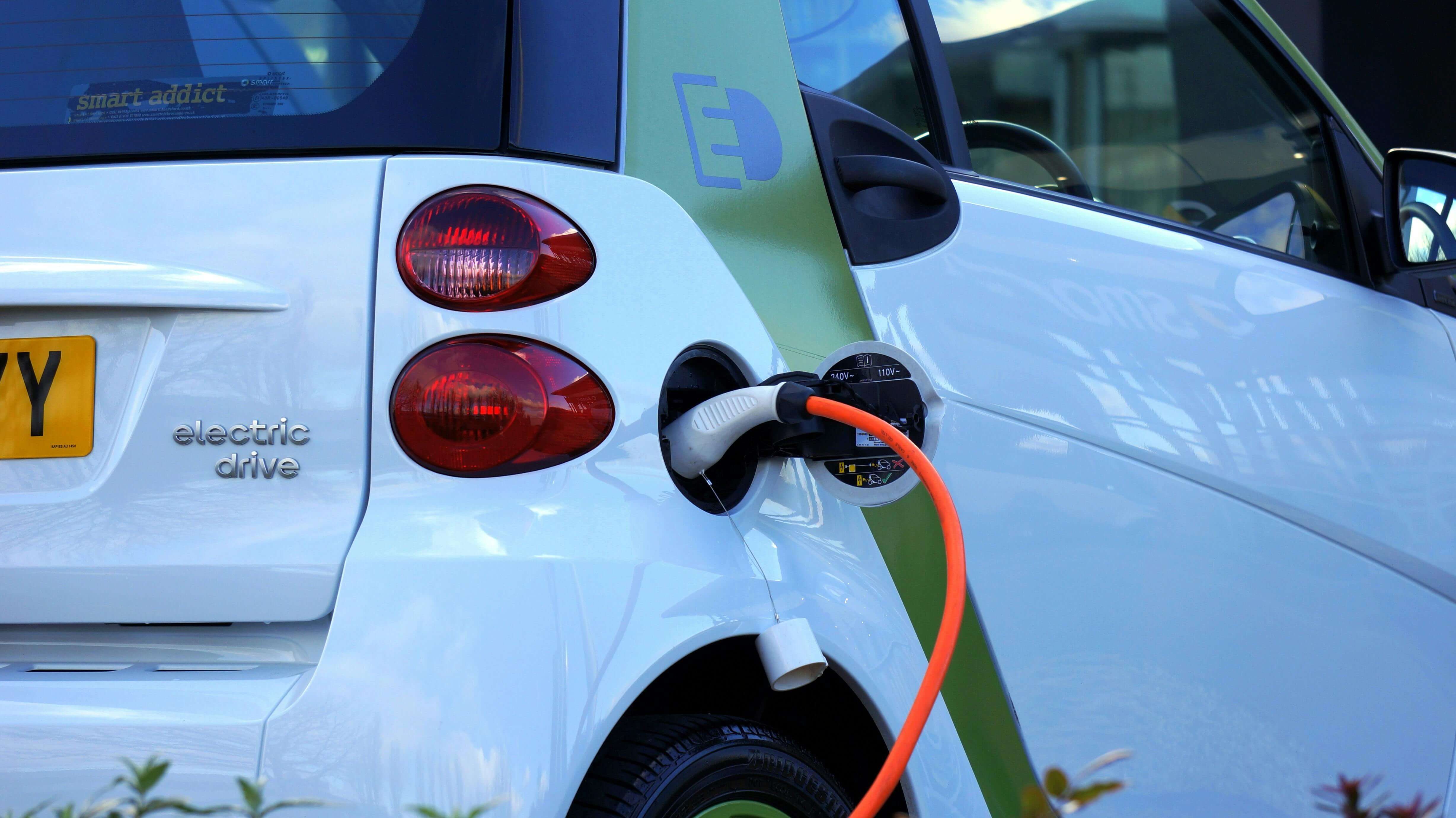
SMM: on September 23, local time, California Governor Gavin Newson (Gavin Newsom) stood in front of a row of electric cars and announced his "full-staff electric vehicle plan." This is a new sign of increasingly stringent global emission standards and raises concerns about whether local Electroweb can hold up.
Newson announced on the same day that by 2035, all new car sales in California must have zero emissions (including cars and pick-up trucks); by 2045, heavy vehicle sales in California must also have zero emissions; and by 2024, California will no longer issue oil and gas production permits for hydraulic fracturing.
It is understood that California accounts for 11% of all car sales in the United States and is the largest car market in the United States. In addition, 13 states and Washington, D.C., follow California's fuel efficiency standards, and carmakers are starting to build cars that meet their stringent standards. As a result, California's move could affect the United States in the future and push automakers to speed up the production of electric cars.
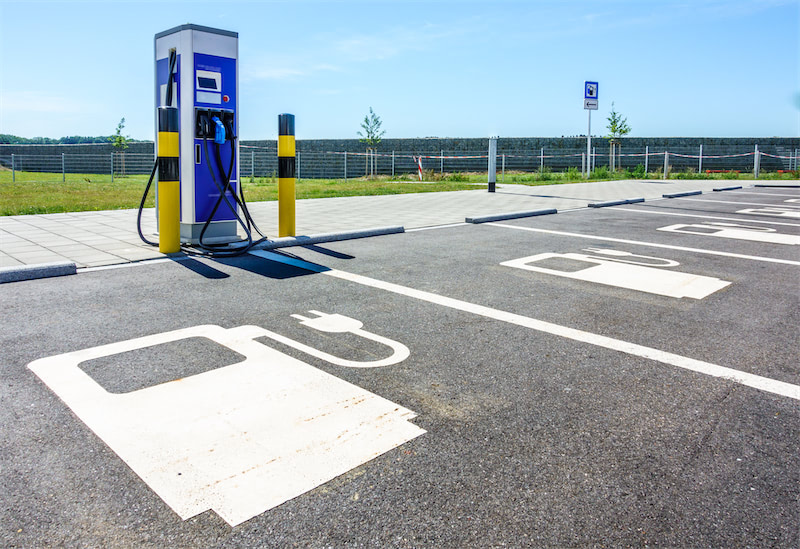
Electric cars seem to have become the future trend of the automobile industry. So let's analyze it in California to see if the infrastructure can keep up with the transition to an all-staff electric car. What far-reaching effects will it have on society?
California, the most populous state in the United States, coupled with the state's rapid transition to renewable energy, is already facing severe power shortages in the coming years. It is a bit impractical for a state that cannot guarantee reliable electricity to require its citizens to buy all electric cars.
Newson has previously said that California is required to generate 60% of its electricity from renewable sources by 2030 and to 100% by 2045. This led to severe power shortages and left millions of Californians suffering from power outages during the summer heat wave. Affected by the heat wave, the state's Electroweb operators imposed two rotating power outages in August and declared a phase-3 emergency for the first time since the power crisis in 2001.
However, the executive order announced last week could increase the state's electricity demand by as much as 9.5% over the next decade and by 25% by 2035. This is undoubtedly a "nightmare" for California's already fragile Electroweb. And to prevent the Electroweb system from eventually collapsing in a heatwave, California seems to be going to have to take turns without power cuts.
In addition, if everyone recharges the electric car after work at night, it will undoubtedly make things worse for the state's Electroweb. It is understood that natural gas is the main source of power generation in the state at night, with more than half of Electroweb's power generation capacity exceeding 24000MW. In addition, (CAISO), California's independent Electroweb system operator, imports about 8000MW, or about 20 per cent of its electricity.
"if everyone chooses to recharge after work and turn on household appliances such as air conditioners and televisions. By that time, the sun will have gone down (that is, there is no solar power generation) and can only be made up by natural gas power generation. Once the natural gas plant shuts down or there are no imports available, then California will face continuous power outages. " American utility manufacturer Southern California Edison (SCE) resources and environmental planning strategy director Erica Bowman said.
Jules Cotenhorst Jules Kortenhorst, CEO of (RMI) at the Rocky Mountain Institute, pointed out that cars will have to "communicate with Electroweb" to determine when is the best time to charge.
In addition to the risk of power outages, California citizens will also pay a higher "price" for this.
It is understood that the unit electricity price paid by Californians is already the highest in the United States. In 2019, the average cost of electricity used by residents in California was 19.2 cents per kilowatt hour, 47% higher than the national average of 13 cents per kilowatt hour. Power companies have also spent tens of billions of dollars on new power plants and transmission lines. Once this policy is implemented, the electricity bill for Californians may be even more "sky-high" in the future.
As we all know, Tesla is headquartered in Palo Alto (Palo Alto), California, and the company's success is also inextricably linked to a series of California policies.
For a long time, Tesla California accounts for about 60% of total sales in the United States. In Tesla's cash-strapped years, California's carbon trading system (ZEV Credits) brought valuable revenue to Musk. Under California law, automakers who sell more than 60,000 vehicles in California must sell a sufficient number of zero-emission vehicles to earn zero-emission points. Manufacturers who fail to meet the zero-emission car points target can only buy from those with rich points. As a result, as an electric car maker, Tesla can earn revenue by selling points.
The announcement comes a day after Musk announced at Tesla's "Battery Day" that he would launch a $25000 civilian version of the electric car over the next three years, nearly $20, 000 cheaper than the Model 3, which is currently the cheapest. Mr Musk also announced that Tesla's delivery this year would increase by 30 per cent year-on-year and 40 per cent.
According to Veloz, an industry analyst, the cost of electric car batteries has fallen by 87% in the past decade, and the price of electric vehicles has fallen by 13%, while the price of fuel vehicles has risen by 2%. If government subsidies are included, the price of electric cars is likely to be less than $20, 000. All these factors indicate that electric cars will gradually become the first choice for working-class people to buy cars in the next decade.
In view of the above reasons, if, as Musk said, Tesla can launch and change the "civilian version of the electric car" within three years, the new California policy is undoubtedly a huge boon for the company.
Musk also tweeted on Monday that Tesla could achieve his target of selling 20 million vehicles a year by 2030, and that the industry would certainly sell more than 30 million electric vehicles within seven years.