Imports increased by nearly 80%! South Korea still relies heavily on Japanese semiconductor equipment

Published: Sep 08, 2020 14:10 (GMT+8)
Source: Integrated microgrid

SMM: according to BusinessKorea, the Korean Trade Association (KITA) announced on September 6th that in the first seven months of 2020, South Korea imported semiconductor devices and integrated circuit manufacturing equipment from Japan totaling 1.7 billion US dollars, an increase of 77.2 percent over the same period last year. In addition, imports of processors and controllers and photosensitive semiconductor devices increased by 8.6% and 3.7%, respectively.

Although South Korea's total imports from Japan fell by about 10% in the same period compared with the same period last year, the semiconductor sector, as a pillar industry, is still heavily dependent on Japan.

South Korean media pointed out that this data is related to the large-scale investment of Samsung Electronics. The company announced in May that it would build a NAND flash memory production line in Pingze and plans to start building a "P3" fab in September, which is expected to become Samsung's largest fab in Pingze.

In addition, the new factory needs advanced equipment and manufacturing machinery, but it is difficult for local enterprises to meet the technological needs of Samsung, SK Hynix and other enterprises. At present, Samsung Electronics and many other South Korean companies still rely on Japanese semiconductor devices as high as 25.7%, almost the same as last year's 27.4%. Even if equipment from other countries is used to reduce dependence on Japan, it will not be easy to maintain the same level of efficiency.

On the other hand, South Korea's dependence on Japanese semiconductor equipment directly leads to its dependence on Japanese engineers. Usually, new equipment imported from South Korea is installed by Japanese engineers sent by suppliers, which led to the exemption of Japanese engineers from self-isolation when they entered South Korea in July. Despite violating the principle of reciprocity and risking the spread of the epidemic, the South Korean government cannot ignore companies' concerns about production disruptions.

It can be said that since Japan imposed trade controls on semiconductor materials in South Korea, the Korean government and enterprises have been working hard to improve the competitiveness of the materials, parts and equipment industries, as well as increasing support for the semiconductor and display industries. But for now, it will take time to be self-sufficient.

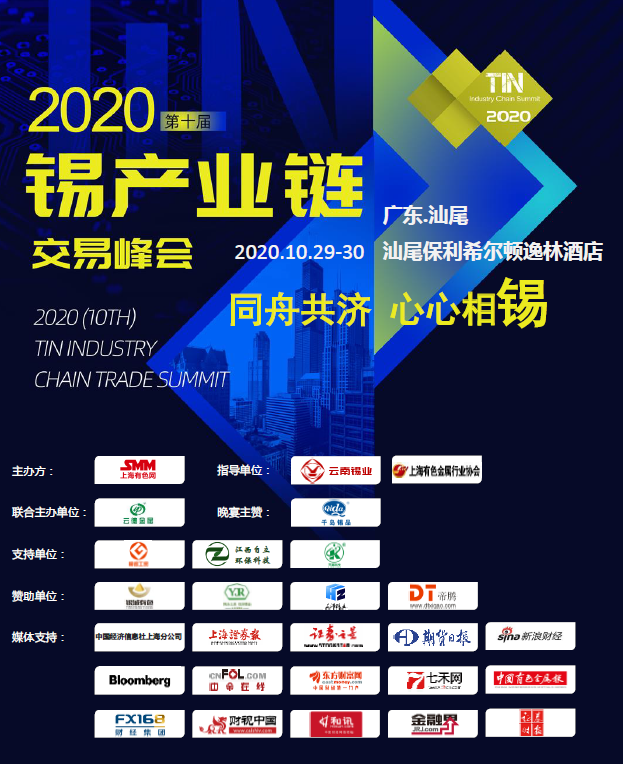
"Click to sign up: 2020 Tin Industry chain Trading Summit
Scan the code to participate in the meeting or apply to join the SMM tin industry exchange group
Data Source Statement: Except for publicly available information, all other data are processed by SMM based on publicly available information, market communication, and relying on SMM's internal database model. They are for reference only and do not constitute decision-making recommendations.

For any inquiries or for more information, please contact: lemonzhao@smm.cn
For more information on how to access our research reports, please contact:service.en@smm.cn
Related News
【Flash | DOWA’s H2 Zinc Plan Rises 27%, Potentially Supporting Indium Recovery】
19 hours ago
【Flash | DOWA’s H2 Zinc Plan Rises 27%, Potentially Supporting Indium Recovery】
Read More
【Flash | DOWA’s H2 Zinc Plan Rises 27%, Potentially Supporting Indium Recovery】
DOWA Holdings plans to produce 113,543 tonnes of zinc in H2 FY2026, up 27.0% from its H1 plan of 89,373 tonnes and 26.8% from the 89,525 tonnes produced in H2 FY2025. Its Akita Zinc operation uses the hematite process to recover indium and other valuable metals at high yields and integrates zinc smelting with rare-metal production and recycling. Higher planned zinc output may increase feed throughput for by-product indium recovery. However, DOWA disclosed no indium production target, and any supply increase will depend on feed grades, recovery rates and operating schedules rather than zinc volumes alone.
19 hours ago
【Flash | Coherent’s PhotonLink Sets the Stage for a Commercial Indium Phosphide (InP) Ramp】
Oct 02, 2026 14:34 (GMT+8)
【Flash | Coherent’s PhotonLink Sets the Stage for a Commercial Indium Phosphide (InP) Ramp】
Read More
【Flash | Coherent’s PhotonLink Sets the Stage for a Commercial Indium Phosphide (InP) Ramp】
Coherent launched PhotonLink, an integrated optics platform for AI infrastructure incorporating Indium Phosphide (InP) lasers, silicon photonics, detectors and optical modules. The company disclosed more than 10 CPO engagements, over 10 NPO engagements and more than five chip-to-chip connectivity projects, with anchor customers and long-term agreements secured for both CPO and NPO. Revenue is expected to begin ramping in Q4 2026. Coherent has shipped over 300 million InP lasers and is expanding its 6-inch InP manufacturing capacity to support the ramp. The customer pipeline provides a clearer commercial demand signal for InP devices and upstream materials, although additional capacity and indium consumption were not disclosed.
Oct 02, 2026 14:34 (GMT+8)
Institutions: iPhone 18 Pro series first-week sales in China up 12% YoY
Sep 30, 2026 18:09 (GMT+8)
Institutions: iPhone 18 Pro series first-week sales in China up 12% YoY
Read More
Institutions: iPhone 18 Pro series first-week sales in China up 12% YoY
According to Counterpoint Research's China Smartphone Weekly Sales Tracker, China's weekly smartphone sales have maintained a double-digit YoY decline since July. Affected by rising storage costs, consumer demand remains weak, but with the arrival of the September new product launch cycle, the market is expected to see a MoM recovery. Sales of the iPhone 18 Pro series in its first three days of availability (accounting for only three days of Week 38) were up 12% YoY compared with the first-week sales of the iPhone 17 Pro series. Driven by this strong start, Apple topped the weekly sales chart in Week 38, capturing a 33% share of China's smartphone market.
Sep 30, 2026 18:09 (GMT+8)