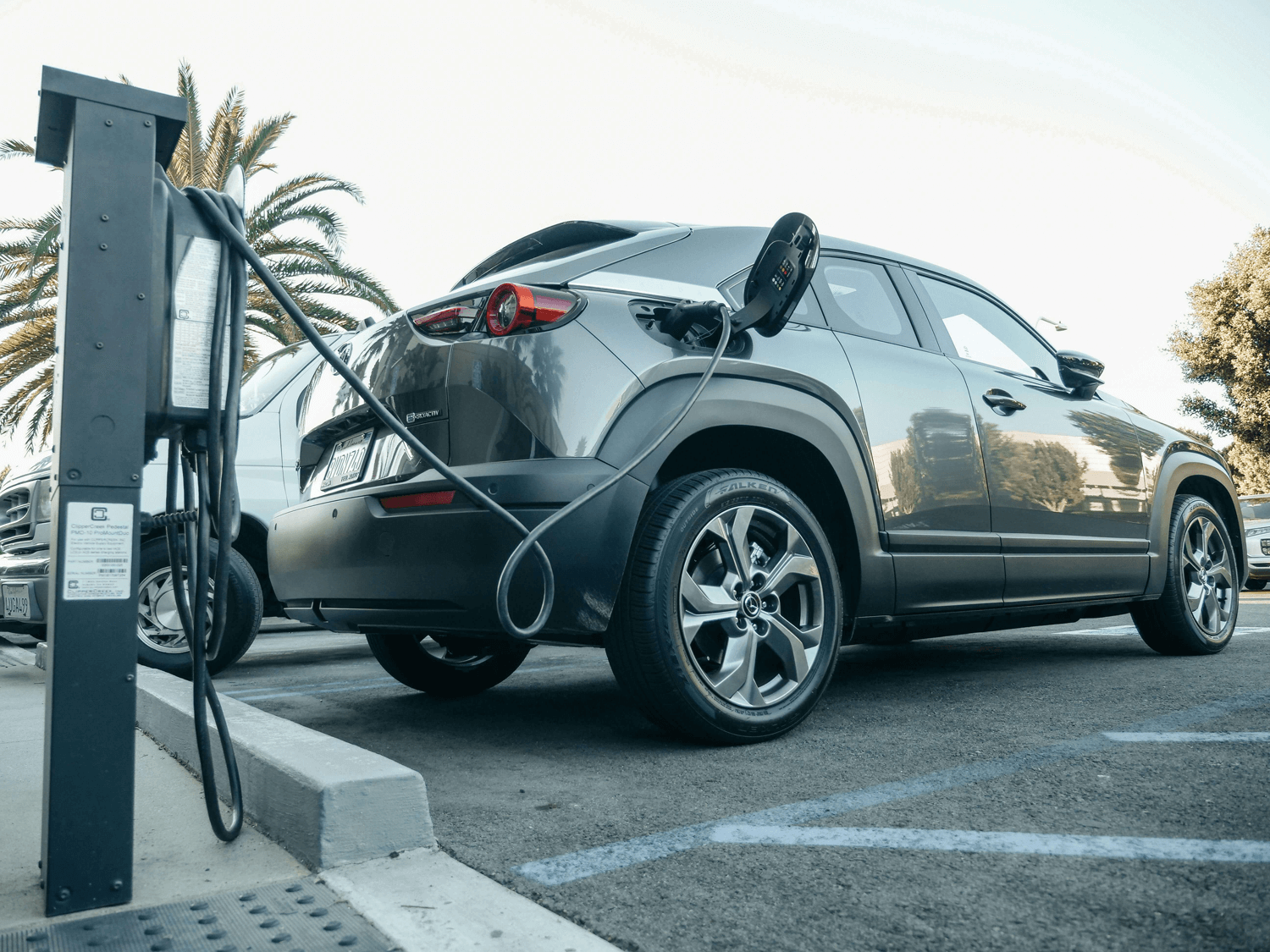
Zhejiang: 310000 electric vehicles were promoted by the end of last year.

Published: Sep 7, 2020 10:10

SMM: on Sept. 4, Zhejiang Development and Reform Commission and Zhejiang Energy Bureau issued the 2019 White Paper on the Development of Electric vehicle charging Infrastructure in Zhejiang Province (referred to as the White Paper). Data show that by the end of 2019, the number of electric vehicles in Zhejiang Province exceeded 310000, accounting for about 10 percent of the country, an increase of 68.8 percent over the same period last year.

In addition to financial subsidies and departmental documents to encourage such achievements in the promotion of new energy vehicles, infrastructure construction also plays a vital role. According to the data released by the White Paper, by the end of 2019, about 33000 public charging piles had been built in Zhejiang Province, accounting for about 6.4 per cent of the country's total. Specifically, by the end of 2019, 2308 centralized charging stations and 33188 charging piles had been built in Zhejiang. Among them, there are 427 special charging stations for public transport, 1725 urban public charging stations, 156intercity fast charging stations on expressways, and about 191000 public and private charging piles. In addition, 438 comprehensive energy supply service stations have been built in Zhejiang Province, of which 241 have the charging function of electric vehicles.

In terms of the number of public and private charging piles and electric vehicles in Zhejiang Province, the vehicle-to-pile ratio is 1.6. Compared with the national average of one charging pile for every three cars, the charging environment in Zhejiang Province is relatively friendly. In terms of the operation of charging facilities, according to the White Paper, the charging capacity of Zhejiang charging facilities was 780 million kilowatt hours in 2019, an increase of 99.21 percent over the same period last year, accounting for 11.2 percent of the national charging capacity.

Editor's comments:

Since 2009, the state has been encouraging the development of new energy vehicles, and provinces across the country have spared no effort to support the industry. By the end of 2019, the number of new energy vehicles in the country has reached 3.81 million, accounting for 1.5% of the total number of vehicles, and the market scale is not large. But in terms of the current development trend, on the one hand, countries all over the world are encouraging the development of fuel-efficient vehicles. In order to reduce air pollution and low carbon emissions, Norway first proposed to restrict the sale of fuel vehicles after six years, while countries such as Britain and France announced a ban on the sale of fuel vehicles 10 years later; on the other hand, the revolution of car electrification transformation has arrived, who can seize the first opportunity in the new runway, there will be greater opportunities and space for development in the future.

Although China has always encouraged the development of new energy vehicles, it has not proposed the timing of banning the sale of fuel vehicles as aggressively as European countries, but the Ministry of Industry and Information Technology has launched a study on a timetable to stop the production and sale of traditional energy vehicles. Some people in the industry believe that China may start in 2035.

"Click to understand and sign up: 2020 China Automotive New Materials Application Summit Forum
Scan the QR code above to view the business cards of the participating companies and sign up online

Scan the code and apply to join the SMM Automotive Industry Exchange Group.

Data Source Statement: Except for publicly available information, all other data are processed by SMM based on publicly available information, market communication, and relying on SMM's internal database model. They are for reference only and do not constitute decision-making recommendations.

For any inquiries or for more information, please contact: lemonzhao@smm.cn
For more information on how to access our research reports, please contact:service.en@smm.cn
Related News
[SMM News] Lithium Africa Samples 1.98% Lithium Oxide at Agboville's Kanien Trend
15 hours ago
[SMM News] Lithium Africa Samples 1.98% Lithium Oxide at Agboville's Kanien Trend
Read More
[SMM News] Lithium Africa Samples 1.98% Lithium Oxide at Agboville's Kanien Trend
[SMM News] Lithium Africa Samples 1.98% Lithium Oxide at Agboville's Kanien Trend
September 15th Lithium Africa has defined a second spodumene trend at its Agboville Project in Côte d'Ivoire, with rock samples returning up to 1.98% lithium oxide (Li2O). The company reports 19 spodumene-bearing pegmatite samples from the Kanien trend, 14 above 1% Li2O, extending 2.8 km along a sheared muscovite granite within the licence. Kanien is the district's second primary spodumene trend, alongside the Saby trend, where trenching returned 8 m at 1.1% Li2O. CEO Thomas Benson said the results point to an emerging lithium district rather than isolated occurrences. Kanien lies along strike of spodumene samples up to 1.36% Li2O on an adjacent licence, together defining a spodumene pegmatite corridor of about 7 km across the licence boundary. The company holds about 485 km² of granted licence via a 50/50 joint venture, and has applied for the adjacent 368 km² Sikensi licence. A 2,000 m RC drilling program at Saby was paused for the rainy season after 1,137 m, with results targeted for Q4 2026. The Agboville licence covers 399.27 km², about 85 km north of Abidjan, adding a new West African exploration target to the global spodumene pipeline.
15 hours ago
[SMM News] Surge Evolution Nevada North Joint Venture Produces Battery-Grade Lithium Carbonate
15 hours ago
[SMM News] Surge Evolution Nevada North Joint Venture Produces Battery-Grade Lithium Carbonate
Read More
[SMM News] Surge Evolution Nevada North Joint Venture Produces Battery-Grade Lithium Carbonate
[SMM News] Surge Evolution Nevada North Joint Venture Produces Battery-Grade Lithium Carbonate
The Nevada North Lithium joint venture between Surge Battery Metals and Evolution Mining has produced 99.95% battery-grade lithium carbonate (Li2CO3) from project ore in the US, supporting a Prefeasibility Study for the project. Kemetco Research produced crude Li2CO3 assaying 99% from the Nevada North master composite via beneficiation, sulphuric acid leaching, solution purification, and carbonate precipitation. A portion was refined to the 99.95% battery-grade product. Leaching achieved lithium extractions above 93% at 475 kg acid per tonne of feed, rising to about 98% at higher acid addition, completing within one hour at 90°C. Attrition and screening recovered 98.9% of lithium into the fine fraction while rejecting about 75% of the acid consuming carbonate. CEO Greg Reimer said the work demonstrates the full chain from sedimentary clay to refined battery-grade product. Focus now shifts to pilot-scale testing of recovery, consistency, reagent consumption, and energy performance. Surge also holds the San Emidio Lithium Project in Nevada, adding a US clay-based lithium supply source to the market pipeline.
15 hours ago
[SMM News] American Lithium Achieves Higher-Than-Expected Recovery Rates at Falchani Pilot Plant in Peru
15 hours ago
[SMM News] American Lithium Achieves Higher-Than-Expected Recovery Rates at Falchani Pilot Plant in Peru
Read More
[SMM News] American Lithium Achieves Higher-Than-Expected Recovery Rates at Falchani Pilot Plant in Peru
[SMM News] American Lithium Achieves Higher-Than-Expected Recovery Rates at Falchani Pilot Plant in Peru
Lithium Corporation has fully commissioned and started operating its Falchani lithium pilot plant, in Peru, with operating systems performing as expected. The plant, advanced by consultancy TECMMINE in Lima, is achieving average lithium extraction rates of 88.7%, above the 80% recovery rate expected in a 2024 preliminary economic assessment. With all flowsheet equipment installed and testing, American Lithium is advancing toward full end-to-end flowsheet validation at scale in continuous mode, to confirm bench-scale results. The pilot plant is expected to run continuously at target rates for three months, processing six to ten tonnes of ore from Falchani. Results will feed into future feasibility work.Falchani's volcanic-hosted lithium mineralisation has naturally low impurities, supporting a simple flowsheet capable of producing battery-grade lithium carbonate exceeding 99.5% purity, adding a potential new South American lithium supply source to the market.
15 hours ago