SHANGHAI, Jul 8 (SMM) – This is a roundup of China's base metals output in June 2020, from an exclusive survey of key producers by SMM analysts.
Copper
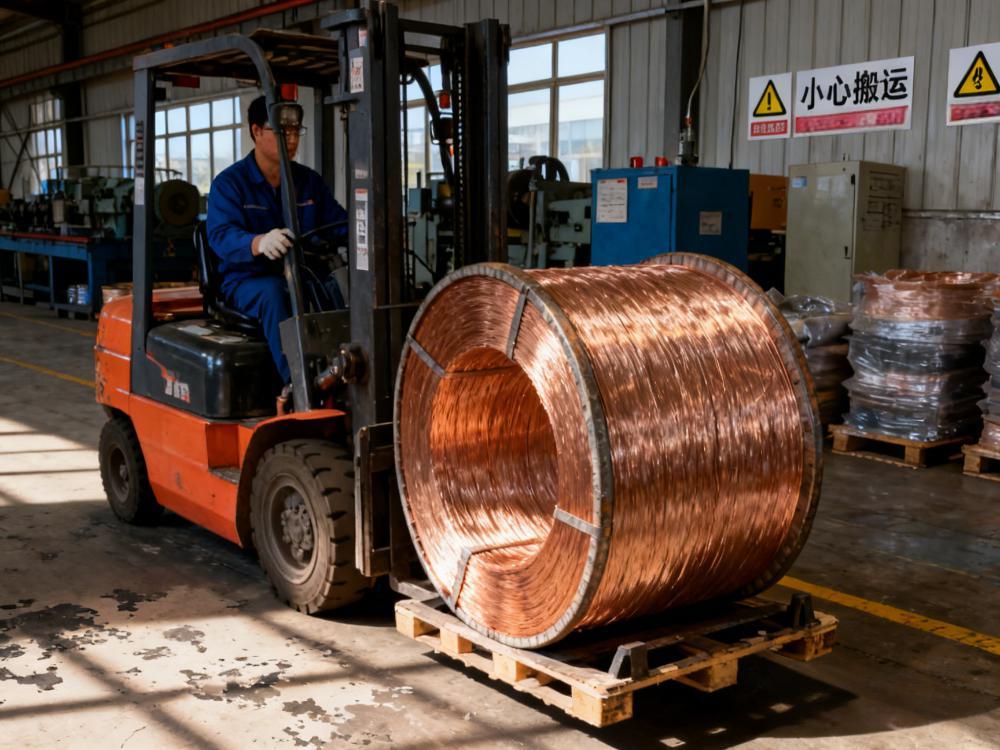
China’s copper cathode output fell less than expected in June as a smelter delayed maintenance and as some smelters ramped up production after blister copper supply tightness eased.
An SMM survey showed that China produced 759,200 mt of copper cathode last month, down 1.42% from May but up 4.25% from June 2019. The output decline came after three consecutive months of gains, but June’s production was higher than the expectations of 734,200 mt.
For the first six months of 2020, China’s copper cathode output stood at 4.43 million mt, up 3.72% from the same period last year.
Wider copper scrap discounts against cathode sparked the release of stockpiles of copper scrap, while increased imports improved supply of blister copper and lifted refining charges (RCs) by 250 yuan/mt from a month earlier. Copper ore supply tightness, however, has yet to ease, and its impact on smelters is spreading.
China’s production of copper cathode is expected to extend its decline in July, decreasing 2.79% from June to 738,000 mt, in view of maintenance at a number smelters, and the tally for the first seven months of the year will come in at 5.17 million mt.
July’s output will be 2.28% lower on a year-over-year basis, narrowing the increase in January-to-July output to 2.82%.
Alumina
China’s alumina output stood at 5.71 million mt in June. This included 5.5 million mt of metallurgical-grade alumina, with the daily output up 1.82% on the month but down 4.57% on the year to 183,000 mt. Output of metallurgical-grade alumina in the first half of the year totalled 32.64 million mt, 7.6% lower on the year.
With the moderate increase in alumina prices, alumina refineries in north China lifted their capacity in operation month on month in June. This has offsetted the production cut at some of the refineries.
As of early July, the operating capacity of metallurgical-grade alumina stood at 66.9 million mt/year. SMM sees output of metallurgical-grade alumina at 5.54 million mt in July, with the daily output edging higher on the month to 184,700 mt.
Chinalco Huaxing and Shanxi New Materials has started to adopt flexible production since end-June, and some refineries in south-west China have planned to put their roasting furnaces into maintenance in July. The production loss will be offsetted by a rise in output at some other refineries. Several alumina refineries under SPIC Shanxi and Henan have resumed operation or planned to restart work. SPIC Wuchuan is expected to begin mass production of alumina products in July. Besides, the continued rally in alumina prices may trigger more capacity resumption.
Aluminium
China’s primary aluminium output rose 2.42% year on year to 3 million mt in June (30 days), showed an SMM survey. As of the end of June, there was 36.76 million mt among 41.23 million mt per year of existing primary aluminium capacity in operation, up 180,000 mt from a month ago, while operating rates across Chinese primary aluminium producers inched up 0.3 percentage point to 89% as high margins encouraged newly commissioned and resumed capacities to ramp up.
During the first six months of 2020, China’s primary aluminium output increased 2.93% year on year to 18.01 million mt, while consumption dipped 0.18% to 17.69 million mt. The decline in consumption was much smaller than a drop of 2.39% seen in the January-to-May period as inventories maintained their steep fall amid mild supply increases and robust downstream demand.
China’s production of primary aluminium is expected to increase 1.79% to 3.12 million mt in July (31 days) from a year earlier. The month-on-month increase in actual consumption is likely to slow to 6.15% in July as supply grows while demand weakens.
New capacities in Yunnan, Inner Mongolia and other regions will continue to ramp up in July, while net imports are expected to increase slightly from June.
Nickel
China’s refined nickel output increased 7.32%, or 1,030 mt, from May and 20.03% from a year earlier to 15,100 mt in June. Output at Gansu smelters rose by nearly 1,000 mt on the month, recovering to the level in March-April, and there is no adjustments to annual output targets. Output at Xinjiang smelters rose slightly month on month in June, while smelters in Jilin held their production flat. Output at Tianjin smelters has gradually recovered, rising to 260 mt in June. Smelters in Shandong saw a decline in output as procurement of raw materials from overseas was hindered. Smelters in Guangxi continued to halt refined nickel production.
SMM expects China’s refined nickel output to shrink to 14,600 mt in July. Smelters in Shandong plan to trim output, while smelters in other regions will produce as scheduled.
Nickel pig iron (NPI)
China’s NPI output rose 0.81% from May to 44,600 mt Ni in June, but was 9.85% lower than a year earlier. This included 37,500 mt Ni of high-grade NPI, up 1.44% on the month, and 7,100 mt Ni of low-grade NPI, down 2.43% month on month. The commissioning of some new high-grade NPI capacities contributed to the slight increase in NPI output in June. There were some smelters in Inner Mongolia that have suspended production or switched to other alloys, but the decline in output could be offset by the release of new capacities. Some of the NPI plants will recover from overhauls in Q3, which will limit the decline in NPI output in Q3. Shorter operating days of June and maintenance at some #200 stainless steel makers led to the decline in low-grade NPI output in June.
SMM expects China’s NPI output to inch up 0.61% on the month, but to fall 9.85% on the year, to 44,900 mt Ni in July. Nickel ore shipments from the Philippines will rise significantly in July, easing the tightness in nickel ore supply, and some new capacities will come online.
Nickel sulphate
China’s nickel sulphate output increased 5.14% on the month, but fell 20.52% on the year, to 45,000 mt or 9,900 mt in nickel content in June. This included 39,800 mt of battery-grade materials and 5,200 mt of electroplating materials. A nickel sulphate plant in North China resuming operations contributed to the slight month-on-month increase in output. Demand for nickel sulphate was weak in June as orders at precursor plants failed to improve significantly. Traded prices of battery-grade nickel sulphate still stood close to, or even below costs, and some plants helped traders that have raw material cost advantages with processing works to maintain operations.
SMM expects China’s nickel sulphate output to rise 5.78% on the month to 10,500 mt (Ni content) in July. Some intermediate products that failed to arrive on time in June will finally arrive in July. With ample supply of raw materials, some nickel sulphate plants are likely to raise output.
Zinc
China’s refined zinc output fell for a second straight month in June, showed an SMM survey, as smelters in Shaanxi, Hunan and Anhui conducted maintenance as planned and as Xiangyun Feilong in Yunnan scaled back output due to equipment failure.
The decline was limited by the recovery from maintenance at some smelters in Yunnan and Inner Mongolia and as Shaanxi Hanzhong smelter ramped up production.
SMM data showed that 465,400 mt of refined zinc was produced in China last month, down 1.85%, or 8,800 mt, from May and 5.77% lower than June 2019. That took the tally for the first six months of 2020 to 2.87 million mt, up 4.57% from the same period last year.
Surveyed smelters produced 66,129 mt of zinc alloy in June, down 5.53% from the previous month.
The recovery from maintenance in Yunnan, Anhui, Inner Mongolia and other regions is expected to lift China’s refined zinc output by 26,400 mt to 491,800 mt in July from June, according to SMM calculations, while there are smelters in Gansu and Inner Mongolia undertaking maintenance.
Inventories of raw materials at Chinese zinc smelters continue to climb in July, currently standing at around 28 days, as zinc concentrate supply tightness has eased, as evidenced by higher treatment charges (TCs).
Lead
China’s primary lead output increased 1.58% from May to 269,000 mt in June, producing a year-over-year gain of 22.3%. The cumulative output in the first six months of 2020 rose 1.23% from the same period last year.
Lead prices were largely stable in June, but prices fell close to 14,000 yuan/mt in the middle of the month amid rising stockpiles. Narrowed profits dampened smelters enthusiasm for production. The routine maintenance at Yunnan Chihong, ongoing production line upgrading at Henan Yuguang and equipment breakdown at some smelters affected some output. However, some smelters ramped up production in the middle of the year, and Chifengshan Gold & Silver & Lead recovered from maintenance, keeping the overall output in the upward trend.
China’s primary lead output in June rose significantly on the year as in June 2019, the environmental department of Henan, a major lead-producing province of China, took measures to control air pollution, and local large-scale smelters went into maintenance.
SMM expects China’s primary lead output to fall by about 10,000 mt to 259,000 mt in July. Output at Henan Yuguang is likely to shrink further in July, as it has not completed replacement of production lines. Besides, Yunnan Chihong, Hunan Shuikoushan and Jingui will undertake maintenance.
Tin
Refined tin output in China continued to recover in June, as demand picked up with the resumption of work overseas. Downstream orders improved from the previous months even as they failed to rise to levels of the same period last year.
China’s production of refined tin increased 6.51% from May to 12,490 mt in June, showed SMM data.
Meanwhile, raw materials supply remained tight and the situation may last until the second half of July, as major ore supplier Myanmar has extended its coronavirus lockdown measures to July 15. Mining enterprises in Myanmar have kept their operating rates at low levels. Shortage of tin ore and reduced TCs drove some Chinese smelters to scale back production.
SMM expects China’s refined tin output to slip to around 12,000 mt in July, given headwinds of ore supply tightness, the arrival of a slack season and production cut at some smelters. Most tin smelters in China said they will maintain stable operation this month.
![Futures drift lower, spot discounts recover [SMM North China spot copper]](https://imgqn.smm.cn/usercenter/mpocQ20251217171712.jpg)
![On the delivery day, trading activity was sluggish among both buyers and sellers in the market, with only sporadic purchases [SMM South China spot copper]](https://imgqn.smm.cn/usercenter/CaLPF20251217171713.jpg)