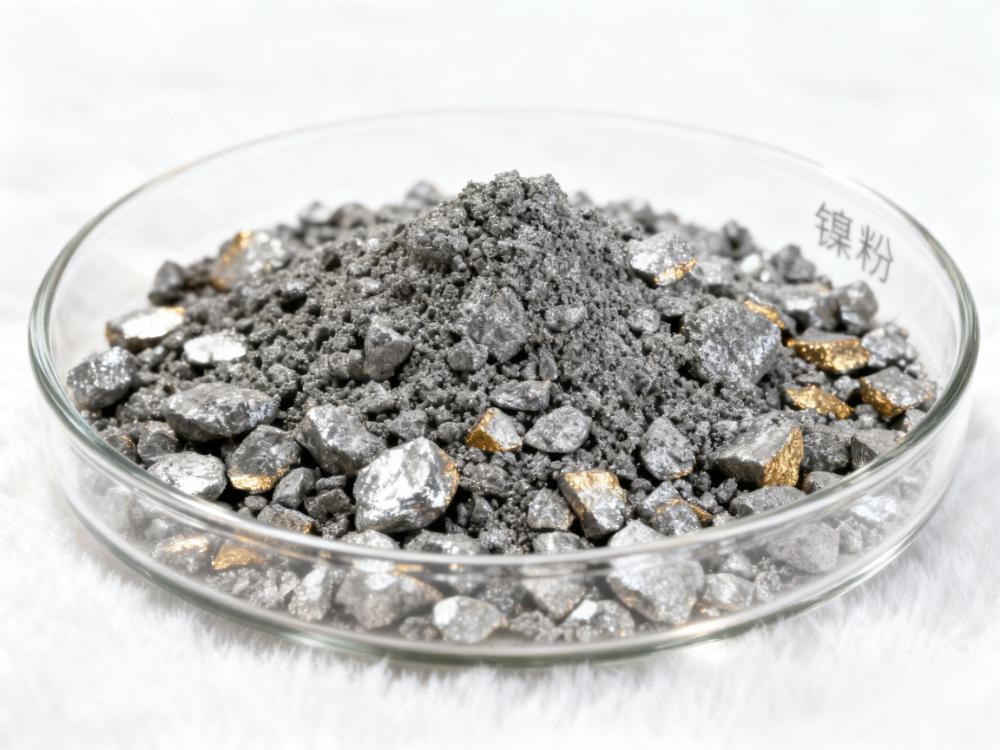
Indonesian Ministry of Industry: looking for the best way to use nickel slag in industrial materials

Published: Jul 3, 2020 14:42

SMM7 March 3: recently, the Indonesian Ministry of Industry, through its R & D department, is looking for the best solution to deal with nickel slag so that it can be used as industrial raw material. This work is in line with good environmental management policies or circular economy plans.

"in the context of dealing with nickel slag, our center already has sufficient technology, equipment and human resources for testing, research, standard-setting and consulting activities," DoddyRahadi, head of the (BPPI) of the Ministry of Industrial Research and Development, said in a statement.

Four R & D departments of the Ministry of Industry play a direct role in the treatment of nickel slag, namely, (BBLM), Bandung Ceramic Center (BBK), Bandung Materials and Technology Center (B4T) and Industrial pollution Prevention Technology (BBTPPI).

According to DoddyRahadi, Indonesia currently produces 13 million tons of nickel slag a year. Metal slag has great potential and can be used as raw materials for cement, construction, road infrastructure, as well as for recycling of iron and steel raw materials. At the end of 2019, the Indonesian national standard (SNI) has been released for the selection of nickel slag in electric furnace. The SNI is also prepared by the Ministry of Industry to support the development of nickel slag standards and as a solution for nickel slag management.

Meanwhile, industry minister DiniHanggandari said that in Japan, the United States and the European Union and other countries and regions, nickel, aluminum and copper slag is not classified as B3 waste, but as raw materials. At present, some smelting industries have used slag for internal use, but compared with the production of nickel slag, the amount of utilization is very small. Therefore, a win-win solution is needed without violating the applicable rules.

AchmadGunawanWidjaksono, director of the B3 waste Management and non-B3 waste Verification Bureau of the Ministry of Environment and Forestry and director of the General Administration of waste and B3 Management, said that according to Article 54PP 101 of 2014, the use of B3 waste can be carried out in the form of alternative raw materials, such as energy and raw materials according to science and technology.

DededPermadiSjamsudin, director of roads and bridge engineering, director of the Highway Bureau of the Ministry of Public works and Public works, said that nickel slag has compounds similar to chemicals in natural aggregates and is often used as building materials, so it has the potential to be used as building materials.

Meanwhile, AladinSianipar, representing the Indonesian Association of processing and Refining companies (AP3I), mentioned that some examples of products made from nickel slag include matches, precast and precast concrete, subgrade and fields, soil modifiers, growth media and fertilizers, mortars as well as slag cement, Portland composite cement and cement geopolymers.

DradjadIrianto, a professor at the School of Industrial Technology at Bandung Institute of Technology, said that nickel slag is the wealth of most machinable and research materials in Indonesia, thus providing value-added to the Indonesian country. The use of nickel slag is expected to stimulate the productivity of the industrial sector and enable it to continue to play a role in promoting the national economy.

2020 China Ni-Cr stainless Steel Industry Market and Application Development Forum
Scan the QR code, apply for participation or join the SMM metal exchange group

A

Data Source Statement: Except for publicly available information, all other data are processed by SMM based on publicly available information, market communication, and relying on SMM‘s internal database model. They are for reference only and do not constitute decision-making recommendations.

For any inquiries or to learn more information, please contact: lemonzhao@smm.cn
For more information on how to access our research reports, please contact:service.en@smm.cn
Related News
[SMM Stainless Steel Flash] UK Construction Sector Criticizes Stricter Steel Tariffs and Quota Cuts Amid Rising Costs
26 mins ago
[SMM Stainless Steel Flash] UK Construction Sector Criticizes Stricter Steel Tariffs and Quota Cuts Amid Rising Costs
Read More
[SMM Stainless Steel Flash] UK Construction Sector Criticizes Stricter Steel Tariffs and Quota Cuts Amid Rising Costs
[SMM Stainless Steel Flash] UK Construction Sector Criticizes Stricter Steel Tariffs and Quota Cuts Amid Rising Costs
The UK construction industry has strongly criticized proposed trade measures that would introduce stricter steel tariffs of 50% alongside quota reductions of up to 60%. Industry representatives warn these measures will drastically inflate costs for private housing and public infrastructure, particularly threatening the viability of companies involved in the €115 billion HS2 railway project, where large volumes of imported steel are already contracted. Thorsten Gerber, CEO of the Gerber Group, warned that these protectionist approaches disproportionately harm SMEs, automotive manufacturers, and the entire downstream metal processing sector, urging both London and Brussels to reconsider their strategies to avoid massive economic damage and widespread job losses.
26 mins ago
[SMM Stainless Steel Flash] European ETS Faces Mounting Pressure as Poland and Italy Call for Suspension and Abolition
27 mins ago
[SMM Stainless Steel Flash] European ETS Faces Mounting Pressure as Poland and Italy Call for Suspension and Abolition
Read More
[SMM Stainless Steel Flash] European ETS Faces Mounting Pressure as Poland and Italy Call for Suspension and Abolition
[SMM Stainless Steel Flash] European ETS Faces Mounting Pressure as Poland and Italy Call for Suspension and Abolition
The European Emissions Trading System (ETS) is under significant pressure from member states due to sharply rising energy costs driven by the tightening supply of certificates, with prices tripling from around €25/t CO2 in 2019 to approximately €75/t in 2025. With the ETS scheduled for a major revision by July 2026, several EU countries led by Italy recently called for the review process to be suspended. Last week, Polish President Karol Nawrocki went a step further, urging his government to advocate for the complete abolition of the ETS to prevent further industrial relocation outside the EU. Industry experts note that any modification, suspension, or national exemption of the ETS would have immediate and direct consequences for the Carbon Border Adjustment Mechanism (CBAM).
27 mins ago
[SMM Stainless Steel Flash] High-End Manufacturing and New Energy to Boost China's Stainless Steel Demand
28 mins ago
[SMM Stainless Steel Flash] High-End Manufacturing and New Energy to Boost China's Stainless Steel Demand
Read More
[SMM Stainless Steel Flash] High-End Manufacturing and New Energy to Boost China's Stainless Steel Demand
[SMM Stainless Steel Flash] High-End Manufacturing and New Energy to Boost China's Stainless Steel Demand
China's stainless steel industry is rapidly transitioning into a high-quality growth phase, with apparent consumption projected to reach 34.45 million mt in 2026. Shifting away from traditional industry reliance, the market's primary expansion engines are now new energy and high-end equipment manufacturing, bolstered by steady support from infrastructure, medical health, and marine engineering. The global energy transition is significantly boosting the need for corrosion-resistant materials in lithium battery equipment and hydrogen storage, while domestic upgrades demand high-performance alloys for aerospace and precision machinery.
28 mins ago