SMM: recent opinion polls show that Democratic presidential candidate Joe Biden has a clear lead over incumbent President Trump. In the run-up to the November presidential election, many media have analyzed whether Biden will raise taxes and depress the market if Biden is elected.
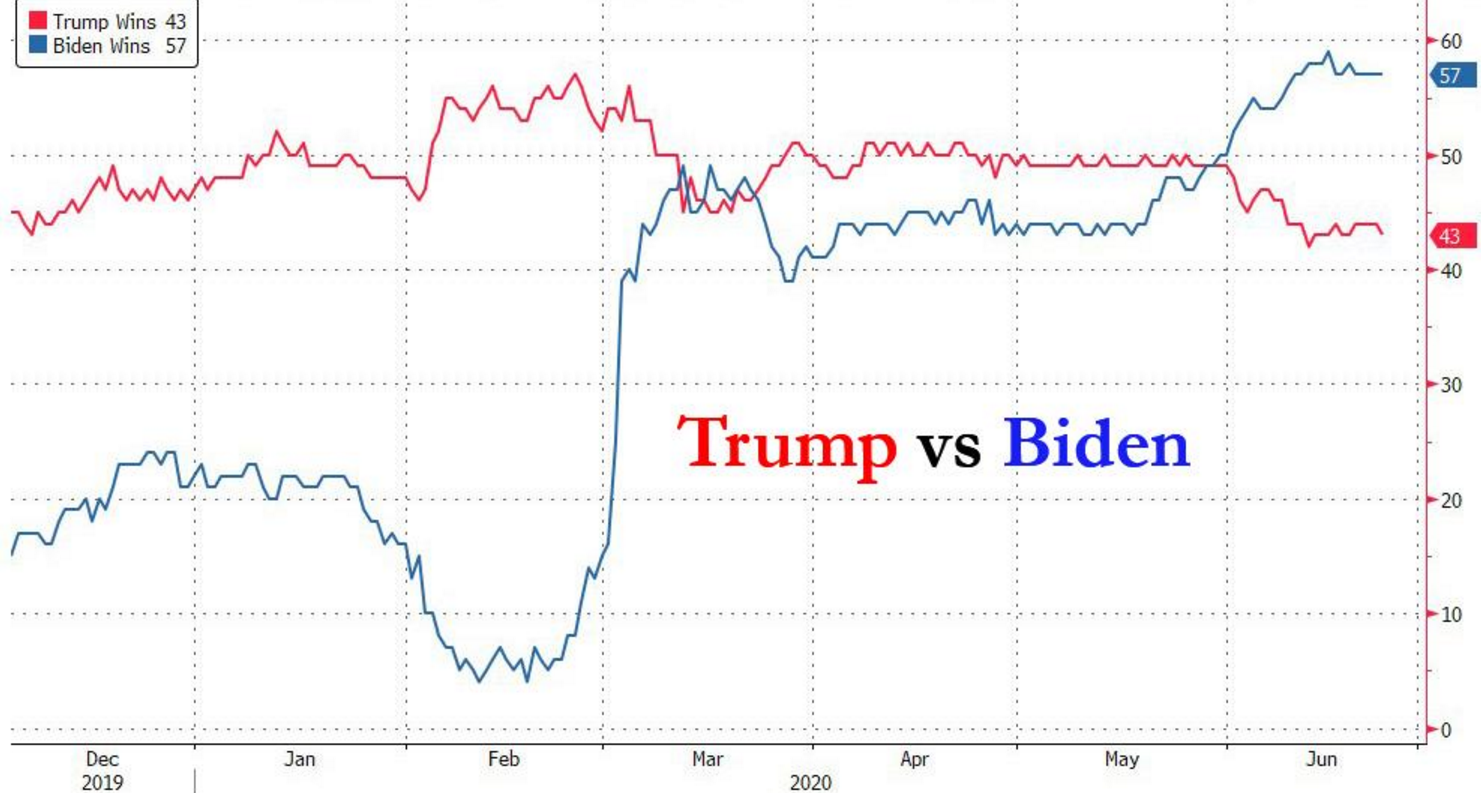
However, under the escort of the Federal Reserve, the stock market has so far not been affected by political events. Instead, it is foreign exchange traders who are under increasing pressure. Foreign exchange traders are "starting to think about an incredible thing": the results of the US presidential election may not be delivered on time, leading to protracted market volatility, according to foreign media reports.
According to the law of previous years, the implied volatility of the yen is an important forward-looking index to judge the market volatility before and after the general election. Some analysts pointed out that from the current implied volatility of the yen, the volatility of major asset prices before and after the election is expected to soar sharply, which may continue until 2021.
This is in stark contrast to the eve of the 2016 US election, when volatility indicators in the foreign exchange market showed only a temporary rise in volatility as investors generally ignored the possibility of Mr Trump becoming president. But this time, traders are much more cautious, says Greg Anderson, global head of foreign exchange strategy at Bank of Montreal.
Anderson is worried that as the epidemic is not over, the daily operation of some government agencies and regulators will be affected to a certain extent. If there is an accident that requires a recount, the election process may be slowed down. This possibility added to market uncertainty, with data showing that the premium to short-term options on dollar / yen options contracts expiring after the November election rose to an eight-year high.
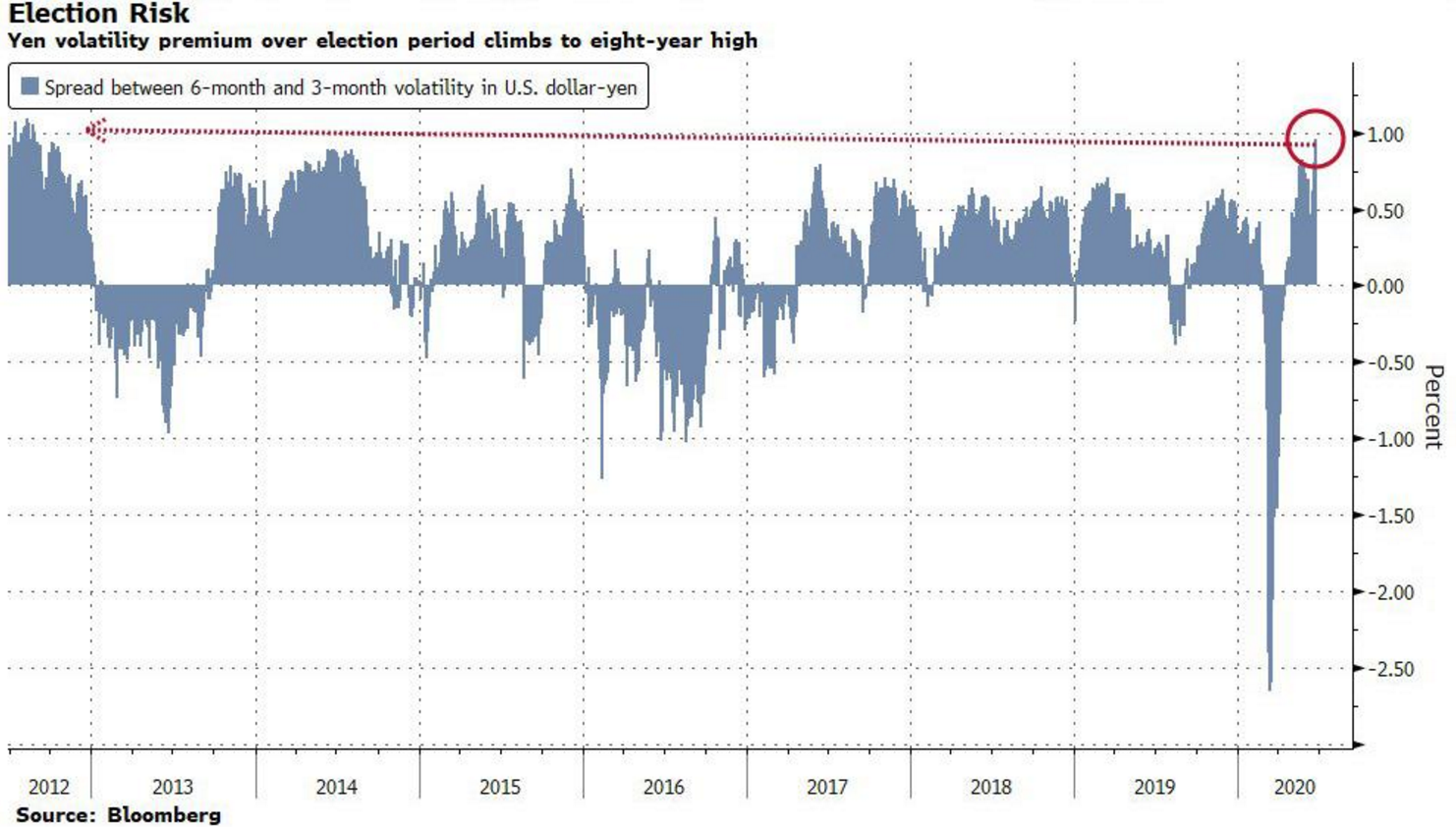
Ned Rumpeltin, head of foreign exchange strategy at TD Bank in Toronto, said the increased uncertainty in the election meant that investors would have to consider how the currency market would deal with long-term uncertainty if the election was unexpectedly cold. He said:
"this year's situation is easily reminiscent of the election showdown between George Bush and Al Gore in 2000. Due to the need for a recount, a month-long legal lawsuit between the two parties led to the postponement of the announcement of the election results. "
Another potential factor complicating the election is that more and more Americans are demanding to vote by e-mail. The New York State campaign Committee says it is not expected to count the results of Tuesday's Democratic primary until July 1, according to Bloomberg. In addition, the campaign committee also needs to review the voting records of some cities and counties, which means that the counting of votes is more cumbersome than ever.
Bloomberg cautioned that implied volatility on election day this year has risen sharply, even as it was at the height of the market turmoil in mid-march, at more than 30%. Four years ago, at the time of the election results, the overnight volatility of the dollar against the yen also soared. Therefore, traders should hedge in time and increase defensive positions and options positions.
Ned Rumpeltin pointed out that for all markets, the best reference indicator for predicting the US economic and political outlook in the coming months is the implied volatility of the US dollar against the yen mentioned above. Compared with other markets, foreign exchange markets provide a way to bet on the future of the United States.
Cobb (Olivier Korber), foreign exchange strategist at Societe Generale, suggests that observing the spread of options between the dollar against the renminbi and the dollar against the yen can track investors' expectations of the election. The reason is simple: these options reflect changes in global risk sentiment, geopolitical tensions and trade.
In addition, Cobb said that compared with previous elections, the economic proposals of the two candidates will be more important than ever before, because 2020 is the year when the United States is really in recession.
The real question now is what kind of 2021 American voters want to see. Morgan Chase analyst Paul Meggyesi said:
"the rise in economic uncertainty has also exacerbated political uncertainty. I think investors should now buy six-month USD / JPY and USD / CHF bullish options, take advantage of the increase in implied volatility and hedge them. As volatility rises, cross-asset correlations usually rise and all assets weaken. As a result, there is not much time left for traders to prepare. "

Scan the QR code and join the SMM metal communication group.
![Precious Metals Continued Volatile Trading, Platinum Spot Market Transactions Were Normal [SMM Daily Review]](https://imgqn.smm.cn/usercenter/kLgYV20251217171736.jpg)

![Silver Prices Moved Sideways, Spot Discounts Held Steady [SMM Daily Review]](https://imgqn.smm.cn/usercenter/tSwaX20251217171735.jpg)