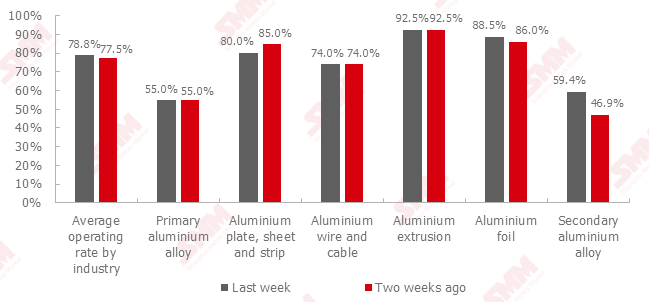
SHANGHAI, May 25 (SMM) – SMM surveyed 41 major aluminium processors in 12 provinces and found that their average operating rate increased 1.3 percentage points on a weekly basis to 78.8% last week, driven by sustained strong consumption from the construction and medical sectors. In addition, seasonal demand for aluminium foil used in air-conditioners, beverage and beer packaging also increased. However, the impact from weaker export orders has emerged, especially for aluminium plates/sheets, leading to lower operating rates at producers.
Current orders should keep operating rates at highs in general this week, but a slight decline is likely as export orders and orders from traders fell.
Operating rates at major aluminium processors by industry (updated on May 22)
Source:SMM
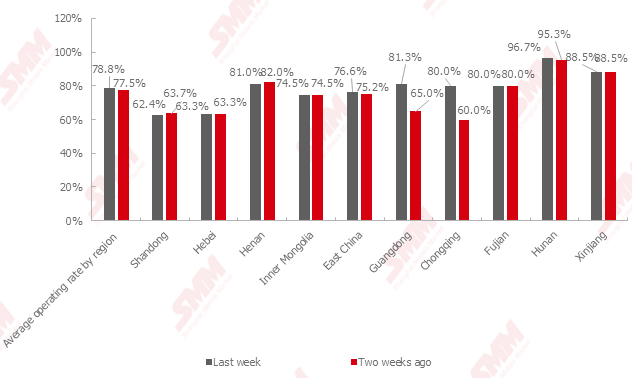
Operating rates at major aluminium processors by region (updated on May 22)
Source:SMM
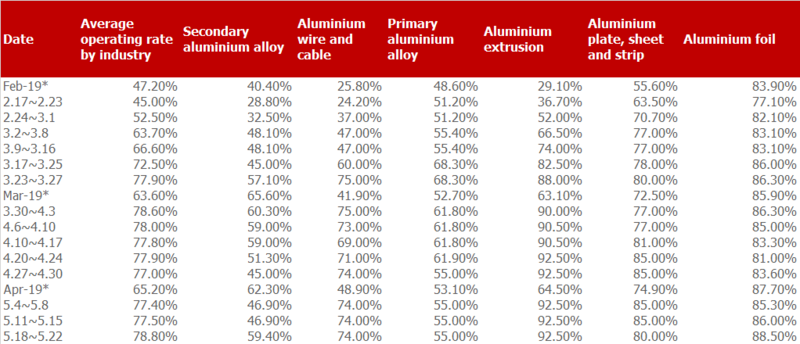
Weekly operating rates at major aluminium processors by industry
Source:SMM
Primary aluminium alloy: Operating rates at primary aluminium alloy producers remained stable at 55%, even as operating rates at aluminium wheel plants picked up slowly. Export-oriented wheel plants maintained low operating rates. Large alloy producers in Shandong switched production to aluminium billets in April, and have no plans to resume production of A356.2 aluminium alloy in the short term. Low operating rates should keep processing fees of A356.2 aluminium alloy at highs of 700-750 yuan/mt (ex-works, including tax).
Aluminium plate/sheet and strip: Operating rates at large aluminium plate/sheet and strip producers fell 5 percentage points as export orders plunged 30-40% while domestic clients became less active in placing orders, taking a toll on primary aluminium consumption. Current orders could sustain production for 2-4 weeks. Demand for curtain wall plates, oxidising materials used in 3C (computer, communication, consumer electronics) and oil tanker materials remained strong, while orders for can stock and automotive sheet remained weak. Aluminium plate/sheet and strip producers stockpiled when aluminium prices were at low levels earlier, but resumed normal purchases after prices trended higher recently. Most of the producers are pessimistic over consumption in late May and June.
Aluminium wire and cable: Operating rates at large aluminium wire and cable producers remained stable, supported by long production schedules. Current orders were mostly received before the Chinese New Year. New orders from State Grid and China Southern Power Grid remained limited, while orders from public works projects, which represent a small share, showed signs of recovering. Higher aluminium prices and weaker purchases weighed on processing fees of aluminium rods in north and east China.
Aluminium extrusion: Operating rates at aluminium extrusion producers remained stable. Optimism over shanty down renovation and infrastructure construction boosted demand for extrusion used in doors and windows, curtain walls and formwork. Demand for industrial extrusion from automobile, home appliance and machinery sectors continued to recover. On the other hand, the global widespread of COVID-19 affected export orders. Sharply falling processing fees of aluminium billets in Foshan, Wuxi and Nanchang drove some extrusion producers to stockpile. Sufficient orders should keep operating rates at aluminium extrusion producers at highs in the short term.
Aluminium foil: Operating rates at aluminium foil producers rose 2.5 percentage points to 88.5%, largely driven by increasing demand for air-conditioner foil. Air-conditioner manufacturers are now under greater pressure to achieve production and sales targets following the impact from COVID-19. Some clients increased purchases in order to settle with lower aluminium prices in April. Output of packaging foil increased slightly. Most of the producers are optimistic over demand for air-conditioner and packaging foil, which are the lion’s share of aluminium foil. Sluggish overseas automobile industry amid COVID-19 continued to suppress demand for soldering and brazing foil. Electronics and battery foil segments remained stable. Output of foil used in beverage and beer packaging increased due to improving demand in the summer months. Exports remained weak. Operating rates are expected to remain stable or increase slightly this week as orders at most of the producers are fully booked until July.
Secondary aluminium alloy: Operating rates at secondary aluminium alloy producers rose 12.5 percentage points. However, the increase was driven by the adjustment of production schedules rather than improving demand. Production ahead of schedule, sluggish demand from the automobile sector and increasing arrivals of imported aluminium alloys are likely to lead to closures at producers and weigh on operating rates in June. Automobile sales returned to growth on a yearly basis in April due to lower baseline in the same period of last year. The figures were based on sales by automakers rather than end-user sales, thus having little impact on secondary aluminium demand.
Aluminium billet: Primary aluminium is expected to continue to replace aluminium scrap in the production of aluminium billets, given the narrowing price spread between A00 aluminium and taint (Al≥98%), high processing fees of aluminium billets, and low ratio of scrap in billets made mostly with molten primary aluminium. However, substitution of primary aluminium for aluminium scrap is likely to wane as processing fees of aluminium billets have fallen.
![[SMM Flash News] South32 Revised Q4 '26 CIF MJP Premium Offer at US$265/mt](https://imgqn.smm.cn/usercenter/tkWbz20251217171654.jpg)